• TalkBass has been independent since 1998. Add your voice.
    Create a free account to reply to discussions, view embedded media, and browse with fewer display ads.
    Join freeLog in
    Want zero display ads or expanded classifieds tools? Compare plans.

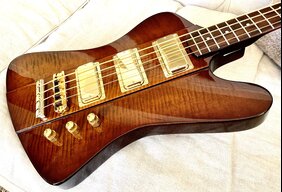
Thunderbird Club

It's just a different feel really while you're playing, and it's not lag like you think of it, they don't take a split second to actuate the speakers, in an ideal world the speakers stops almost immediately after the note stops, which a sealed cab like you have helps with. If they stop too fast (to me) the sound is what I call dry, I like just a little give and take which is probably why I like tube amps better. I play the amp as much as I play my bass. I do own a few SS amps too but can tell the difference when I use them. I'm no expert at this I just know what i like but struggle to find technical terms to describe it.
If it sounds and feels good, it's good.
 
My SVT-VR is typically connected to my Bergantino NV610 which is a sealed cab IIRC. Never noticed any issues with it, lag or distortion wise, but I haven’t played it loud in at least 10 years now and I wasn’t really ever listening for it back then.
It’s not something most people listen fore, more something you notice.
 
There’s two criteria to join the club…
1) a clear lack of talent
2) a sum of money spent on instruments that isn’t justifiable by your playing level.

Here’s a quick test to determine your talent level, it’s a pass or fail question and you have 2 seconds to answer it:
Q) On a fretted 4 string bass in standard EADG tuning, at what fret on the D string will you find B#?

As for money spent, it’s all relative. If you only have $300 to your name then $300 spent on a bass would be a fortune.

All I know is the 10th fret for the B# on the D.
 
This is amplifier damping in a nutshell

"Amplifier damping factor (DF)is defined as “the ratio of the load impedance (loudspeaker plus wire resistance) to the amplifier internal output impedance.” This basically indicates the amplifier’s ability to control overshoot of the loudspeaker, i.e., to stop the cone from moving. It is most evident at frequencies below 150 Hz or so where the size and weight of the cones become significant. A system where the damping factor of the entire loudspeaker/wire/amplifier circuit is very low will exhibit poor definition in the low frequency range. Low frequency transients such as kick drum hits will sound “muddy” instead of that crisp “punch” we would ideally want from the system."

Amplifier damping factor: More is better! (....or is it?) - EAW: Eastern Acoustic Works
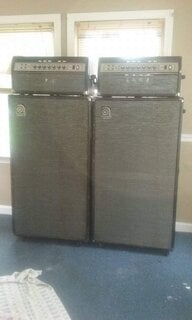
and there lies the problem….lower amp output impedance yields better damping factor….AC coupled amps cannot enjoy the amounts global feedback necessary to match DC coupled amps due to the phase shift of the transformer and the potential instability…I like my SVT for reggae and relic rock gigs..
 
and there lies the problem….lower amp output impedance yields better damping factor….AC coupled amps cannot enjoy the amounts global feedback necessary to match DC coupled amps due to the phase shift of the transformer and the potential instability…I like my SVT for reggae and relic rock gigs..


Don't sell it short, it has quick transients too especially with the fridge but yeah they have a great thick bottom especially with 15's.
 
Don't sell it short, it has quick transients too especially with the fridge but yeah they have a great thick bottom especially with 15's.
ever try?
upload_2022-5-9_17-41-17.jpeg