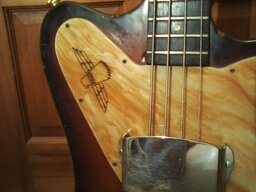
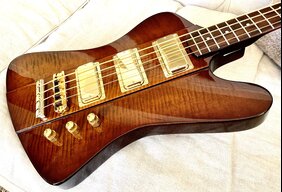
I have a '74 Ric 4001 and a 2014 Thunderbird. The public perception of the "short comings" of each of these basses is somewhat similar in my opinion.
The Ric bridge system flaws, which exist, are WAY overstated. As mentioned earlier, the older Ric bridges can be subject to tail lift but the majority do not in a meaningful way.
A newer, Allparts or later (post 80's) Rickenbacker bridge should be fine, if the original needs replacing on an older bass. The saddles on the Ric bridge are removable, when all the strings are removed, just like a 3-point bridge on a Thunderbird. Solution? Don't remove all the strings at once or lift the bass in a vertical direction with the strings off and you should have no issues.
It is easy to replace the adjustment screw on the Ric saddle with 1/4 (I think) hex head screws. This allows for loosening string and using a standard allen wrench to adjust the saddle travel. Very easy in my opinion.
My, 74' had a cracked headstock, tail lift and really weak output pickups when I got if from a pawn shop in Portland. The headstock repair was done, it has more modern, higher output Ric pick ups with adjustable pole pieces (saved the originals) and a 2016 Ric bridge. I also bypassed the .047 cap ( present on all Ric basses prior to the early 1980's as a way to limit the low end output) on the bridge pickup to give it a extra shot of low end.
The Thunderbird and the Ric are much maligned by folks who often time have not played one or are inflexible on how they approach playing an instrument. (Wider strap to solve neck dive?!?! NEVER!

)
My point after this long rant is take in the info about the short comings, understand it but don't allow it the become a "fact" for you unless its your actual experience.
 View attachment 4910500
View attachment 4910498
View attachment 4910500
View attachment 4910498










 But y'all can ease up a bit once in a while!


