• TalkBass has been independent since 1998. Add your voice.
    Create a free account to reply to discussions, view embedded media, and browse with fewer display ads.
    Join freeLog in
    Want zero display ads or expanded classifieds tools? Compare plans.

Thunderbird Club

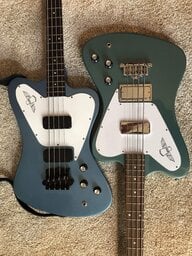
Hey Bob, mine I’ve guessed from other photos to be c1968 so that could be right. Mine has a 5 screw neck plate with the word JAPAN inscribed (no “made in”). I got it free and it had its OHSC - complete with slogans written on it and a busted lock.

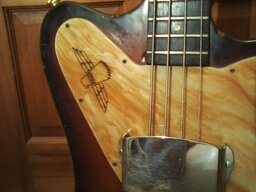
Mine has a barely legible “Challenge” in script on the headstock and is 33.25” in scale (Rick scale), and 2 single coils in (comparing to photos) approximately Rick 4001 spots.

I just got it back from a couple of days at the Drs. Had Chromes put on and some surgery to reduce the action. It was high enough to limbo under before! I through the foam mute I was using with the other strings and played around with the pickup blend and hey no I get something other than thump thump thump, which I liked ok, but this is better. Maybe helped by being able to venture north of fret 7 now. :laugh:
I can get a burpity bop out of it now and it is really in its own spot now apart from the Birds and the P copy. For now at least.

Do you know anything of the origin of your old bass?

No, not at all, mine was used when I bought it but I do think it was also Japanese, it had to have been at least several years old, most of the cheaper basses and guitars were made in Japan back then and sold here under a variety of names. It's an interesting topic though. It had high action but wasn't that bad, I knew nothing of set up, not even truss rods. It sounded pretty good though and was playable, I will say though that when I bought my first new P bass in 1970 that came with flats, covers, mute etc I had to raise the action because I was so used to the other one :laugh:.

@JIO knows a lot more about this than I do.

List of Japanese OEM guitar manufacturers - Wikipedia
 
Not that it'll help Irv, but I have a stupidly high falsetto. Most of y'all have heard my natural, baritone-y voice on a coupla videos I've posted, and I have no 'high mids'("Ah ain't no Country tenor"), but A above the treble clef staff is no problem and the C above that is possible with a little practice.

Wow, good going. Maurice Gibb was similar, normally lower than the other two but he could pitch his falsetto to sit above Barry.
 
Lawn management critters -
We are on the edge of the rural area (although that is disappearing). Where those 5 goats are is the top paddock of a horse riding ‘farm?’, and we used to get horses right up to there and sometime riders walking or riding their mounts down our street. The kids loved it when they were little. Now I’m concerned that maybe the riding ‘school?’ might not have made it through the lock downs. That would be sad. We’ve been here 32 years, and they were here when we arrived
 
No, not at all, mine was used when I bought it but I do think it was also Japanese, it had to have been at least several years old, most of the cheaper basses and guitars were made in Japan back then and sold here under a variety of names. It's an interesting topic though. It had high action but wasn't that bad, I knew nothing of set up, not even truss rods. It sounded pretty good though and was playable, I will say though that when I bought my first new P bass in 1970 that came with flats, covers, mute etc I had to raise the action because I was so used to the other one :laugh:.

@JIO knows a lot more about this than I do.

List of Japanese OEM guitar manufacturers - Wikipedia

mine doesn’t have a truss rod. It does however have a truss rod cover….
 
I wore out Theme for an Imaginary Western as a young teen. I didn’t hear this until I was almost 19, and it replaced TfaIW as my fave. I have all three album versions. The two sided version off the double vinyl live album is pretty cool but my favorite is the single side version on “The Road Goes Ever On”. And not that clean. You can hear where the bass is pushing the amp through a lot of the song.


Oh yeah, I thought maybe you were thinking about his live tone. I've always loved Mountain and saw them twice 3 piece. All great hard rock players, Corky was a machine, Leslie had the best tone going along with his great voice song writing, Felix tone, voice, licks, song writing etc, Steve Knight was a great player too, I was disappointed he wasn't with them when I saw them but they were still REALLY good. Felix had piles of Sunn amps and cabs and his EB-1. Felix was such a melodic player.
 
Wow, good going. Maurice Gibb was similar, normally lower than the other two but he could pitch his falsetto to sit above Barry.
Mine is a 'clear' falsetto. I'd love to have the 'edge' that Barry has(had?). Same with Frankie Valli's. I have no clue how to develop that. And at my age, singing lessons are not happ'nin'.
 
You mean three pair, I trust.


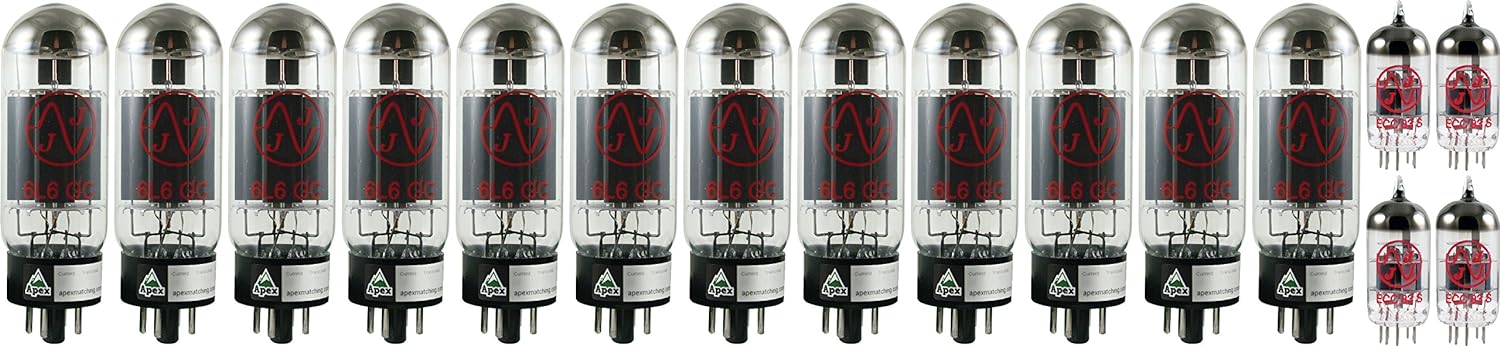
Unavailable tube compliment from Amazon for a Mesa 400 Plus head. :laugh: I think the plain 400 used three pairs.


819ejlCnaQL._AC_SL1500_.jpg
 
No, not at all, mine was used when I bought it but I do think it was also Japanese, it had to have been at least several years old, most of the cheaper basses and guitars were made in Japan back then and sold here under a variety of names. It's an interesting topic though. It had high action but wasn't that bad, I knew nothing of set up, not even truss rods. It sounded pretty good though and was playable, I will say though that when I bought my first new P bass in 1970 that came with flats, covers, mute etc I had to raise the action because I was so used to the other one :laugh:.

@JIO knows a lot more about this than I do.

List of Japanese OEM guitar manufacturers - Wikipedia

In the '60s The Japanese were relentless in addressing the music boom primarily in the US of young players (like me!) wanting to be part of rock & roll. Thousands of entry-level instruments were cranked out of a number of different factories in Japan. Many same instruments were badged with a myriad of different brand-names to carpet the market with product. Teisco was one of the biggest and most well known - but others offered an array of unique and sometimes exotic space-age designs aimed at attracting kids interested in playing in a R&R band. (or 'combo' as they ere commonly referred to) Nobody knew about intonation or how to adjust neck-relief back then - and some basses/guitars from Japan were better than others. But if set-up correctly - these now vintage instruments can be very legit players, hence the reason why they are gaining more interest and respect. (and costing more)
 
In the '60s The Japanese were relentless in addressing the music boom primarily in the US of young players (like me!) wanting to be part of rock & roll. Thousands of entry-level instruments were cranked out of a number of different factories in Japan. Many same instruments were badged with a myriad of different brand-names to carpet the market with product. Teisco was one of the biggest and most well know - but others offered an array of unique and sometimes exotic space-age designs aimed at attracting kids interested in playing in a R&R band (or 'combo' as they ere commonly referred to) Nobody knew about intonation or how to adjust neck-relief back then - and some basses/guitars from Japan were better than others. But if set-up correctly - these now vintage instruments can be very legit players, hence the reason why they are gaining more interest and respect. (and costing more)


Right after I first got married in 2002, I stay out here for about 6 months and joined a band, the bass amp they had was a Teisco 100 watt tube guitar head going through a double 15" cab, it really sounded good. I wanted to buy it when I came back but he had gotten rid of it.