• TalkBass has been independent since 1998. Add your voice.
    Create a free account to reply to discussions, view embedded media, and browse with fewer display ads.
    Join freeLog in
    Want zero display ads or expanded classifieds tools? Compare plans.

Thunderbird Club

The Greco rundown…
- Stock pickups are to die for! By far the best sounding, boldest, most authoritative and well balanced TBird pickup I’ve played. If you get the bass and don’t like the pickups I’d be interested in buying them from you. The pickup placements are part of the magic of this bass. The neck pup is further from the neck than a modern bird (closer to vintage spec) and the bridge pup is further from the bridge than vintage or modern spec. (Note: scale length is not 34” so a direct comparison between Gibby and Greco pup locations isn’t accurate).
- The neck is a slightly shorter scale than a standard Tbird. IIRC it’s 33-1/2” scale. The neck feels like something between a P bass and a Jazz bass in girth. The FB radius is similar to or the same as a Tbird. It’s a set neck, not neck through. I believe the neck wood is mahogany, not positive. The necks are stable, I suspect the truss is dual acting. Mine both hold tune for months of sitting or playing.
- The overall weight is about a half pound more than a typical Gibson Tbird which is normally in the 8 to 9 pound range.
- The tuners are typical Gibson quality in feel and action but the chrome or black plating is vastly inferior and prone to oxidizing and blistering (possibly from being in a salt air environment in Japan???).
- Frets are good and durable, standard Gibson quality.
- Bridge is typical Gibson design three point but again inferior plating (or possibly base metal selection or salt air issues).
- Claw is the same situation as the bridge and tuners on plating.
- Body is a basic slab, no tummy or forearm cut. I believe the body wood is mahogany, not positive. Pickup placements are part of the magic

General impression - the Greco is an Epiphone level Tbird with nearly Lull level pickups which have been uniquely placed in this bird to maximize the forceful bold output of the humbucker design. Fair market value in my opinion for a very good condition all original Greco bird with a basic hard case is $1200. More than $1300 would be over paying and anything under $1000 is a great buy. Anything under $800 should be suspect - double check for neck issues and non original pups, either of which are a deal breaker in my book at any price.

I believe mine has a basswood body. I found this page with specs. Hopefully the link works.

[Invalid or Expired Link Removed]

The hardware on mine was in great shape. That was one reason I bought the one I did. The bridge wasn't great, but tuners and claw were totally fine. I swapped the bridge with an Epi 3 point I had and it was a perfect fit. As you can see, almost all of the finish was gone from the bridge and posts.
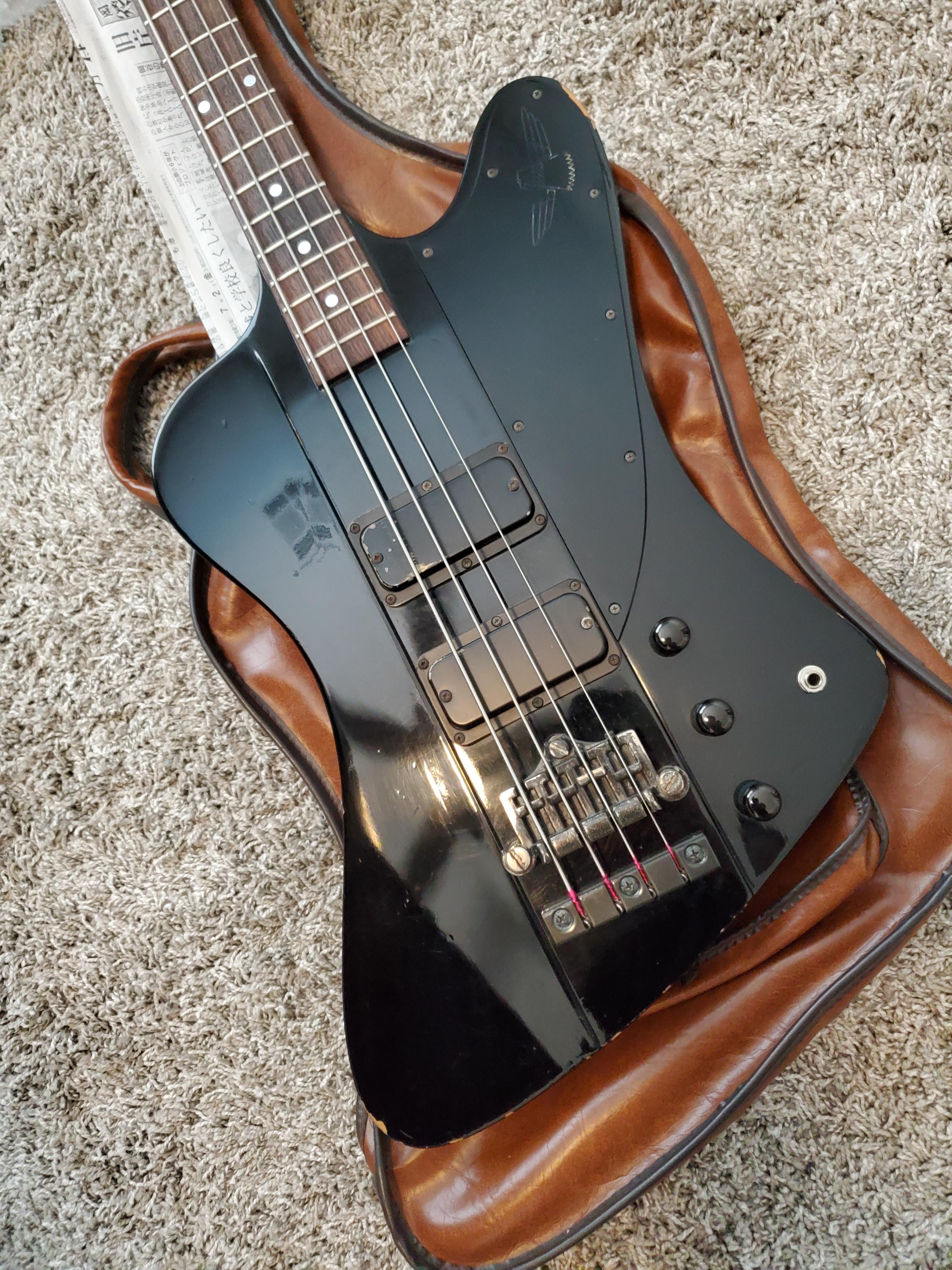
tg8Qogf.jpg
 
Last edited:
I believe mine has a basswood body. I found this page with specs. Hopefully the link works.

[Invalid or Expired Link Removed]

The hardware on mine was in great shape. That was one reason I bought the one I did. The bridge wasn't great, but tuners and claw were totally fine. I swapped the bridge with an Epi 3 point I had and it was a perfect fit. As you can see, almost all of the finish was gone from the bridge and posts.

tg8Qogf.jpg
Just updated my original post. Yes the neck is 3 piece maple. However, both of my Grecos have the mahogany body, it apparently was an upgrade option over basswood. I suspect the majority of painted Grecos are basswood and the majority of the transparent bursts are mahogany.
 
I believe mine has a basswood body. I found this page with specs. Hopefully the link works.

[Invalid or Expired Link Removed]

The hardware on mine was in great shape. That was one reason I bought the one I did. The bridge wasn't great, but tuners and claw were totally fine. I swapped the bridge with an Epi 3 point I had and it was a perfect fit. As you can see, almost all of the finish was gone from the bridge and posts.

tg8Qogf.jpg
You can occasionally get lucky. My 1990 white Greco has pristine hardware, Not the case with my 1977 burst Greco…
8846064B-3642-491C-87CA-B20BEC2DDD2D.jpeg
 
Just updated my original post. Yes the neck is 3 piece maple. However, both of my Grecos have the mahogany body, it apparently was an upgrade option over basswood. I suspect the majority of painted Grecos are basswood and the majority of the transparent bursts are mahogany.

You can see the light colored wood on mine wherever paint is missing. The chip on the face of your white Bird would make me think it is mahogany.
 
Here is a demo of 3 different Greco Birds to give you an idea of the sound.


The Greco rundown…
- Stock pickups are to die for! By far the best sounding, boldest, most authoritative and well balanced TBird pickup I’ve played. If you get the bass and don’t like the pickups I’d be interested in buying them from you. The pickup placements are part of the magic of this bass. The neck pup is further from the neck than a modern bird (closer to vintage spec) and the bridge pup is further from the bridge than vintage or modern spec. (Note: scale length is not 34” so a direct comparison between Gibby and Greco pup locations isn’t accurate).
- The neck is a slightly shorter scale than a standard Tbird. IIRC it’s 33-1/2” scale. The neck feels like something between a P bass and a Jazz bass in girth. The FB radius is similar to or the same as a Tbird. It’s a set neck, not neck through. I believe the neck wood is mahogany, not positive. The necks are stable, I suspect the truss is dual acting. Mine both hold tune for months of sitting or playing.
- The overall weight is about a half pound more than a typical Gibson Tbird which is normally in the 8 to 9 pound range.
- The tuners are typical Gibson quality in feel and action but the chrome or black plating is vastly inferior and prone to oxidizing and blistering (possibly from being in a salt air environment in Japan???).
- Frets are good and durable, standard Gibson quality.
- Bridge is typical Gibson design three point but again inferior plating (or possibly base metal selection or salt air issues).
- Claw is the same situation as the bridge and tuners on plating.
- Body is a basic slab, no tummy or forearm cut. I believe the body wood is mahogany, not positive. Pickup placements are part of the magic

General impression - the Greco is an Epiphone level Tbird with nearly Lull level pickups which have been uniquely placed in this bird to maximize the forceful bold output of the humbucker design. Fair market value in my opinion for a very good condition all original Greco bird with a basic hard case is $1200. More than $1300 would be over paying and anything under $1000 is a great buy. Anything under $800 should be suspect - double check for neck issues and non original pups, either of which are a deal breaker in my book at any price.

that right there my friends, is a heck of a lot of Thunderbird for the money….paid almost twice for my 89 and would have paid more (didn’t know about them until V talked about hers) if I knew what a superb instrument they are….

Thanks for all the info :thumbsup: - once I hear back from the seller and if he confirms the neck has no issues, I'll buy it. I looked at the rest of his guitars and basses and his prices seem legit. What you have to look out for these days is if all those guitars and basses have low prices. On-line scammers create a fake web-site where they put together a collection of pics found on-line and put stupid low prices under them. If the neck is ok, I'm going to trust the pu's are original. The object of having them reply back addressing a specific question is a kind of insurance so that if there is an issue, I have a document to address returning it. (they have a 30 days return policy) If it sells before he gets back to me - oh well.
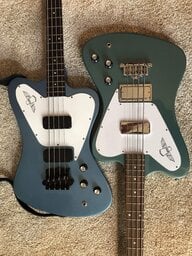

If I get it - I'm going to do a number on the body. Ever since I got my Coral Deluxe Bass with the sculpted/tapered edges - I've wanted to do that to a T-bird. The Greco has little round-over of the edges and no body-bevel - so it's a perfect candidate for major ergo sculpting. I'll also incorporate my strap-peg extension. Basically I'll Geo-ize it. Not sure what colour it'll be - it's always fun to search for the perfect colour. Or possibly gild it... hummm...

upload_2023-2-25_10-34-46.jpeg

Etched copper-leaf over black w/distressing. I sold this to Rudi "Rudolf Rock" Saum (Zwick) in Hamburg many years ago. Never saw it built up.
upload_2023-2-25_11-4-42.jpeg
upload_2023-2-25_11-4-59.jpeg

My inspiration for this finish -
upload_2023-2-25_11-17-24.jpeg
 
Just updated my original post. Yes the neck is 3 piece maple. However, both of my Grecos have the mahogany body, it apparently was an upgrade option over basswood. I suspect the majority of painted Grecos are basswood and the majority of the transparent bursts are mahogany.

Studying the pics - I'll guess that the body is basswood with a faux mahogany graining. (the pic of the back looks faux to my eyes) That would be fine by me - basswood is a good tone-wood, is light and sculpts easily. Plus I'll be refinishing it anyway.
 
The Greco rundown…
- Stock pickups are to die for! By far the best sounding, boldest, most authoritative and well balanced TBird pickup I’ve played. If you get the bass and don’t like the pickups I’d be interested in buying them from you. The pickup placements are part of the magic of this bass. The neck pup is further from the neck than a modern bird (closer to vintage spec) and the bridge pup is further from the bridge than vintage or modern spec. (Note: scale length is not 34” so a direct comparison between Gibby and Greco pup locations isn’t accurate).
- The neck is a slightly shorter scale than a standard Tbird. IIRC it’s 33-1/2” scale. The neck feels like something between a P bass and a Jazz bass in girth. The FB radius is similar to or the same as a Tbird. It’s a set neck, not neck through. I believe the neck wood is mahogany, not positive (just checked - it’s 3 piece maple) The necks are stable, I suspect the truss is dual acting. Mine both hold tune for months of sitting or playing.
- The overall weight is about a half pound more than a typical Gibson Tbird which is normally in the 8 to 9 pound range.
- The tuners are typical Gibson quality in feel and action but the chrome or black plating is vastly inferior and prone to oxidizing and blistering (possibly from being in a salt air environment in Japan???).
- Frets are good and durable, standard Gibson quality.
- Bridge is typical Gibson design three point but again inferior plating (or possibly base metal selection or salt air issues).
- Claw is the same situation as the bridge and tuners on plating.
- Body is a basic slab, no tummy or forearm cut. I believe the body wood is mahogany, not positive (just checked - both of my Grecos have the mahogany body, there was a basswood body option as well). Pickup placements are part of the magic

General impression - the Greco is an Epiphone level Tbird with nearly Lull level pickups which have been uniquely placed in this bird to maximize the forceful bold output of the humbucker design. Fair market value in my opinion for a very good condition all original Greco bird with a basic hard case is $1200. More than $1300 would be over paying and anything under $1000 is a great buy. Anything under $800 should be suspect - double check for neck issues and non original pups, either of which are a deal breaker in my book at any price.

I believe mine has a basswood body. I found this page with specs. Hopefully the link works.

[Invalid or Expired Link Removed]

The hardware on mine was in great shape. That was one reason I bought the one I did. The bridge wasn't great, but tuners and claw were totally fine. I swapped the bridge with an Epi 3 point I had and it was a perfect fit. As you can see, almost all of the finish was gone from the bridge and posts.

tg8Qogf.jpg

Just updated my original post. Yes the neck is 3 piece maple. However, both of my Grecos have the mahogany body, it apparently was an upgrade option over basswood. I suspect the majority of painted Grecos are basswood and the majority of the transparent bursts are mahogany.

Studying the pics - I'll guess that the body is basswood with a faux mahogany graining. (the pic of the back looks faux to my eyes) That would be fine by me - basswood is a good tone-wood, is light and sculpts easily. Plus I'll be refinishing it anyway.


If I had to hazard a guess vis-a-vis bodywood, my guess would be the earlier Project series basses, the single pickup versions and early two pickup ones in the late 70s and early 80s, were mahogany of some variety. The chips in my '78 show a darker wood, very similar in grain and color to my Bach when stripped, very different from the lighter wood visible in the chips on the black one posted above. The Project series was intended to be as close to the original instruments as they could be and were the top of the line for Greco. I think later into the 80s when they introduced the painted models and black hardware, they weren't part of the Project series anymore and likely changed to basswood.
 
If I had to hazard a guess vis-a-vis bodywood, my guess would be the earlier Project series basses, the single pickup versions and early two pickup ones in the late 70s and early 80s, were mahogany of some variety. The chips in my '78 show a darker wood, very similar in grain and color to my Bach when stripped, very different from the lighter wood visible in the chips on the black one posted above. The Project series was intended to be as close to the original instruments as they could be and were the top of the line for Greco. I think later into the 80s when they introduced the painted models and black hardware, they weren't part of the Project series anymore and likely changed to basswood.

This one is from 1990 -
 
  • Like
Reactions: Engle and MCF
Studying the pics - I'll guess that the body is basswood with a faux mahogany graining. (the pic of the back looks faux to my eyes) That would be fine by me - basswood is a good tone-wood, is light and sculpts easily. Plus I'll be refinishing it anyway.
According to the Greco flyer posted by Noc the Black and White models were TB-70 basses and had basswood bodies. The Stained model was a TB-75 and had a mahogany body and carried a slightly higher price tag. I looked closely at the eBay pics for the bass in question and I’d say the front absolutely looks like mahogany both above the stain and under the stain where the finish is chipped. But oddly enough the back of the bass looks more like a faux mahogany grain above the stain and basswood below the stain where it’s chipped. I don’t think they ever did a laminate top on the Greco Tbirds, so I’m gonna go with solid mahogany body. Not as easy to rework as basswood but certainly not a difficult wood to work with, besides it’s more durable and holds a thread better and usually takes a stain better as well.
 
@Chucky Stiletti , can you comment on this? If I recall correctly you knew your Ashdown cabs.
you referring to the Italian made Sica drivers?…..myself, never experienced an Ashdown speaker problem but I can shoot Mark or Guy a note inquiring……
my issue with them is the lack of output DC protection ….
 
According to the Greco flyer posted by Noc the Black and White models were TB-70 basses and had basswood bodies. The Stained model was a TB-75 and had a mahogany body and carried a slightly higher price tag. I looked closely at the eBay pics for the bass in question and I’d say the front absolutely looks like mahogany both above the stain and under the stain where the finish is chipped. But oddly enough the back of the bass looks more like a faux mahogany grain above the stain and basswood below the stain where it’s chipped. I don’t think they ever did a laminate top on the Greco Tbirds, so I’m gonna go with solid mahogany body. Not as easy to rework as basswood but certainly not a difficult wood to work with, besides it’s more durable and holds a thread better and usually takes a stain better as well.

I thought the same thing - front looks mahogany and the back looks faux. That does throw in a wrench, like who did that and why? And what else did they do?
 
Finally got round to taking some pics of my Tbird. Nothing fancy, just a 2011 but I changed out the pickups to Thunderbuckers, chrome Hipshot bridge and ultralite mini cloverleaf tuners, and Montreaux Gold Reflector knobs. Haven't put the pickup cover on it yet, but I will.

Thunderbird.jpg
 
Finally got round to taking some pics of my Tbird. Nothing fancy, just a 2011 but I changed out the pickups to Thunderbuckers, chrome Hipshot bridge and ultralite mini cloverleaf tuners, and Montreaux Gold Reflector knobs. Haven't put the pickup cover on it yet, but I will.

View attachment 4981003
You sure fit right in with us here. I have lost track of how many of us have modified our Thunderbirds like that. Chrome is good.
 
Finally got round to taking some pics of my Tbird. Nothing fancy, just a 2011 but I changed out the pickups to Thunderbuckers, chrome Hipshot bridge and ultralite mini cloverleaf tuners, and Montreaux Gold Reflector knobs. Haven't put the pickup cover on it yet, but I will.

View attachment 4981003
Beautiful!
 
That was my favorite color for Camaros. But muscle cars in general often came in vivid colors, which I love. I hate the tendency of cars to be grayscale, although if we moved back to the desert, white would tempt me.
My wife's car is red. My Camaro is yellow. The van is white because it is a van. At least for now. We don't do beige and we don't do road kill gray. Our house is all different colors inside and out. I usually wear mostly black so as to avoid clashing.
 

Latest posts