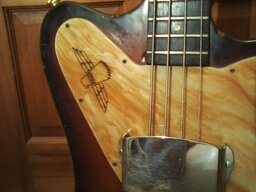
It makes sense that the thickness and type of finish affects the vibration of an acoustic instrument top. (From what I've read the sealer type/thickness actually makes more difference than the top coat).Yes, using the definition of 'breathing' as something 'living' - you are correct, but it's somewhat true if talking about acoustic instruments. 'Somewhat' because "breathe" is used in a specific way. More 'to move' with humidity and temperature changes - so loosely "breathing". (wood expanding/contracting) But if it has a thick finish the constricts movement/"breathing" - it will sound less "alive". At least that's how I have always interpreted it. The exaggerated use of 'breathing' is if talking about solid-bodied instruments. Necks will move due to temperature/humidity etc, but a solid wood body... ah..,no.
I believe the effects of temperature and humidity have more to do with the geometry of the guitar changing: it's going to sound different if the neck moves.
But to say that a nitro finish on a bass guitar lets the wood breathe and is thereby superior...