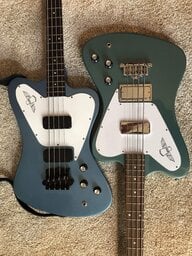
I’d pretty much agree with your tonal pecking order (might swap pu positions with electronics but that could honestly go either way).
I’d also throw strings (type and brand) in there as well. Maybe right between pickups and electronics. Then at the tail end add neck woods, body woods, hardware (nut, bridge, tuners), construction method (bolt on set or thru neck) and finish in that order.
And don’t forget that all assumes you don’t have any variability in amps or cabs or cables which we all know play a huge part in the sound of your bass.
Then there’s the aspect of different players and their playing styles.
And all that’s before we even consider venue acoustics and interactions with other band instruments and background noise.
Oh and don’t forget the impossible to predict issues of listener hearing quality and any conformation or other bias they might have hardwired in their brain that tells them how your tone sounds or in Wills case, what color it is.
It’s no wonder tone chasing frequently ends up being an expensive rabbit hole to run down.
My advice (as a quintessential tone chaser who build basses to achieve specific tones) play what ya got, make it sound as good as you can using your style of playing and the gear you have and in the venue you’re in. That’s gonna get you 80% there, that last 20% has financially drastically diminishing returns and largely won’t even be noticed by an audience in a typical rock, pop, or country band setting, especially if you rely on a sound man or recording engineer.
If you choose to chase down that last 20% I’d start with strings, probably the biggest bang for the buck, and once you find the right strings you’ll probably not even need to address the other tone tweak issues.


reverb.com


 There are far worse ways to go.