
Correct. The Toyota Tarago people mover (you prob know it under a different name - Previa?) would be mid engined.The engine doesn’t have to be behind the driver to qualify as mid engine...

TalkBass has been independent since 1998. Add your voice.
Create a free account to reply to discussions, view embedded media, and browse with fewer display ads.
Join free Log in
Want zero display ads or expanded classifieds tools? Compare plans.
Correct. The Toyota Tarago people mover (you prob know it under a different name - Previa?) would be mid engined.The engine doesn’t have to be behind the driver to qualify as mid engine...
“Horse and rider as one” credoI know, but it’s still pretty far forward. Or was on my 2001. But they did a whole lotta good engineering to make it work.

I had an 89 for years......that short wheelbase makes things easier...the little 1.6/8 liter motor was exceptionally lightweight as well..loved that little car..I know, but it’s still pretty far forward. Or was on my 2001. But they did a whole lotta good engineering to make it work.

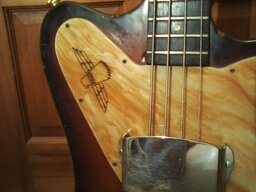
Interesting. Why going back to black hardware?this is getting a clear guard tomorrow and going back to the black hardware, stock pups and Hipshot bridge got some neat silver Bird stickers from Larry V....no routing on this NR....
View attachment 3901346

Yeah, and mounting it the old way for real wheel drive helped the weight distribution. I want another, but looking for another deal on a used one. New are too spendy for me.I had an 89 for years......that short wheelbase makes things easier...the little 1.6/8 liter motor was exceptionally lightweight as well..loved that little car..
And ironically, most of them have black interiors. IN CENTRAL TEXAS. No, thanks.Yeah, and mounting it the old way for real wheel drive helped the weight distribution. I want another, but looking for another deal on a used one. New are too spendy for me.
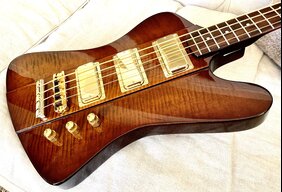
Proof that size does matter?it may be a Gibson copyright issue? As cool and close the BaCHs are to the 60’s NRs (definitely closer than the 12/13 RI) when compared side be side to a Gibby they are WAY off..bigger and heavier with similar proportional differences to those observed between that 64 and VP..

Yeah, and mounting it the old way for real wheel drive helped the weight distribution. I want another, but looking for another deal on a used one. New are too spendy for me.
Does look sweet, very Ferrari. Haven't driven one yet but hope to get out on the track with one this year. The corvette really has come a long way over the years, this one looks especially promising.looks like Chevy got it right, 2020 Corvette with mid engine configuration...first time in person..
View attachment 3901383
As a rule of thumb a "mid" engine offers optimal balance front to rear with 50/50 weight distribution and very neutral handling. The 1968 Stingray when it came out wasn't quite but was approaching a front mid engine (driver seating was actually near the rear axle). A mid engine isn't a prerequisite for good handling, a modern rear engine 911 will out handle most mid engine rivals but that's only after decades of engineering refinement and a whole lot of money in purchase price. The early rear engine 911's (930 is a prime example) were seriously wicked beasts to drive at the limit. They earned the nickname widow maker for a reason.So is mid-engine considered the best design?
Most of my basses are 2mm or a hair less at the 12th fret on an open E string, but have zero clank or fret buzz the full length of the neck even if I really dig in. I have a couple of basses that I've been able to get down to 1mm but that low just doesn't leave much if any room for neck movement or heavy playing without clank and buzz, as I think you've noticed on yours. Some people like the clank or buzz, I normally try to avoid it, just a personal preference thing.Does anyone else set up his/her Bird for lots of clank? John Entwistle style. Mine is set up very low like all my basses (~1mm action). It gives a lovely clank, but the first fret sometimes frets out depending on the weather (the rosewood absorbs moisture and expands on a rainy day).
I'd like to achieve an even clank across the fretboard. Like John Entwistle said, "I want my frets to buzz evenly". My Bird has a mostly uniform "clank" from the 2nd fret up, but tends to choke up (fret out) at the 1st fret (i.e. when I'm pressing the 1st position). Of course I can raise the action so it doesn't buzz anymore, maybe I just need to find the balance.Most of my basses are 2mm or a hair less at the 12th fret on an open E string, but have zero clank or fret buzz the full length of the neck even if I really dig in. I have a couple of basses that I've been able to get down to 1mm but that low just doesn't leave much if any room for neck movement or heavy playing without clank and buzz, as I think you've noticed on yours. Some people like the clank or buzz, I normally try to avoid it, just a personal preference thing.

Two options. Nudge the truss rod looser 1/8th turn or less. Don't play F, Bb, Eb, G#.I'd like to achieve an even clank across the fretboard. Like John Entwistle said, "I want my frets to buzz evenly". My Bird has a mostly uniform "clank" from the 2nd fret up, but tends to choke up (fret out) at the 1st fret (i.e. when I'm pressing the 1st position). Of course I can raise the action so it doesn't buzz anymore, maybe I just need to find the balance.
I slightly increased both the action and the relief. Now it plays wonderfully clean, and I can still pick near the neck for clank.Two options. Nudge the truss rod looser 1/8th turn or less. Don't play F, Bb, Eb, G#.

yeah, going today!!....Does look sweet, very Ferrari. Haven't driven one yet but hope to get out on the track with one this year. The corvette really has come a long way over the years, this one looks especially promising.
As a rule of thumb a "mid" engine offers optimal balance front to rear with 50/50 weight distribution and very neutral handling. The 1968 Stingray when it came out wasn't quite but was approaching a front mid engine (driver seating was actually near the rear axle). A mid engine isn't a prerequisite for good handling, a modern rear engine 911 will out handle most mid engine rivals but that's only after decades of engineering refinement and a whole lot of money in purchase price. The early rear engine 911's (930 is a prime example) were seriously wicked beasts to drive at the limit. They earned the nickname widow maker for a reason.
So yes, 50/50 weight distribution is optimal. Anything more or less than that can be compensated for with enough dollars and engineering time thrown at it.
Most of my basses are 2mm or a hair less at the 12th fret on an open E string, but have zero clank or fret buzz the full length of the neck even if I really dig in. I have a couple of basses that I've been able to get down to 1mm but that low just doesn't leave much if any room for neck movement or heavy playing without clank and buzz, as I think you've noticed on yours. Some people like the clank or buzz, I normally try to avoid it, just a personal preference thing.

I think they pushed out the neck to provide better access to the higher register.I would like to know/hear Epi's thinking about this - their marketing philosophy. Because if I were commissioned to make an authentic '63-'65 T-bird it would be to exact measured specs off of mine. You may be correct that they made it bigger so it wouldn't be passed off as a legit early '60s bird, but I would like to hear them say that to make sense of it. G&L did a bang-on RI of their early L-1000/L-2000 series basses from the early '80's and I very much doubt they are BIGGER than the originals.
Sounds like you got it working, but are the nut slots too low?I slightly increased both the action and the relief. Now it plays wonderfully clean, and I can still pick near the neck for clank.

Runnin' outta mahogany?The lower 'bout on both the Classic and Vintage pro is cut very differently from the original's shape.
wanna revisit the stock pups with LaBella tapes...Interesting. Why going back to black hardware?


