Peregrines. Merlins were needed for Spits, Hurris, Lancs, Halifaxes, Mosqitoes, etc.always loved that frame….don’t believe it used Merlins……looks fast….same tail as the Meteor?..

TalkBass has been independent since 1998. Add your voice.
Create a free account to reply to discussions, view embedded media, and browse with fewer display ads.
Join free Log in
Want zero display ads or expanded classifieds tools? Compare plans.
Peregrines. Merlins were needed for Spits, Hurris, Lancs, Halifaxes, Mosqitoes, etc.always loved that frame….don’t believe it used Merlins……looks fast….same tail as the Meteor?..

thanks M, pretty song and a great arrangement….With your regular singer? He ought to sound great on that.


no major difference in sustain or intonation (the latter surprised me), gigged it last night with mixed feelings….something didn’t seem right, the feel of the boomers was excellent but i could not seem to get the bottom previously available from the Greco (RS66?)/Ashdown combo, the growl and bark were there but seemed a bit thin for my taste….I’ll allow for the set to mellow a little (as suggested by dagrev) and see……for all you know it could have been crappy line voltage? new moon? claw? me? who knows….Finally, I can sleep at night!That unused claw had my OCD in overdrive. But the real question is, do you notice any difference in sustain or intonation.


Yes, thank you. I stand corrected."Heather Poly"

I haven’t done it, but I like the concept.Number 1, excited at the possibility of a proper 'Bird from Gibson. If it's a Reverse, I'll probably refrain from getting one given how great the Epi is. If they revamp the NR to me more vintage accurate, I am IN.
However, in more pressing news, I've been playing my Greco 4001s just about non-stop the last month, tracked our whole next album with it (barring one song on 8 and dub'd parts on the Epi). I've been moving in this direction for a while, but the 4001s really let me dive into stereo set-ups. Last gig I ran the bridge pickup straight into the Sunn, and the neck through a Wah and overdrive, and it was about the biggest, gnarliest sound I've managed. The way this 4001s is rigged has a push/pull pot to switch the mono output to stereo, and I want to rig that same sort of set-up into my Epiphone. Vol/Vol/Tone, with a push/pul on one of the pots to run with a TRS. I would think one pickup would have the tone knob and then the other would have to run direct from volume to output. Anyone done this before?
Handy, but I'm not sure sure pedals that do everything do everything well.playing around with this thing now….not convinced yet….although more of a hassle, give me analog any day…
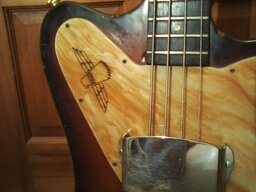
View attachment 4430161
Odd about lack of bottom. Boomers are known for plenty of that. But it just may not be a good match. For me, some basses sound better with some strings and definitely not with others. I find that true when changing rigs, different strings are often needed. But don't sweat it at all if they don't work. Life is too short for bad tone!no major difference in sustain or intonation (the latter surprised me), gigged it last night with mixed feelings….something didn’t seem right, the feel of the boomers was excellent but i could not seem to get the bottom previously available from the Greco (RS66?)/Ashdown combo, the growl and bark were there but seemed a bit thin for my taste….I’ll allow for the set to mellow a little (as suggested by dagrev) and see……for all you know it could have been crappy line voltage? new moon? claw? me? who knows….

Try some pink nail polish - that'll make it work better...playing around with this thing now….not convinced yet….although more of a hassle, give me analog any day…
View attachment 4430161


I like your style! Leap right in and enable.Also if anyone is looking for the new non-reverse, GC has about 10-15 left in stock and then the next shipment is allegedly “March 2022 ?”

Ok now I can officially apply for membership in the club..
also have a fano with Lollar t-bird pickups
I read about that the other day. He is very lucky - few live to tell the story of a ruptured aortic aneurism.
There is also someone else here who has high regard for one as well.