• TalkBass has been independent since 1998. Add your voice.
    Create a free account to reply to discussions, view embedded media, and browse with fewer display ads.
    Join freeLog in
    Want zero display ads or expanded classifieds tools? Compare plans.

Totally transparent combo bass amp?

@Wasnex
Do you recall the knob position for flat response based on the curves from post #66?
Not that it changes anything but curious to know.

Pretty sure the knobs were at noon. Here's the original post the preamp plot was pulled from. You can interpret the wording yourself. Confused: The Ampeg SVT sound and the low-mids thing
You could also ask @Mark Reccord as I believe he still logs on fairly regularly.

There was also an old magazine article the involved detailed measurements of an old SVT that showed similar frequency response plots. I can't find the article anymore, but I believe the optimum flat plot was with the controls close to 12:00 but not exactly at 12:00. I would expect flat to vary a bit from amp to amp due to manufacturing tolerances.
 
  • Like
Reactions: tombowlus and Jim C
I haven't done the search, but seem to recall someone posting something that compared recordings and perhaps frequency plots of the Tech 21 VT Bass (when it first came out) with an actual SVT. Pulling that string with an effects forum search might yield something.

I also recall a lot of frequency plots being posted on the Tech 21 BDDI (all versions) which is supposed to have some classic Ampeg voicing settings recommendations. They probbaly aren't accaurate for just the head because the Tech 21 Sansamp stuff includes cabinet simulation...and when defeated (at least on the VT Bass V2) there is an LPF with a 6dB/ocatve slope that engages that I susepct is not precisely Ampeg amp voicing.
 
[QUOTE="I would expect flat to vary a bit from amp to amp due to manufacturing tolerances.[/QUOTE]
Agreed
I would also think (although don't have concrete proof) that the aging of components would change their values as well as knob position from amp to amp from flat response.
 
  • Like
Reactions: Wasnex
@Wasnex
Do you recall the knob position for flat response based on the curves from post #66?
Not that it changes anything but curious to know.

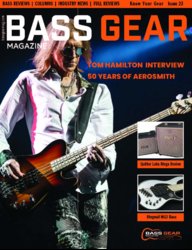
We did a vintage gear review of my '73/'74 SVT back in Bass Gear Magazine issue #5. Our measurements were not as ruler flat as seen above, but our scale was adjusted to show more detail. In our tests, the "optimally flat" knob settings (on Channel One) were with the Treble set about at noon, Midrange set about 10 o'clock, and Bass set between 11 o'clock and noon. Ultra Hi, Ultra Lo were both set to "0," and the midrange frequency was set to 220Hz.
 
  • Like
Reactions: DrMole and Al Kraft
We did a vintage gear review of my '73/'74 SVT back in Bass Gear Magazine issue #5. Our measurements were not as ruler flat as seen above, but our scale was adjusted to show more detail. In our tests, the "optimally flat" knob settings (on Channel One) were with the Treble set about at noon, Midrange set about 10 o'clock, and Bass set between 11 o'clock and noon. Ultra Hi, Ultra Lo were both set to "0," and the midrange frequency was set to 220Hz.
Out of curiosity, for those who have a lot of time with the SVT, how do those settings compare to what you use as your "preferred voicing home base" setting?
 
Love working from home. Bass and mids might go as high as 2:00 for a particular room and treble up or down a touch for string type. This setting was with the GB 2x12.
IMG_1785.jpg
 
  • Like
Reactions: Al Kraft
Out of curiosity, for those who have a lot of time with the SVT, how do those settings compare to what you use as your "preferred voicing home base" setting?

Here are the pages from the technical review of that '74 SVT (which I own):

Ampeg%20SVT%20Test_Page_1_zpsrhnfwtpe.png


Ampeg%20SVT%20Test_Page_2_zpsjpjkixiu.png


Ampeg%20SVT%20Test_Page_3_zpsdgujprtr.png


Ampeg%20SVT%20Test_Page_4_zpscmy6gz5z.png


Ampeg%20SVT%20Test_Page_5_zpsv2ixucmo.png


As you can see, the former owner (Phil Maneri, actually) had marked in red where he normally set the knobs, and it looked like he really liked the Bass, LOL! Of course, he was playing it through an SVT-810, so there is the natural low end roll-off he was apparently fighting.
 
I should clarify: I'm not interested necessarily in purchasing such an amp (if one even existed). I was hoping to get a very heady interesting philosophical discussion going, and it seems that that's exactly what I have achieved with my posts. :) Thanks to all who have posted! Still reading and learning here.
Then why did you specify combo amp in the thread title?

Based on your this post, seems to me the thread title needs to be updated.
 
  • Like
Reactions: fretlessman71
The knobs at noon is not very flat. That's one of the benefits (IMO) of that amp though... it's native voicing.

This isn't my experience with them assuming the ultra filters are out.

@Wasnex
Do you recall the knob position for flat response based on the curves from post #66?
Not that it changes anything but curious to know.

Sorry for the laggy uptake on this, since the whole C-19 thing happened I'm actually busier than ever, trying to juggle working and the kids being home all day. The plots I did for my amp were with all EQ knobs at noon and filters out unless noted. The plots are on a 10dB/division scale. In terms of frequency response, it's almost dead flat. There's a slight (maybe 1dB) low end boost centered around 110Hz but that could well be a pot tolerance vs. silk screen anomaly. And the argument I was making in that thread and the one before it was that in terms of pure frequency response, SVTs do indeed have a flat response with the EQ neutral and the ultra filters out. I've seen the same from 3 or 4 CLs that I've serviced over the years. I compared my plot's with BGMs and even accounting for differences in vertical scale, the responses they got are much more extreme than mine were. I'm not sure what accounts for the delta between Tom's '74 and my '78 but based on the preamp's design, I think mine is probably working closer to the design spec.

I actually have built a preamp that is very similar to the SVT's and have it on my bench right now. The James tone stack is dead flat when the low and high knobs are in their neutral positions (which is about 90:10 resistance ratio on a log taper pot). The midrange circuit is the same except it uses a linear pot. The circuit simulates flat and measures that way. Not even close to a 4dB boost or cut anywhere. If I replicate BGM's optimally flat EQ settings on either my SVT or my diy preamp I get a very bass-shy response. I can probably grab a capture of that later on.

For me, I normally run the amp with the ultra lo out, bass boosted a bit (1:00-2:00), treble flat and occasionally some mid boost at 800Hz (middle position) into an NV610. Sometimes I turn the ultra hi on and roll the treble EQ knob back a bit. The centre frequency of the treble control is a bit low for my liking, so if I feel like I need a treble boost, that's how I get it. In my own design I set the treble control a littler higher and there's a bright switch, which isn't the same as the ultra-hi. It boosts treble when the gain knob is at lower settings and gradually boosts less as you increase the gain.
 
If you do ear candles and then allow yourself 24 hours to adjust and play your bass unplugged it's pretty transparent. You can use a cable if it helps set the mood. Or you spend a couple hours wanging with Electroharmonix micro synth and when you hit the bypass everything will seem transparent.
 
  • Like
Reactions: fretlessman71
This isn't my experience with them assuming the ultra filters are out.

The plots I did for my amp were with all EQ knobs at noon and filters out unless noted. The plots are on a 10dB/division scale. In terms of frequency response, it's almost dead flat. There's a slight (maybe 1dB) low end boost centered around 110Hz but that could well be a pot tolerance vs. silk screen anomaly. And the argument I was making in that thread and the one before it was that in terms of pure frequency response, SVTs do indeed have a flat response with the EQ neutral and the ultra filters out. I've seen the same from 3 or 4 CLs that I've serviced over the years. I compared my plot's with BGMs and even accounting for differences in vertical scale, the responses they got are much more extreme than mine were. I'm not sure what accounts for the delta between Tom's '74 and my '78 but based on the preamp's design, I think mine is probably working closer to the design spec.

For me, I normally run the amp with the ultra lo out, bass boosted a bit (1:00-2:00), treble flat and occasionally some mid boost at 800Hz (middle position) into an NV610. Sometimes I turn the ultra hi on and roll the treble EQ knob back a bit. The centre frequency of the treble control is a bit low for my liking, so if I feel like I need a treble boost, that's how I get it. In my own design I set the treble control a littler higher and there's a bright switch, which isn't the same as the ultra-hi. It boosts treble when the gain knob is at lower settings and gradually boosts less as you increase the gain.

Thanks for this Mark.
It sounds like you and I both use virtually the same EQ.
My set up is normally passive, stock, Fender basses and the Berg and GB cabinets mentioned above.
I've never liked the ultra hi/low switches.
I've read the treble center freq. is 4K which is probably a good choice for an 8x10, but agreed that it is a little low for a modern hi-fi cabinet design like a Berg that uses a well design crossover and quality horn/ tweeter.
 
  • Like
Reactions: fretlessman71
Out of curiosity, for those who have a lot of time with the SVT, how do those settings compare to what you use as your "preferred voicing home base" setting?

My settings vary with the speakers I am using, room acoustics, and how I perceive sound at a given time. I last used my Blueline with a pair of Genz Benz 1288Ts for basement playing. The controls are set with Treble 11:00, Mids 2:00, Bass 11:30. I tend to like a fairly bright and mid forward sound.

I would say the approximate range I use is Treble 11-1, Mids 2-3, Bass 9:30-2. It would be unusual for me to run the bass above about 11:00 in a live setting. I use the normal input on channel I. Ultra High is off, Mid is set to 800hz, Ultra Lo is off
 
The combos I've used have had mid-scooped preamps tied to mid-forward speakers. I have been quite successful at getting them closer to FRFR by bypassing the speaker and feeding the amp output into an FRFR speaker. Then learning how to EQ the amp to dial out the baked-in mid scoop.

It has never been perfect, but I've gotten close enough that I could listen to full range music through the system and it sounded very good.

Bass played through that system was very pillowy, lots of lows, not much definition. I fixed that by tweaking EQ on the amp and ended up with the best sounding practice amp I've ever used.

But with the low efficiency speaker it would not work when used in a band.

NAD - Top notch practice rig - Pics

The commercial alternative is probably the Acme speakers driven from the output of the combo amp.
 
  • Like
Reactions: fretlessman71
Here are the pages from the technical review of that '74 SVT (which I own):

View attachment 3854513

View attachment 3854514

View attachment 3854515

View attachment 3854516

View attachment 3854517

As you can see, the former owner (Phil Maneri, actually) had marked in red where he normally set the knobs, and it looked like he really liked the Bass, LOL! Of course, he was playing it through an SVT-810, so there is the natural low end roll-off he was apparently fighting.

The Tom Lees article is the one I was talking about :thumbsup:. Any chance you could post higher resolution images so it's a bit more readable? Understandable if the answer is no due to fair use policy.

I think @Mark Reccord 's frequency response plots look flatter than they are because of the 10dB per subdivision setting used to take the measurement. However, if you look at the Figure F. in the Tom Lee article rather than the optimally flat, one of the traces seems to indicate fairly flat response...When I reviewed this article previously, I found some of the traces a bit confounding.

Over 300W at 4% THD. Your amp is making really good power :woot:.
 
  • Like
Reactions: fretlessman71
The Tom Lees article is the one I was talking about :thumbsup:. Any chance you could post higher resolution images so it's a bit more readable? Understandable if the answer is no due to fair use policy.

I think @Mark Reccord 's frequency response plots look flatter than they are because of the 10dB per subdivision setting used to take the measurement. However, if you look at the Figure F. in the Tom Lee article rather than the optimally flat, one of the traces seems to indicate fairly flat response...When I reviewed this article previously, I found some of the traces a bit confounding.

Over 300W at 4% THD. Your amp is making really good power :woot:.

I will see what I can come up with. I may have some files saved on a backup hard drive somewhere, or I should be able to get the files from our current webmaster. We are slowly adding more of our back issues to the new website, but this it time consuming, and we are going in order from newest to oldest, so it may be a while before we get to issue #5. I will see what I can do, though.

Thanks, Tom.
 
Here are the pages from the technical review of that '74 SVT (which I own):

As you can see, the former owner (Phil Maneri, actually) had marked in red where he normally set the knobs, and it looked like he really liked the Bass, LOL! Of course, he was playing it through an SVT-810, so there is the natural low end roll-off he was apparently fighting.

Oh, wow, these are interesting graphs.

Would love to see them in a higher resolution too!
 
  • Like
Reactions: fretlessman71
Then why did you specify combo amp in the thread title?

Based on your this post, seems to me the thread title needs to be updated.

Because if there WAS a universally-agreed-upon transparent combo amp, it would be interesting to know what it was, and then to do some research as to why it was made the way it was. It would also be interesting to play through and listen to the sound of a bass with no other "tonal influence". But it would always be a means to an end; I'd say, "Okay this sounds nice, but I am missing X, Y, and Z; I need to find an amp with THESE qualities".
 

Latest posts