My Trib Fallout is ~9 lbs. i used to own a G&L Tribute Jazz which was 9.8 lbs and a Fender American Perform P-Bass which was 8.8 lbs by comparison. for a short-scale it definitely has some heft to it.~
Lotsa posts, comments on possible neck dive, but nobody has put theirs on a digital scale, and posted the weight [unless I read too quickly].
Please, if someone or three would do that....
Thanks.
~

Enjoy the benefits of a premium membership!
Upgrade Account
-
TalkBass has been independent since 1998. Add your voice.
Create a free account to reply to discussions, view embedded media, and browse with fewer display ads.
Join free Log in
Want zero display ads or expanded classifieds tools? Compare plans.
You are using an out of date browser. It may not display this or other websites correctly.
You should upgrade or use an alternative browser.
You should upgrade or use an alternative browser.
Tribute G&L Fallout Bass
- Thread starter Dr. Cheese
- Start date
More options
Who Replied?

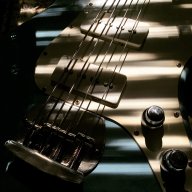
Yeah it ain't light, but compared to the 2500 hanging next to it, it's positively featherweightMy Trib Fallout is ~9 lbs. i used to own a G&L Tribute Jazz which was 9.8 lbs and a Fender American Perform P-Bass which was 8.8 lbs by comparison. for a short-scale it definitely has some heft to it.

I'd been tracking them on Sweetwater for awhile, and was also amazed at how much they weighed on average.
While I was looking to get a red one, SW's last batch of green ones included an example that was listed at 8lbs
8oz.....about the lightest I'd ever seen anyway, so I grabbed it. Briefly, I was quite impressed with the build
quality and feel of the bass. SW's listed weight was spot-on; 8lbs 8.4oz on my postal scale.
I was not surprised to find that the bass was slightly neck-heavy, but I had Hipshots in mind anyway. Once
the Ultralights were in place (easy install), the bass then sat on my scale at 8lbs 3.2oz. The original tuners
were good quality and worked smoothly, but definitely beefy. The bass hangs nicely on a strap now, but I do
have best results using a Levi's leather bass strap with suede backing.
While I was looking to get a red one, SW's last batch of green ones included an example that was listed at 8lbs
8oz.....about the lightest I'd ever seen anyway, so I grabbed it. Briefly, I was quite impressed with the build
quality and feel of the bass. SW's listed weight was spot-on; 8lbs 8.4oz on my postal scale.
I was not surprised to find that the bass was slightly neck-heavy, but I had Hipshots in mind anyway. Once
the Ultralights were in place (easy install), the bass then sat on my scale at 8lbs 3.2oz. The original tuners
were good quality and worked smoothly, but definitely beefy. The bass hangs nicely on a strap now, but I do
have best results using a Levi's leather bass strap with suede backing.

No neck dive on mine. I do use a leather strap with a fair amount of friction on the shoulder pad. Out-of-box tuners hold very well once the strings are stretched and tight.
Just got one of these basses, I have figured out that the switch in the down position is the OMG mode by the big output boost, can anyone tell me what the other 2 positions are? I know it is single coil and parallel but not sure which switch position is doing which of these
I'm pretty sure the middle position is parallel. I don't have any documentation for that; I'm just judging because of the way it sounds in that position.
@LowEndLobster did a review on this bass some time back, he probably mentioned it there. You might want to go to his YouTube channel and see if you can find it.
@LowEndLobster did a review on this bass some time back, he probably mentioned it there. You might want to go to his YouTube channel and see if you can find it.
Last edited:
Thanks, to me through my modest practice setup the middle setting sounds more bitey, the down position is definitely Omg mode due to the high output.I'm pretty sure the middle position is parallel. I don't have any documentation for that; I'm just judging because of the way it sounds in that position.
@LowEndLobster did a review on this bass some time back, he probably mentioned it there. You might want to go to his YouTube channel and see if you can find it.
Am I right in thinking parallel mode is like having 2 single coils on at the same time(like running both pickups on full on a jazz bass just worry different spacing between the 2 pickups)?
Parallel and series are both like having two single coils on at the same time, but the wiring is different, and the name refers to the wiring. Series is higher impedance / resistance and therefore voltage output, and subsequently louder to the listener. Parallel is lower impedance / resistance and therefore lower voltage output. Some would say that parallel sounds "cleaner". Though I don't remember enough of my electronics from 50+ years ago to remember what effect impedance has on frequency range; I suspect maybe that it's "flatter". I don't know what they do to get the OMG mode; I've never opened up the control cavity to find out. Maybe it has something to do with the capacitor wiring, so that the frequencies that are bled to ground get modified.
There are people here who know a whole lot more about it than I do; hopefully one or more of them will come across this thread and explain it better (and correct my errors). Enjoy your new bass!!
There are people here who know a whole lot more about it than I do; hopefully one or more of them will come across this thread and explain it better (and correct my errors). Enjoy your new bass!!
Thanks, one thing I noticed, I was touching the pole pieces with a screwdriver earlier to try and figure out which mode was parallel and which was single coil, I figured that in single coil mode I would only get sound tapping one set of the pole pieces but strangely with all 3 modes tapping the pole pieces with a screwdriver I got a noise from both sets of pole pieces.Parallel and series are both like having two single coils on at the same time, but the wiring is different, and the name refers to the wiring. Series is higher impedance / resistance and therefore voltage output, and subsequently louder to the listener. Parallel is lower impedance / resistance and therefore lower voltage output. Some would say that parallel sounds "cleaner". Though I don't remember enough of my electronics from 50+ years ago to remember what effect impedance has on frequency range; I suspect maybe that it's "flatter". I don't know what they do to get the OMG mode; I've never opened up the control cavity to find out. Maybe it has something to do with the capacitor wiring, so that the frequencies that are bled to ground get modified.
There are people here who know a whole lot more about it than I do; hopefully one or more of them will come across this thread and explain it better (and correct my errors). Enjoy your new bass!!
Each mode sounded different so it seems to be switching between the modes ok but I thought it was odd.
I'm a little stumped about the Omg mode, some sources I have read say that it is series with a treble cut and some say it is single coil mode with a treble cut, does anyone know for certain?
This makes sense and also tells you that OMG mode is not single-coil....but strangely with all 3 modes tapping the pole pieces with a screwdriver I got a noise from both sets of pole pieces....

If it had a back plate for cavity access I'd open it and take a look, but I'm not about to remove the entire front pickguard just to satisfy my curiosity.

I never use OMG mode, anyway, it's just more drive than I want my amp to sound like.
Last edited:
Yeah what was strange though is that when tapping with the screwdriver I got noise from both sets of pole pieces in all modes including the single coil mode,This makes sense and also tells you that OMG mode is not single-coil.
If it had a back plate for cavity access I'd open it and take a look, but I'm not about to remove the entire front pickguard just to satisfy my curiosity.
all modes sounded different from each other though so they seem to be working
~
Bring a source of hum near the bass, and you can narrow down which position is single coil.
Parallel and series [OMG] mode should each have both coils on, and be humbucking.
Parallel will sound brighter but less loud than series, even with no other tone-shaping parts added.
Single should sound more like parallel than it does like series.
All of these observations should hold true just as much so here as they would have with the earliest DiMarzio guitar humbuckers introduced back during the 1970s, along with mini-toggle switches.
~
Bring a source of hum near the bass, and you can narrow down which position is single coil.
Parallel and series [OMG] mode should each have both coils on, and be humbucking.
Parallel will sound brighter but less loud than series, even with no other tone-shaping parts added.
Single should sound more like parallel than it does like series.
All of these observations should hold true just as much so here as they would have with the earliest DiMarzio guitar humbuckers introduced back during the 1970s, along with mini-toggle switches.
~

Mine weighs 8 lbs. 4.7 oz. I have hipshot ultra lites though.~
Lotsa posts, comments on possible neck dive, but nobody has put theirs on a digital scale, and posted the weight [unless I read too quickly].
Please, if someone or three would do that....
Thanks.
~
Do we know for sure that one of the positions IS single coil? One position could be coil-tap to get three output variations: series, parallel and series coil-tap. If there's no hum in any switch position then none of the positions is single coil.
Have just looked it up on the G and L website and it says parallel/split/OMG modes so from that it sounds like one of the modes is in fact split coil like a P bass and not single coilDo we know for sure that one of the positions IS single coil? One position could be coil-tap to get three output variations: series, parallel and series coil-tap. If there's no hum in any switch position then none of the positions is single coil.
I used a multimeter to measure resistance for switch position with controls at 100%, and at a 20K ohms meter scale:
1) switch UP = 8.4
2) switch MID = 4.4
3) switch DOWN = 2.2
For those readings to make any sense, resistance wiring-wise, up would have to be series, mid would have to be single, and down would have to be parallel. However, that doesn't correlate wrt the sound output, so I think they must be also doing something with tap and/or capacitance. I usually run mine on the middle switch position and I've never noticed any hum.
1) switch UP = 8.4
2) switch MID = 4.4
3) switch DOWN = 2.2
For those readings to make any sense, resistance wiring-wise, up would have to be series, mid would have to be single, and down would have to be parallel. However, that doesn't correlate wrt the sound output, so I think they must be also doing something with tap and/or capacitance. I usually run mine on the middle switch position and I've never noticed any hum.
Interesting, if the switch is as G and L then I think it is Up Parallel, Mid Split coil, Down Series/Omg or at least that is how it sounds to my novice ears , the Middle position certainly has that midrange grind that I associate with a split coil and the Up position has that dip in the mids that associate with a single coilI used a multimeter to measure resistance for switch position with controls at 100%, and at a 20K ohms meter scale:
1) switch UP = 8.4
2) switch MID = 4.4
3) switch DOWN = 2.2
For those readings to make any sense, resistance wiring-wise, up would have to be series, mid would have to be single, and down would have to be parallel. However, that doesn't correlate wrt the sound output, so I think they must be also doing something with tap and/or capacitance. I usually run mine on the middle switch position and I've never noticed any hum.
Ya, it's curious ... the sounds it's putting out don't correlate with the measured output resistance. IF each coil is 4.4, and series resistance adds: ie total resistance = 4.4 + 4.4, where total = 8.8, and in parallel resistance divides (sum of reciprocals, actually): 1/total = 1/4.4 + 1/4.4, where total = 2.2, and this corresponds close enough to measured resistance; concluding that up = series, mid = single, down = parallel. But you're right, that's NOT what the output actually SOUNDS like..... or at least that is how it sounds to my novice ears ,...
~
As I suggested earlier, bring a known source of hum nearby, and check what gets in in each position.
If anyone also owns a single coil bass, such as a standard Jazz with only one pickup turned on, the J pickup of a typical PJ soloed, then that could be your bassline [pun] test.
If any of the positions of the Fallout produce a similar amount of hum as on the other bass, then that one is single coil.
~
As I suggested earlier, bring a known source of hum nearby, and check what gets in in each position.
If anyone also owns a single coil bass, such as a standard Jazz with only one pickup turned on, the J pickup of a typical PJ soloed, then that could be your bassline [pun] test.
If any of the positions of the Fallout produce a similar amount of hum as on the other bass, then that one is single coil.
~
~Ya, it's curious ... the sounds it's putting out don't correlate with the measured output resistance. IF each coil is 4.4, and series resistance adds: ie total resistance = 4.4 + 4.4, where total = 8.8, and in parallel resistance divides (sum of reciprocals, actually): 1/total = 1/4.4 + 1/4.4, where total = 2.2, and this corresponds close enough to measured resistance; concluding that up = series, mid = single, down = parallel. But you're right, that's NOT what the output actually SOUNDS like.
I agree with your math, but have not yet played nor listened to one of these basses.
~


