How do I join? I have a heavily tricked out squire tele bass with a Moses neck and hipshot everything

TalkBass has been independent since 1998. Add your voice.
Create a free account to reply to discussions, view embedded media, and browse with fewer display ads.
Join free Log in
Want zero display ads or expanded classifieds tools? Compare plans.

There's a lot of conflicting info on TB about the supposed differences between the US and licensed Hipshot products, and almost nothing out in the real world. IMO, the vendor would be smart to offer adapter bushings to fit some of the more common peg hole sizes. After all, not every musician is interested in fabricating shims.
I have the US tuners on my Dingwall, and the imports on the Squier. Tuning precision seems comparable.
On bridges: If you want old-school P-bass thump, keep the stock bridge. If you want some more sustain, do the Babicz. If you want something in the middle, go with Hipshot.

How do I join? I have a heavily tricked out squire tele bass with a Moses neck and hipshot everything

How do I post my picks?


How do I post my picks?

The HB7 is Hipshot's drop-in replacement for Mexi/VM/CV basses. Appropriately sized, looks like a stock bent-plate tuner but with good bushings, better ratio, adjustable tension, etc.Thanks. The information regarding the licensced Ultralites is frustrating, it'd be nice to have a clear idea of what would actually fit.
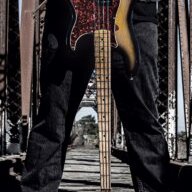
The HB7 is Hipshot's drop-in replacement for Mexi/VM/CV basses. Appropriately sized, looks like a stock bent-plate tuner but with good bushings, better ratio, adjustable tension, etc.
The trouble is, they don't do anything for neck dive. If you want the nearly half-pound weight savings you get from the Ultralites, then you've got to put up with the extra work.
Shimming the bushings for a proper fit really isn't a big deal:
Cut the top off a pop can, cut down the side from top to bottom, then start cutting thin strips around the circumference of the can, to use as shims.....
Great info! Probably a good idea to wear protective gloves?

The HB7 is Hipshot's drop-in replacement for Mexi/VM/CV basses. Appropriately sized, looks like a stock bent-plate tuner but with good bushings, better ratio, adjustable tension, etc.
The trouble is, they don't do anything for neck dive. If you want the nearly half-pound weight savings you get from the Ultralites, then you've got to put up with the extra work.
Shimming the bushings for a proper fit really isn't a big deal:
Cut the top off a pop can, cut down the side from top to bottom, then start cutting thin strips around the circumference of the can, to use as shims. You can use tin snips, but cheap, heavy kitchen shears work just fine.
Cut the strips a little narrower than the thickness of the headstock. No need to be super-exact, as long as they are narrow enough to allow the bushing and the tuner body to seat properly against the headstock.
When you're ready to install the tuner, grab each strip by the edges between thumb and forefinger, and bend them fairly tightly, so they form a coil about 1/2 to 3/4" in diameter.
Spring two of them about half-way into the hole in the peghead, then insert the bushing into the shims, and push it the rest of the way into the headstock. You want the shims tight enough to take up the slop, but still loose enough to allow the bushing to turn easily in the hole.
How much material you need will vary, depending on the thickness of the can. If they're too tight or too loose, simply cut one of the shims a little shorter, or add another piece.
It sounds like a lot of work, but it's actually easier to do than it is to describe.
Thanks for the advice, it seems a straight forward if mildly inconvenient fix. I can understand the way they're trying to save weight, but it just sounds like they're not exactly the size they're advertised as.
Worth the hassle, though, for sure.
Actually, the problem seems to be that people don't check on sizing. The 1/2" shaft Hipshots are exactly that, unlike the larger-than-life Fender, and the Ultralites aren't advertised as being a drop-in Fender replacement.
You want custom, you've got to be willing to do the work.
Fair enough - I've been told the Fender/Squier's are a 1/2" fit, saw the Hipshots advertised as the same size, then read that they don't necessarily fit. It seems I've been misinformed...

 turned out great!