• TalkBass has been independent since 1998. Add your voice.
    Create a free account to reply to discussions, view embedded media, and browse with fewer display ads.
    Join freeLog in
    Want zero display ads or expanded classifieds tools? Compare plans.

Truss rod snapped......want to cry.

Not a fun project, but as others have said it is fixable. I have removed truss rods from necks I have messed up building to use in other projects. I used an iron and an icing spatula. The fingerboard wasn't usable afterwards but maybe someone with more skill could save it. That was with tight bond used also. Hide glue would be even easier.

As said above I wouldn't remove anymore wood.

 
I can't tell your location but if the Golden Gate Bridge means you're in San francisco take it to Jeff Lutrell at SF Guitar works. He will give you an honest assessment of what needs to be done to fix it and the cost. Excellent luthier and very good at nastier repairs like this. Good luck
 
  • Like
Reactions: Hot Rats
That's exactly why it's best to 'help' the neck to where it needs to go, and let the trussrod 'hold it'.

Which is why I was amazed at the opinion of a couple of bass gurus I saw in a vid of some bass seminar (NAMM, maybe) when one or both stated they do not loosen strings before adjusting a truss rod, "because then you can't get an accurate reading of the neck," as if you can't retighten the strings to measure. Wish I could get back to that vid to provide a link.
 
Which is why I was amazed at the opinion of a couple of bass gurus I saw in a vid of some bass seminar (NAMM, maybe) when one or both stated they do not loosen strings before adjusting a truss rod, "because then you can't get an accurate reading of the neck," as if you can't retighten the strings to measure. Wish I could get back to that vid to provide a link.

Keeping a neck under string tension while doing adjustments is a very valid and logical mind frame.
 
  • Like
Reactions: Hot Rats
I believe you're referring to the Roger Sadowsky / Mike Tobias forum from Bass Player LIVE! 2014


I found the comment to be interesting, because I have heard advice to the contrary. But I would trust these two any day of the week over a Fender / Squier manual.

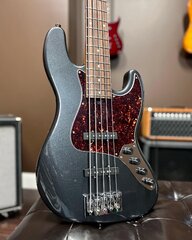
OP: Sorry to hear of your troubles. That is a beautiful bass.
 
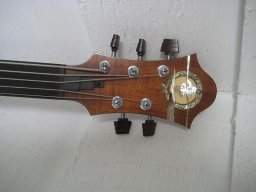
Angled headstocks that have a cavity for truss rod adjustment at the headstock end are inherently weak. This is due to removing material for the cavity. There simply isn't very much lumber left afterwards. Removing more wood from an angled headstock is an accident waiting to happen.
There was no wood removing at the first photo at all. Only a thin slice of a matched maple which was glued back. At the second there was nothing critical I believe. But I definitely agree that some basses have headstocks that can not be processed this way.
 
Thanks for the couple of offers to set me up with good luthiers. I am going to contact Mayones (they are in Poland) just to pick their brains about it. See what they recommend. I am sure it will be the same as recommended here. I live in the S.F. Bay area, so the S.F. Guitarworks suggestion will definitely be looked into. Thanks.
 
There was no wood removing at the first photo at all. Only a thin slice of a matched maple which was glued back. At the second there was nothing critical I believe. But I definitely agree that some basses have headstocks that can not be processed this way.

Tilt back headstocks are inherently weak by design. Placing the truss rod adjustment access at the headstock further weakens the structure. The second photo shows removing a lot of material, obviously by a less skilled hand. From a structural standpoint, it was a bad decision.

Gluing the piece that was removed back into the original space (data not accompanying the original picture) only confuses the choice. If one is willing to remove and reglue a part, why carve new holes when standard operating procedure is to remove and replace the fingerboard?

The first picture was not addressed in the original comments.
 
I am going to contact Mayones (they are in Poland) just to pick their brains about it. See what they recommend.
This is definitely the most prudent course of action. The company's still in business, so there's absolutely no reason not to talk with them first.

Such a bummer that it happened during the holidays so you'll probably have to wait a while to get things rolling, but you're going about it the right way.

Sorry your bass is busted. :( Happy holidays anyway.
 
  • Like
Reactions: Hot Rats
I have a good tech, a great tech. He worked at Fender & early Alembic. He then worked on the Jefferson Airplane's gear. His advice? Mine for you in the future? Leave those adjustments to very experienced techs. Its a feel thing. It's tightened or loosened a little then they wait for the adjustments to slowly happen. It's a finese thing.

Once you have a good setup you may only need truss rod adjustments twice a year depending on your climate.
 
Last edited:
If one is willing to remove and reglue a part, why carve new holes when standard operating procedure is to remove and replace the fingerboard?
Obviously it's quite easier and less destructive. Which new holes? Nobody carved anything there.

Only the thin small piece of wood for "regluing" vs the whole fingerboard for change? A you serious about that? Do you really want to say that it is the better way?