• TalkBass has been independent since 1998. Add your voice.
    Create a free account to reply to discussions, view embedded media, and browse with fewer display ads.
    Join freeLog in
    Want zero display ads or expanded classifieds tools? Compare plans.

Trying to resolve low string tension feel

A few years back I commissioned a wonderful Frankenstein monster of ideas of a bass. Essentially it is a mix of a 51 P, a 54 P and a 72 Tele bass.

It is a very well made instrument, that sounds fantastic. However, it has always felt like the strings have considerably lower tension than my other instruments which becomes particularly excarbated when playin in drop tunings.

I have had the instrument pleked, replicating the setup of my favorite bass (string action, fretboard relief, nut height etc) but it always felt very loose.

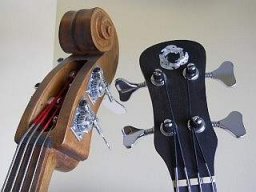
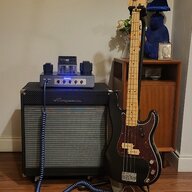
A little while I identified a potential culprit. The headstock break angle is considerably less dramatic than on my other instruments.

The custom bass
IMG_20241017_172809.jpg


My MVP jazz bass
IMG_20241017_172739.jpg

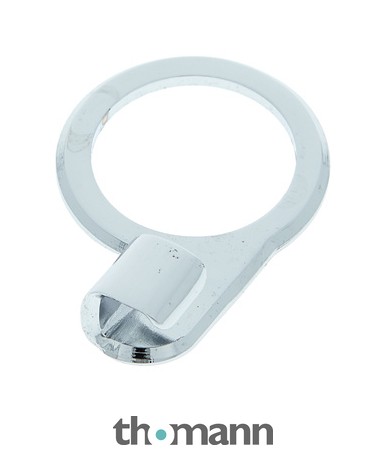
I initially tried to increase the break angle of the string by using string retainers but this wreaked absolute havok to the hipshot xtender's functionality without having a real result.

I have also experimented with shims in order to change the entire neck's break angle but that did not offer a noticeable improvement either

This week, after a lot of deliberation and a LOT of measuring I decided to remove approximately 2.5mm of material from the headstock with a Japanese saw file and redo the break angle curve.

It was not the most elegant job, but I managed to execute it well enough without compromises. However this did not yield any result either

So far the best solution was switching to heavier gauge strings (.050 to .110). However, I would like to know if there is another way to approach this that I am perhaps missing.
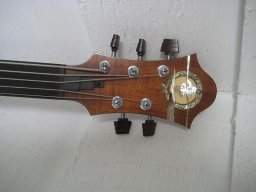
 
So far the best solution was switching to heavier gauge strings (.050 to .110). However, I would like to know if there is another way to approach this that I am perhaps missing.
Not that it helps you much now, but that’s what I would have tried first.

How an instrument feels is an aggregate of a lot of different factors. It’s hard, and sometimes impossible, to pinpoint causes of certain conditions such as a “loose feel” because there may be several different causes working in concert.

If tighter strings gets you what you need, stop looking for other solutions. Some basses just get along better with certain strings.
 
However, it has always felt like the strings have considerably lower tension than my other instruments which becomes particularly excarbated when playin in drop tunings.

I have had the instrument pleked, replicating the setup of my favorite bass (string action, fretboard relief, nut height etc) but it always felt very loose.

A little while I identified a potential culprit. The headstock break angle is considerably less dramatic than on my other instruments.

So far the best solution was switching to heavier gauge strings (.050 to .110). However, I would like to know if there is another way to approach this that I am perhaps missing.

I thought the break angle looks ok. Would you consider sinking the tuner into the headstock, instead of shaving the whole thing?

1762473723735.png
 
Nest time you restring keep more length on your E and A strings. The extra windings around the tuning posts will create a steeper angle. There are also higher tension strings available with round core strings typically being the most flexible. I've owned about 100 guitars and basses with obviously variable break angles at the nut or tune-o-matic bridge. Shallower angles never created a looser feeling string for me. Scale length, string type and gauge will change the feel considerably. My $.02
 
You don't say what scale length the bass was built at. Ninety percent of what is perceived as tension is directly related to scale length. As you found out, there's a lot of "contributory causes" like the break angle over the nut that just don't matter much.
It's a 34in scale.
I thought the break angle looks ok. Would you consider sinking the tuner into the headstock, instead of shaving the whole thing?

View attachment 7362718

Nest time you restring keep more length on your E and A strings. The extra windings around the tuning posts will create a steeper angle. There are also higher tension strings available with round core strings typically being the most flexible. I've owned about 100 guitars and basses with obviously variable break angles at the nut or tune-o-matic bridge. Shallower angles never created a looser feeling string for me. Scale length, string type and gauge will change the feel considerably. My $.02
I have already removed the 2.5mm of material but have not taken an "after" Pic. The break angle is more dramatic and the string wraps are sitting considerably lower but the general feel is still the same.

Just to try and convey the looseness feel I use the exact same set of strings but in a 45-105 gauge on my jazz bass and the custom bass, even with the heavier gauge strings, feels looser. To add, the custom bass has a badass 3 bridge and I string it through the body (which supposed should help more with a tighter feel)

To be honest I would rather not resolve into going to an even higher gauge as it would require a new nut. I have actually tried a 5 string set but it was too much. My estimate would be that something like a very light 5 string set would the trick (115-120 gauge) but I would rather not go down that path but I am still open to ideas.
 
I'd say that one factor is the stiffness of the neck and body as a whole. If neck is very soft, it vibrates more than a stiff neck and makes the strings feel less taut than with a stiffer neck. If the neck/body joint is not tight, the energy of the string disappears in that loose joint and makes the string feel loose.
I have the same opinion on neck stiffness. Had a 6 string Ibanez EHB with 9pc laminate panga/walnut neck, the EB slinkies felt stiff, compared to my 5string with the usual maple neck.
 
  • Like
Reactions: el murdoque
Would something like this help?

I tried something similar but it didn't have much of an effect. As an added side effect it completely messed up the function of the hipshot xtender on the E string.
 
  • Like
Reactions: lidl e
I'd say that one factor is the stiffness of the neck and body as a whole. If neck is very soft, it vibrates more than a stiff neck and makes the strings feel less taut than with a stiffer neck. If the neck/body joint is not tight, the energy of the string disappears in that loose joint and makes the string feel loose.
It is the first time I hear about those two points. I am fairly certain the neck joint is tight. As for the stiffness of neck, the only thing I can say is that this is the instrument that reacts the least to temperature and humidity changes but I can understand that this is not necessarily an indicator of its stiffness.

Is there any way to check the neck's stiffness?
 
all I can think of is to try adding a little more bow in the neck relief, ie loosen truss rod a bit. The strings would push back against you a little more than if they’re right up against the frets with a flatter set up. 🤷🏻‍♂️
 
  • Like
Reactions: bassdude51
I'd say that one factor is the stiffness of the neck and body as a whole. If neck is very soft, it vibrates more than a stiff neck and makes the strings feel less taut than with a stiffer neck. If the neck/body joint is not tight, the energy of the string disappears in that loose joint and makes the string feel loose.

I have the same opinion on neck stiffness. Had a 6 string Ibanez EHB with 9pc laminate panga/walnut neck, the EB slinkies felt stiff, compared to my 5string with the usual maple neck.

I second that. In my experience with five and six string instruments, where perceived string tension/stiffness makes or breaks a good low B,
I found that I had some specimen in 34" standard scale that had a B string that felt like it's under more tension than some 35 or 36" models.
The one difference I could make out was that those with better B strings always had rock solid necks (and if bolt on, a rock solid neck/body connection).
My current main bass, a Le Fay, has carbon rods in the neck, along with an extremely stiff construction and very high quality woods that have been stored for a long time before being used. I've had to set the truss rod once in five years of use and the whole frame feels a lot stiffer than, let's say, on my Ibanez BTB that had a 35" scale and a five piece neck (or was it seven?) where you could dent the maple with your thumbnail.
 
  • Like
Reactions: Chris Chong
all I can think of is to try adding a little more bow in the neck relief, ie loosen truss rod a bit. The strings would push back against you a little more than if they’re right up against the frets with a flatter set up. 🤷🏻‍♂️
Neck relief is set at Fender standards at 0,3mm over the 8th fret with the first and seventeenth fret depressed. I have played around that a bit but it does not make a significant change
 
A little while I identified a potential culprit. The headstock break angle is considerably less dramatic than on my other instruments.
If the nut slots are angle cut to the path of the tuning posts, there shouldn't be an issue. And if it were an issue (and it shouldn't be) fretted notes would not be related to the break angle and fretted notes should not have a low tension feel.

I can see a low tension feel when your bass is down tuned.

Use different strings with a some stronger tension. Put a bit of bow to the truss rod. Raise the action a bit.

The photo shows mixed strings, different colored silk. ???? Maybe an issue? I don't know.
 
  • Like
Reactions: thefaceofbass
To add, the custom bass has a badass 3 bridge and I string it through the body (which supposed should help more with a tighter feel)
Stringing through the body will not increase the stiffness feel of the strings. It will have the opposite effect because of the added length of string - there's more string to stretch. Stretchiness is the opposite of stiffness.

You cannot give the string more tension without raising the pitch. Changing the break angle of the string at the nut or the bridge will not increase tension, they increase downforce on the nut and bridge respectively with absolutely no change to tension. the vibrating length of the string remains unchanged. Your options to achieve more tension are limited to a change of string to one that is stiffer as a consequence of gauge or materials.

For more info, check this thread:

 
Last edited:
I remember having a bass like this a few years ago. The E string always felt like a big floppy rubber band. I tried everything to fix it, from setups to replacing hardware and strings. I eventually decided it was just the wood, that this neck or body was just soft and wobbly, and I sold it for parts
 

Latest posts