Well...
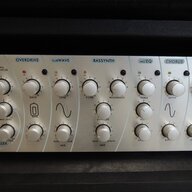
Got some time and decided to do a lengthy "tube-rolling" session with my Demeter VTBP-201 (1.5 space "blackface" unit). While I did not have examples of all the tubes I would have liked, these are the tubes that I tested:
(2) JAN GE 7025
(2) Mullard ECC 83
(1) Mullard ECC 82 (12AU7)
(2) Groove Tubes JJ/Tesla ECC 83S
(1) JJ ECC 83S
(1) JJ ECC 803 (long plate)
(2) Chinese 12AX7B (recent production)
(1) Sovtek 12AX7WA (recent production)
Others just used in V2:
(1) JAN Philips 5751
(1) JAN Philips 12AT7
The way I conducted the session was to use my Fender Power Jazz Special with switches in series with both pups full on, volume all the way up. The same songs, riffs, and chords were played with all tubes. Internal trim on the Demeter was at 12:00 noon (straight up), EQ was flat, bright switch off, bass switch at 120 HZ, presence switch at 4K. Power amp was my PLX 2402, and the cabs used were my Wizzy's. No settings were changed except preamp volume for the 12AU7 due to the decreased volume that tube produces.
I used my wife (who is an accomplished vocalist with a very nice ear for pitch and overall blend). She sat across the room with no way to see which tube was being auditioned. Needless to say, I swapped the tubes in a random fashion and returned to all of them at various times - sometimes pulling out a tube and then placing it immediately back into the preamp, just to insert a "control" into the experiment process. V2 was left as it has been - a JAN GE 7025 proven tube with no microphonics and very nice tone. I was looking to audition the V1 possibilities of the tubes above with a common denominator in V2.
Before I list the results, the Mullard 12AU7 and one of the Mullard 12AX7's turned out to be a little too microphonic to be considered. I tried them several times, but they had quite a bit of hiss/crackle/pop.
Results:
First place: Mullard 12AX7 - probably not a huge surprise to this board, but I will tell you that it did not run away against the competition. Almost all the tubes acquitted themselves very well, and I feel fortunate to have the tubes I do. It took the entire 2 hours to finally break it out - in fact, at the beginning, my wife actually was not fond of the low end - saying that it was a little too "muddy" for her taste. In the end, however, the depth of the low end and the sheer beauty of the high end (sweet and not harsh) won the day. More on this later - but this was definitely a standout tube. It definitely did possess the most Mu (gain) of the 12AX7's in the group as well.
Second place: JAN GE 7025 - another standout in this very nice group of 12AX7 specimens. It possessed the punchiest and most defined low end with very nice high frequencies as well. It was very polite and musical across the entire frequency spectrum, in fact, and my wife had a deuce of a time deciding between this one, the Mullard, and....
Third place: JJ ECC 803 (long plate). O.K. I'm going to eat some crow on this one because I have a thread here telling everyone how I was disappointed in this tube. I still think that this one, as it heats up, breaks up a little too early for me. However, this had the best low end of the entire group, and overall it was the third standout in my test run. Nice highs, combined with very powerful lows. It was decidedly less "polite" than the GE tube and had gain very close to the Mullard. I would guess (given the fact that I have gigged this tube several times) that it has slightly less clean headroom than the GE tube.
Fourth place (and a surprise): Chinese 12AX7B (one of them). The only thing keeping this tube from being in the standout group was the high frequency spectrum. While the highs were very detailed and sharp - they were also just a tad (and I mean just a tad) too bright and "out there". The low end on this tube was simply outstanding - easily as good as the three front-runners. Interestingly enough, the other Chinese tube was exactly opposite - a bit pillowy on the lows with an outstanding high end.
Fifth place: JJ/Tesla ECC 83S. I was surprised at this as well - the low end of this tube is huge - but the response is not balanced through to the high end. This would be a great rock and roll P-bass tube if you are playing the classics (and stay on the bottom two strings). It will make the low end jump out at the audience (and cause your soundman to have a coronary if you try to solo up the neck and then return to a big bottom bass thumpin' line).
Sixth place: The other Chinese tube - see the description above. This tube had a very nice high end detail and sound, yet the lows were mushy (as compared to this group). It was still a very usable tube, however, and I would not hesitate to pop it in any day of the week.
Tied at the bottom: The Sovtek tube and the GT JJ/Teslas. The JJ Grooves are nice tubes, but they are simply too trebly for me as coupled with the Demeter. As a result, their noise floor is too high, and the resultant tube "noises" get in the way of their true tone. The Sovtek was still a very nice tube, yet it was not polite across the RF spectrum, and it seemed to run to extremes - slightly too harsh highs....slightly too big on the lows.
Now for what I settled on for the next few shows:
After my wife and I settled on the Mullard as the V1 winner, I then auditioned the 5751, 12AT7, JJ ECC 803, and the JAN GE 7025 in the V2 position.
The winning combination?
V1 - Mullard
V2 - JJ/Tesla ECC 803 (long plate)
This combination has tons of gain with a big, defined, punchy low end coupled with a very musical and sweet top end.
Any given preamp is going to respond differently to any number of tubes...and each tube run is going to be different for any given manufacturer. However, I hope this helps if someone is looking for some broad generalities between these tubes and the Demeter 201.
Jay
Got some time and decided to do a lengthy "tube-rolling" session with my Demeter VTBP-201 (1.5 space "blackface" unit). While I did not have examples of all the tubes I would have liked, these are the tubes that I tested:
(2) JAN GE 7025
(2) Mullard ECC 83
(1) Mullard ECC 82 (12AU7)
(2) Groove Tubes JJ/Tesla ECC 83S
(1) JJ ECC 83S
(1) JJ ECC 803 (long plate)
(2) Chinese 12AX7B (recent production)
(1) Sovtek 12AX7WA (recent production)
Others just used in V2:
(1) JAN Philips 5751
(1) JAN Philips 12AT7
The way I conducted the session was to use my Fender Power Jazz Special with switches in series with both pups full on, volume all the way up. The same songs, riffs, and chords were played with all tubes. Internal trim on the Demeter was at 12:00 noon (straight up), EQ was flat, bright switch off, bass switch at 120 HZ, presence switch at 4K. Power amp was my PLX 2402, and the cabs used were my Wizzy's. No settings were changed except preamp volume for the 12AU7 due to the decreased volume that tube produces.
I used my wife (who is an accomplished vocalist with a very nice ear for pitch and overall blend). She sat across the room with no way to see which tube was being auditioned. Needless to say, I swapped the tubes in a random fashion and returned to all of them at various times - sometimes pulling out a tube and then placing it immediately back into the preamp, just to insert a "control" into the experiment process. V2 was left as it has been - a JAN GE 7025 proven tube with no microphonics and very nice tone. I was looking to audition the V1 possibilities of the tubes above with a common denominator in V2.
Before I list the results, the Mullard 12AU7 and one of the Mullard 12AX7's turned out to be a little too microphonic to be considered. I tried them several times, but they had quite a bit of hiss/crackle/pop.
Results:
First place: Mullard 12AX7 - probably not a huge surprise to this board, but I will tell you that it did not run away against the competition. Almost all the tubes acquitted themselves very well, and I feel fortunate to have the tubes I do. It took the entire 2 hours to finally break it out - in fact, at the beginning, my wife actually was not fond of the low end - saying that it was a little too "muddy" for her taste. In the end, however, the depth of the low end and the sheer beauty of the high end (sweet and not harsh) won the day. More on this later - but this was definitely a standout tube. It definitely did possess the most Mu (gain) of the 12AX7's in the group as well.
Second place: JAN GE 7025 - another standout in this very nice group of 12AX7 specimens. It possessed the punchiest and most defined low end with very nice high frequencies as well. It was very polite and musical across the entire frequency spectrum, in fact, and my wife had a deuce of a time deciding between this one, the Mullard, and....
Third place: JJ ECC 803 (long plate). O.K. I'm going to eat some crow on this one because I have a thread here telling everyone how I was disappointed in this tube. I still think that this one, as it heats up, breaks up a little too early for me. However, this had the best low end of the entire group, and overall it was the third standout in my test run. Nice highs, combined with very powerful lows. It was decidedly less "polite" than the GE tube and had gain very close to the Mullard. I would guess (given the fact that I have gigged this tube several times) that it has slightly less clean headroom than the GE tube.
Fourth place (and a surprise): Chinese 12AX7B (one of them). The only thing keeping this tube from being in the standout group was the high frequency spectrum. While the highs were very detailed and sharp - they were also just a tad (and I mean just a tad) too bright and "out there". The low end on this tube was simply outstanding - easily as good as the three front-runners. Interestingly enough, the other Chinese tube was exactly opposite - a bit pillowy on the lows with an outstanding high end.
Fifth place: JJ/Tesla ECC 83S. I was surprised at this as well - the low end of this tube is huge - but the response is not balanced through to the high end. This would be a great rock and roll P-bass tube if you are playing the classics (and stay on the bottom two strings). It will make the low end jump out at the audience (and cause your soundman to have a coronary if you try to solo up the neck and then return to a big bottom bass thumpin' line).
Sixth place: The other Chinese tube - see the description above. This tube had a very nice high end detail and sound, yet the lows were mushy (as compared to this group). It was still a very usable tube, however, and I would not hesitate to pop it in any day of the week.
Tied at the bottom: The Sovtek tube and the GT JJ/Teslas. The JJ Grooves are nice tubes, but they are simply too trebly for me as coupled with the Demeter. As a result, their noise floor is too high, and the resultant tube "noises" get in the way of their true tone. The Sovtek was still a very nice tube, yet it was not polite across the RF spectrum, and it seemed to run to extremes - slightly too harsh highs....slightly too big on the lows.
Now for what I settled on for the next few shows:
After my wife and I settled on the Mullard as the V1 winner, I then auditioned the 5751, 12AT7, JJ ECC 803, and the JAN GE 7025 in the V2 position.
The winning combination?
V1 - Mullard
V2 - JJ/Tesla ECC 803 (long plate)
This combination has tons of gain with a big, defined, punchy low end coupled with a very musical and sweet top end.
Any given preamp is going to respond differently to any number of tubes...and each tube run is going to be different for any given manufacturer. However, I hope this helps if someone is looking for some broad generalities between these tubes and the Demeter 201.
Jay