
Enjoy the benefits of a premium membership!
Upgrade Account
-
TalkBass has been independent since 1998. Add your voice.
Create a free account to reply to discussions, view embedded media, and browse with fewer display ads.
Join free Log in
Want zero display ads or expanded classifieds tools? Compare plans.
You are using an out of date browser. It may not display this or other websites correctly.
You should upgrade or use an alternative browser.
You should upgrade or use an alternative browser.
Tune in 5ths?
- Thread starter Axtman
- Start date
More options
Who Replied?
Lying down, playing it like an upright bass. Easier than playing a full size standup while lying in bed I guess.
Bass uke FTW
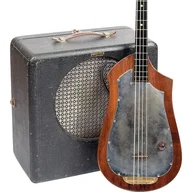
GumB was playing a bass tuned in fifths like a cello three octaves down the one time I saw Stick People live:
Sounds like a solution in search of a problem.
It gives you extended range but with four strings, and easy fifths for all your root and fifths needs.


In my experience changing to fifths can work if you don’t play a lot of fast scales (they are not easy), and if you just practice songs you know in the new tuning, you will get up to speed pretty quickly. The benefits are the extra range, and greater variety/ease of arpeggios and chords.
It gives you extended range but with four strings, and easy fifths for all your root and fifths needs.
I mean, fifths are already literally the easiest thing to play on a bass.
I mean, fifths are already literally the easiest thing to play on a bass.
Yes, but root then fifth is two fingers. Tuned in fifths you only need one finger. That's twice as easy.

Works for violins!
...and mandolins, but the scale length of a fiddle or mandolin makes playing in 5ths much more manageable - the reaches aren't an issue with a short scale length. With a bass, the reaches are definitely an issue - you have to give up playing some combinations of notes that a 4th tuned bass gives you. If you never do double stops or chords, it's not that big of an issue, but for those of us who do a lot of double stops and/or chords, it's a big limitation.

I do, on double bass. Been at it for about six months. Takes a minute to get used to, for sure, and there are definitely pros and cons, especially depending on the style(s) you play.
For bass guitar, I could see where the extra shifting could be a pain. Conceptually, it would probably (generally) be okay, it’s more re-thinking your intervals in the scope of the line you’re playing (pivoting for the stretch instead of shifts, per se, so you can cover five frets without too much fuss to get a perfect 4th on one string).
The next month for me is dedicated to relearning a bunch of Steely Dan bass parts for a cover gig I’m doing - we’ll see how muscle memory plays into this one…
what upright strings are you using that takes that tension??? G to D# on the G string? I call BS.
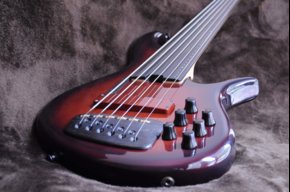
The bass player I am referring to also tunes his bass in cello tuning. (I also know another guy that plays upright in 5ths but bass guitar in 4ths. Now that would be a challenge!)
I am not casting aspersions on anyone. I just am curious as to advantages of tuning a bass this way.
I read an interview with a double bassist in a symphony orchestra and he told me that he tuned in fifths because a lot of the runs are written such that they are easier to play in fifths. I have never played in an orchestra to comment on this personally, but it kind of makes sense that the runs would lean this way to accommodate violins and cellos....maybe?
what upright strings are you using that takes that tension??? G to D# on the G string? I call BS.
I am not sure what you are referring to here, from the internets to confirm my thinking: fifths tuning is a non-standard tuning for the double bass, used primarily in classical and jazz music. In this tuning, the double bass is tuned like a cello but an octave lower (C-G-D-A low to high). Totally reasonable tuning in my mind.
Name checks out, but a standard set with a heavier low C String is what's typical, it's not like mixing strings isn't common on DB anyway.what upright strings are you using that takes that tension??? G to D# on the G string? I call BS.
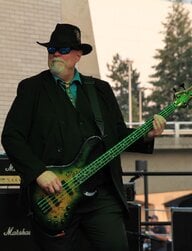
My musical journey started on cello in elementary school, so I understand the concept. On a bass guitar, it seems like an easy way to extend the range of the instrument. But I've spent most of my life with EADG, and for me the benefit just wouldn't be there.
I speak only for myself.
I speak only for myself.

If it's from C, that's "New Standard Turning" as approved by Robert Fripp
Doesn't Fripp's New Standard Tuning have one non-fifth interval between adjacent strings...istr between 1st and 2nd? I vaguely remember it being C G D A E G.
Yeah but it's a practical limitation because tuning higher then g results in broken strings.Doesn't Fripp's New Standard Tuning have one non-fifth interval between adjacent strings...istr between 1st and 2nd? I vaguely remember it being C G D A E G.

devnulljp
Supporting Member

They make fifths sets (CGDA) for DB. I use the Spirocore "Red Mitchell" Mittels, but there are at least a few other mass-produced options. I wish they made fifths sets for BG, it's surprisingly hard to work out a set, especially if you want flats, short scale, or five-string options (CGDAE - which is what I like on BG).what upright strings are you using that takes that tension??? G to D# on the G string? I call BS.
...and mandolins, but the scale length of a fiddle or mandolin makes playing in 5ths much more manageable - the reaches aren't an issue with a short scale length. With a bass, the reaches are definitely an issue - you have to give up playing some combinations of notes that a 4th tuned bass gives you. If you never do double stops or chords, it's not that big of an issue, but for those of us who do a lot of double stops and/or chords, it's a big limitation.
I can't speak for DB, but on BG you can still play triads on 3 strings, the 3rd just has to be moved up an octave. The fingering is a bar on the first two strings and two or one fret over on the third string for major or minor, respectively. You can't really play closed triads anymore but spread triads sound better for the lower register anyway.
I can't speak for DB, but on BG you can still play triads on 3 strings, the 3rd just has to be moved up an octave. The fingering is a bar on the first two strings and two or one fret over on the third string for major or minor, respectively. You can't really play closed triads anymore but spread triads sound better for the lower register anyway.
It makes octaves tougher to play, which would be my issue with it.
Marginally, depends on technique, it's just the opposite direction as standard.It makes octaves tougher to play, which would be my issue with it.
This is why I play fifths, the chord shapes are easy and still sound good down low. Something fun you can do is put on an octave A to get more chime and an even wider spreadI can't speak for DB, but on BG you can still play triads on 3 strings, the 3rd just has to be moved up an octave. The fingering is a bar on the first two strings and two or one fret over on the third string for major or minor, respectively. You can't really play closed triads anymore but spread triads sound better for the lower register anyway.


