• TalkBass has been independent since 1998. Add your voice.
    Create a free account to reply to discussions, view embedded media, and browse with fewer display ads.
    Join freeLog in
    Want zero display ads or expanded classifieds tools? Compare plans.

U.S. Peavey Club

Threaded saddles serve the same purpose but you can go DIY and cut slots with a hacksaw, rotary tool like a Dremel speeds the process up a fair bit :thumbsup:
Two of my basses have Fender threaded saddle bridges which allow me to get the strings exactly where they belong, which is very helpful with a Fender 51P type pickup with four thin pole pieces. One of my other basses has a simple Fender bridge with three slots (maybe four) on each saddle which also allows for perfect alignment.
I have no fancy bridges on any of my basses.
 
I start the topcoat process on my 92 Foundation tomorrow. The question I have for when that’s done is do I keep the stock bridge or use a Hipshot Supertone I have sitting around? I also found a true blend pot (i.e., no volume drop at the detent like a pan pot), so going blend, volume, tone.

View attachment 5464659

Neck just sitting there for color reference.

No on that Hipshot bridge, it was intended to improve Gibson's crap design but it is no improvement (it's heavy) over the stock bridge that was on the Peavey.
Simple Fender style bridges work great if you don't need some feature that a Hipshot can provide like the left to right adjustable saddles on their Type A bridges.
I think the Peavey bridge you have is perfect for that bass.


The replacement saddles for the Peavey Trapezoidal Bridge (1983-85ish) that have worked best for me are the Wilkinson brass saddles on their $15 bridge.
Perfect diameter and perfect width.
My bad, it was Wilkinson saddles. :)
 
How do you think a Precision shaped rail SF pickup like @Matt Kustom produces (above), set in the reversed P position with a classic Foundation/Dyna SF at the bridge position in one of those elusive maple-bodied Patriots would sound (especially if I was to find and install a Haz preamp in the beast)?

Thank you so much for all the great replies on my question everyone! :bassist:

IMHO bet it would sound great. But... If you really wanna go over the top how about about add two of the matching SF Js @ the bridge (wired as one pup?) with a series/parallel switch.
I have matching SFs in my '85 meranti Foundy with a S/P switch and they sound amazing...I bet that set up with a maple body and a Haz preamp may sound absolutely amazing, but...

Interesting. :cool:

Reverse P trumps normal P for single-pickup stuff, and also a brace of them. But a single (reverse) P with a soapbar will do that thing where the lower strings have a different comb filter response than the upper strings, because the sensing positions are separated by different distances. Which is the same as what the Spector (and others) arrangement does too. So if that’s part of what you’re looking for, then yay, go for it!
I have to agree with @ctmullins, that reverse P sound with the soapbar/P at the bridge having that different comb filter response and, on top of it, sexy@ss growl is the bees knees for me. Could the two singles do that? Possibly but probably wouldn't be totally what I'm going for.

I bet that would be a great combination. SFs have some output, and they sound better at the Patriot position vs the Foundy/Dyna bridge position. That 2 1/4" shift makes a massive difference in perceived output and low/low-mid punch. That is enough to really make it balance out with a P type split coil.
A caveat is where the P pickup will be located. If in the proper P spot, it will be very close to overlapping the Patriot bridge pickup. The P pickup is traditionally centered 28.5" from the nut, which puts the bridge side coil's bridge edge extended to about 29.5" from the nut. The Patriot pickup is centered about 29 11/16" from the nut, which puts the neck side edge around 29 1/8" from the nut. If the P pickup is moved a touch neckward, no biggie.
I agree the SFs sound better in the Patriot position rather than the Foundy/Dyna position BUT I have many basses in the hopper that will have that RicRiot combo. I also have to say, the Foundy/Dyna bridge position (in my Foundy at least) with the neck rolled to 50% really does nail the Geddy tone for me better than anything I've met, so I have a soft spot for it too (it's why I think of your rule of putting SFs at the 24th, 36th AND 48th-ish positions so much...add a parallel/series between the two bridge position pickups too and BOOM). That properly positioned reversed P sounds amazing and I think I want some Spector and Geddy-ish growl in this...I'm thinking of making a template for the Patriot body and making nothing but maple bodies with it...I so dig the sound of my maple bodied basses.

I will also share what I found to be a really killer pickup combo.
When I was doing the incremental mods towards the final revision of the T-42.5, the first stop was the SF in the neck, a Toaster in the bridge, using the mini switch to split to the bridge side coil. A single coil of a Toaster wasn't quite as great sounding as a SF soloed, but sounded good in combination with the neck pickup. However, series mode of the bridge Toaster blended really well with a neck SF, both in volume and tonality. The neck SF had punch and clarity, and the bridge Toaster was a little thicker and smoother vs a SF. They sounded so good together that when I did finally install the neck Toaster, I was a little let down by the tonality, but liked the look better (especially once the green pickup rings were installed).
When I sussed out how to split to the inside coils and have hum cancelling, I was very happy with the T-42.5.
@bigtone23, I think of that first iteration of yours of the T-42.5 with the Foundation/Dyna SF in the neck and T-40 toaster at the bridge a lot! If it weren't for the looks, would you have kept that original setup with the switch for the toaster? It sounds like the best of many worlds to me.
 
  • Like
Reactions: 58kites and smogg
@bigtone23, I think of that first iteration of yours of the T-42.5 with the Foundation/Dyna SF in the neck and T-40 toaster at the bridge a lot! If it weren't for the looks, would you have kept that original setup with the switch for the toaster? It sounds like the best of many worlds to me.
My ultimate goal was a Toaster loaded Foundy, to be different and unique from the other basses I have. It was a sort of 'what if' type project, much like the Paranormal series from Fender/Squier.
I had found one Toaster and put it in the bridge spot, to see how it sounded there. (My Ibanez RB45 project already had a Blade Toaster in the neck spot, so I knew that sound already). It was a few weeks before a 2nd Toaster was found, so in the meantime, I put some time in on the hybrid pickup set. Sounded great! Once the 2nd Toaster was installed and I figured out the final wiring and such, it was cool.

However, I would certainly do the SF neck/Toaster bridge thing again. It may be a cool combo in the RicRiot spots, too!
 
  • Like
Reactions: 58kites and XsoGol
Peavey often added the words like "Plus" and "Custom" to sales and spec blurb to give customers the impression they were getting 'more', trouble was it was more of the same :laugh:

Often this may have been a color OR matching headstock.... sometimes hardware.

there is nothing to "custom" about "custom" the company view was to standardize and automate.
 
Ouch, sorry about the repair bill. $6500 hurts!

That black one with rosewood and matching headstock is technically a Foundy Custom, which was a small upcharge from the maple fingerboard/maple headstock version. Very cool bass! If I could own everything, I would certainly take this one off your hands, as the all black/rosewood is a favorite look of mine.

Seems that 80s era Foundies and the Foundy S sell for around $400. An absolute bargain for that caliber of bass, but it's also the most they have ever sold for. 10+ years ago, they were commonly found for $200 or less, and only the super rare colors (like the Heather Pearl) might sell for more than $500. You might get more for the S as it's so clean.

I recently sold my Foundriot (85 Foundation Custom white pearl body with an 87 Patriot 1.5" neck). Did a bro deal to a good friend for $300, which included an 80s era Ibanez brown chainsaw case. He loves it. I would probably net about the same $$ if I sold it online, whether it was an offer from a local buyer or my take after Reverb or Ebay took their cut.
 
Anyone looking for a complete wiring harness?

[Invalid or Expired Link Removed]
Well, that is a Pure Tone jack. Not original. ;)

An awful lot of money for less than $10 worth of parts.
Yep.

And the wiring job is typical sloppy Peavey, and I prefer solid shaft pots from CTS.
Yep.

Been looking for long, solid shaft, linear taper, 250k CTS pots for a couple weeks. Anyone have a link? Got a no from Sweetwater, Stew Mac, All Parts, and a few electronics parts distributors.
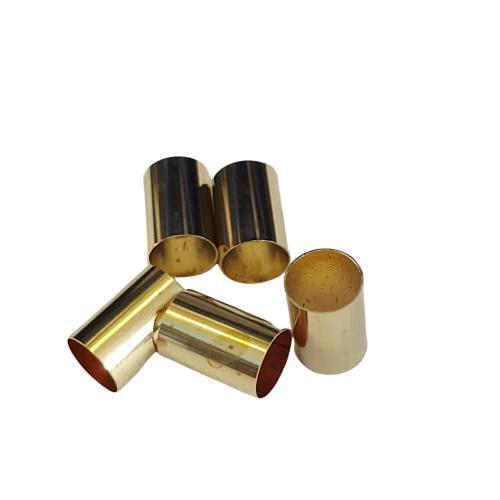
Another option is to get long shaft, splined pots and put the brass sleeves over the splines so they operate more like a solid shaft pot. I have done this a lot, especially when putting the cool, pre-84 metal "P" knobs on my post 84 instruments.
s-l960.jpg
 
  • Like
Reactions: kodiakblair
Last summer I picked up a badly used International Milestone IV for $40. I think I got ripped off. The neck was heavily bowed, but I figured that a truss rod adjustment would solve that. Bought it, took it home, and discovered that it didn't put out any signal. Turns out, one of the pots had loosened, spun, and ripped the wires loose. Easily solved with a decent soldering iron to reattach the wires, and a wrench to tighten the nut.

Then I went to adjust the truss rod, only to find that it was already bottomed out with the strings nearly a 1/4" above the neck at the octave with them held down against both ends of the fretboard. After talking with Peavey service and a local authorized repairman, and deciding that the cost of having the work done would be far more than the value of the instrument, I decided to stick a washer under the capstan (it doesn't have the usual style nut) to put it further back onto the threads. To do so, I had to remove the neck, rout out the body to make room for the extended capstan, and trim the pickguard to fit. Removing the neck turned into its own 3-ring circus, as 3 of the 4 screws had the Philips head slots stripped, one so badly that I had to cut a fresh slot in it to turn it. Once the neck was loose, I discovered that the previous bass-butcher had tried to fix the string height issue by carving the neck seat to a slightly different angle using a chisel, leaving a rough surface that was anything but level. That took additional cutting and sanding to get it flat, and I added a shim to bring it back to a more correct angle and height.

Finally, I was able to put a washer under the capstan, reassemble the neck, and put the strings back on. The shim helped, but the neck was still heavily bowed. It took 3 thick washers to get it more-or-less straight, after which it became apparent that the neck had a slight "S" shape, so the strings couldn't be lowered below about 3/16" at the nut without buzzing while playing higher up past the octave.

I also noticed that the pickups sat really low, almost flush with the pickguard, and turning the screws (two of the heads were stripped out) didn't raise them. Upon removing the pickguard, it became apparent that whoever butchered the instrument had removed the pickups at some point and reassembled them without putting the springs back over the screws. The springs were stuck to the bottoms of the pickups.

At this point, the instrument is reasonably "playable" but will never be good. This is hands-down the worse instrument I have ever owned, and $40 was far too much to pay for it.
 
This is the US Peavey Club
Yes, and it's a Peavey International series Milestone IV bass.

Incidentally, way back in the dim and distant past, when dinosaurs ruled the earth and I was a repair tech for a music store, we had a Peavey T-40 in stock, which played nicely and sounded great, but the weight was ridiculous. They got in a Patriot bass, which I probably would have bought if it had been left-handed. This Milestone IV was a serious disappointment.
 
Last summer I picked up a badly used International Milestone IV for $40. I think I got ripped off. The neck was heavily bowed, but I figured that a truss rod adjustment would solve that. Bought it, took it home, and discovered that it didn't put out any signal. Turns out, one of the pots had loosened, spun, and ripped the wires loose. Easily solved with a decent soldering iron to reattach the wires, and a wrench to tighten the nut.

Then I went to adjust the truss rod, only to find that it was already bottomed out with the strings nearly a 1/4" above the neck at the octave with them held down against both ends of the fretboard. After talking with Peavey service and a local authorized repairman, and deciding that the cost of having the work done would be far more than the value of the instrument, I decided to stick a washer under the capstan (it doesn't have the usual style nut) to put it further back onto the threads. To do so, I had to remove the neck, rout out the body to make room for the extended capstan, and trim the pickguard to fit. Removing the neck turned into its own 3-ring circus, as 3 of the 4 screws had the Philips head slots stripped, one so badly that I had to cut a fresh slot in it to turn it. Once the neck was loose, I discovered that the previous bass-butcher had tried to fix the string height issue by carving the neck seat to a slightly different angle using a chisel, leaving a rough surface that was anything but level. That took additional cutting and sanding to get it flat, and I added a shim to bring it back to a more correct angle and height.

Finally, I was able to put a washer under the capstan, reassemble the neck, and put the strings back on. The shim helped, but the neck was still heavily bowed. It took 3 thick washers to get it more-or-less straight, after which it became apparent that the neck had a slight "S" shape, so the strings couldn't be lowered below about 3/16" at the nut without buzzing while playing higher up past the octave.

I also noticed that the pickups sat really low, almost flush with the pickguard, and turning the screws (two of the heads were stripped out) didn't raise them. Upon removing the pickguard, it became apparent that whoever butchered the instrument had removed the pickups at some point and reassembled them without putting the springs back over the screws. The springs were stuck to the bottoms of the pickups.

At this point, the instrument is reasonably "playable" but will never be good. This is hands-down the worse instrument I have ever owned, and $40 was far too much to pay for it.

Yes, and it's a Peavey International series Milestone IV bass.

Incidentally, way back in the dim and distant past, when dinosaurs ruled the earth and I was a repair tech for a music store, we had a Peavey T-40 in stock, which played nicely and sounded great, but the weight was ridiculous. They got in a Patriot bass, which I probably would have bought if it had been left-handed. This Milestone IV was a serious disappointment.
I am sorry for your loss.
I would think a former repair tech would have been able to see many of those problems upon your initial inspection of the instrument.
In the future, when you go to look at basses, bring the few tools needed to determine if you are buying a usable bass or not.
I bought a used 1992 Peavey Fury in Olympic White (made in Meridian Mississippi) that had a dead pickup for $40 and it currently has a Thunderbird pickup in it, I like that bass a lot, never had any problems with anything on it.
I bought a used 1989 Peavey Fury (made in Meridian Mississippi) that had no pickup for $65 and it currently has an EMG Geezer P that sounds just great. I like that bass very much and it has given me no problems.
Better luck next time, this was not Peaveys fault.
Try to buy a USA made Peavey next time around, they are very available and usually pretty cheap.
 
  • Like
Reactions: Bleecker and XsoGol