• TalkBass has been independent since 1998. Add your voice.
    Create a free account to reply to discussions, view embedded media, and browse with fewer display ads.
    Join freeLog in
    Want zero display ads or expanded classifieds tools? Compare plans.

Unusual Rock Trivia?

Interscope Records cofounder and sometime ally of Dr. Dre, Jimmy Iovine, actually began his career as a recording engineer at the Record Plant in New York in the Seventies and actually worked as an engineer on the album Bat Out Of Hell by Meatloaf.

Just to add to your excellent post...Jimmy Iovine worked with a bunch of the greats! He even helped send those gold records into space on the Voyager space probes in 1977. You know the ones where the hostile aliens are going to get a road map directly back to Earth?
upload_2022-9-24_17-19-59.png


What a career! In the early 1970s, Iovine became a recording engineer, working with John Lennon and Bruce Springsteen, among others. By 1973, Iovine was on staff at the New York studio the Record Plant, where he worked on Springsteen's Born to Run and Meat Loaf's Bat Out of Hell albums. He came to prominence via his work on the 1978 Patti Smith album Easter, which included her Top 40 hit "Because the Night". He teamed with Tom Petty and the Heartbreakers on Damn the Torpedoes and U2 on Rattle and Hum. Iovine also produced Bella Donna (the first solo album for Stevie Nicks), Making Movies for Dire Straits, and Get Close for The Pretenders.
upload_2022-9-24_17-17-53.png
 
John Lodge on when he acquired his 1960 Fender Precision.

On Saturday mornings, like every budding musician, Lodge went to the local music shop, where he’d have a look at the amplifiers and the guitars, and he and his friends would show each other the new chords they had learned. “It was called Jack Woodruff’s, in the middle of Birmingham, and there in the window, ‘Direct from the USA’ — the Fender Precision Bass.” Lodge then went home and asked his father to help him buy it. And he did. “We went back to the store and signed the papers and bought that bass. Can you believe I’ve still got the paperwork? I found it the other day … amazing. That bass recorded nearly every Moody Blues song I’ve ever recorded, and my new album,.”
 
John Lodge on when he acquired his 1960 Fender Precision.

On Saturday mornings, like every budding musician, Lodge went to the local music shop, where he’d have a look at the amplifiers and the guitars, and he and his friends would show each other the new chords they had learned. “It was called Jack Woodruff’s, in the middle of Birmingham, and there in the window, ‘Direct from the USA’ — the Fender Precision Bass.” Lodge then went home and asked his father to help him buy it. And he did. “We went back to the store and signed the papers and bought that bass. Can you believe I’ve still got the paperwork? I found it the other day … amazing. That bass recorded nearly every Moody Blues song I’ve ever recorded, and my new album,.”
Very great and often overlooked bass player, singer and songwriter!
 
Geddy Lee commenting on Les Claypool.

“I really got off on watching how he approached the instrument,” who toured with Claypool in the Nineties. “He used to say to me, ‘You’re a big influence on me,’ but … he’s got his own style. He has a sense of rhythm that I find very appealing.”
 
  • Like
Reactions: Eli_Kyiv
On New Year's Day, 1962, Decca, looking for a beat group, auditioned two promising young bands: Brian Poole and the Tremeloes and another combo (also heavily influenced by Buddy Holly) from Liverpool called the Beatles. Decca chose Brian Poole and the Tremeloes over the Beatles, reportedly based on location – the Tremeloes were from the London area, making them more accessible than the Liverpool-based Beatles.

Here's a video of the Decca Exec that signed the Tremeloes over The Beatles.
giphy.gif

Dick Rowe, the man at Decca who rejected the Beatles, went on to sign:

The Rolling Stones
Them
The Moody Blues
The Zombies
John Mayall's Bluebreakers
Tom Jones
The Small Faces
The Animals
Cat Stevens
Procol Harem
 
The Greatest Music Producer You’ve Never Heard of Is . . . Tom Wilson
180410_TomWilson.jpg

Tom Wilson was born on March 25, 1931, and grew up in a mixed neighborhood just east of Baylor University. Music was a constant presence in the Wilson family. They attended New Hope Baptist Church, the oldest black church in town, whose most famous member was Jules Bledsoe, who sang “Old Man River” on Broadway in 1927 and became the first black opera star. Wilson’s father directed one of New Hope’s three choirs, including leading a performance at a Texas Centennial celebration in 1936, when Tom Jr. was five. His grandfather owned a rug laundry, where he hosted Saturday afternoon jam sessions. Tom learned to play the trombone at segregated Moore High School.

After Wilson graduated from Moore, he moved to Nashville and spent a year at Fisk University before transferring to Harvard. After graduating cum laude in 1954, he borrowed $900 and started his own label, Transition Records. It was a new era in jazz, and Wilson wanted to release some of the sounds he was hearing. One of his first signings was the pioneer bebop trumpeter Donald Byrd, whom he recorded with pianist Horace Silver and drummer Art Blakey. Wilson went to Chicago to record an album by avant-garde pianist and bandleader Sun Ra, who at that point had made only a couple of 45’s. Wilson also recorded 23-year-old post-bop pianist Cecil Taylor, putting out Jazz Advance, which "The Penguin Guide to Jazz" calls “one of the most extraordinary debuts in jazz.” Wilson—who by now was married with a couple of kids—wasn’t just a producer, he was a small businessman who took photographs, designed album covers, and wrote liner notes. He was DIY before DIY was cool.

In four years Wilson produced 22 albums (including an unreleased one featuring John Coltrane), but he ran into financial struggles and was forced to fold the label. He was offered a job as a jazz A&R (Artists and Repertoire) representative at United Artists in New York, the first in a series of similar jobs for other labels like Savoy Records and Audio Fidelity Records. He finally landed as a staff producer at Columbia Records in 1963, becoming the first African American to hold the position there. His first significant job at Columbia was to finish an album by a young folk singer named Bob Dylan, who had done an album of mostly covers and was now halfway through a second album of mostly originals. “He was such an ebullient spirit,” remembered singer and songwriter Van Dyke Parks, whom Wilson signed around this time. “Charismatic, statuesque, and curiously empowering for those in his orbit.” At first Wilson wasn’t thrilled with the prospect of working with someone like Dylan. “I didn’t even particularly like folk music,” he later told Melody Maker. “I’d been recording Sun Ra and John Coltrane, and I thought folk music was for the dumb guys. This guy played like the dumb guys. But then these words came out.” He told Albert Grossman, Dylan’s manager, that they should put a band behind him—“you might have a white Ray Charles”—but Dylan was comfortable doing things solo.

The scruffy 20-year-old clicked with the well-dressed 30-year-old, and they developed a good working relationship, doing two more acoustic albums (The Times They Are a-Changin’ and Another Side of Bob Dylan) before Wilson helped usher in the modern age in 1965 with Bringing It All Back Home, Dylan’s half-electric, half-acoustic tour de force. The year before, Wilson had overdubbed a band onto three of Dylan’s older songs, including “House of the Rising Sun,” but the sound didn’t work. On Bringing It All Back Home, Wilson got it right, bringing in a band of electric guitarists, a couple of bassists (including Bill Lee, director Spike Lee’s father), and a drummer. The result was Dylan’s first modern masterpiece, “Subterranean Homesick Blues,” whose frantic, lurching bluesy vibe would set the tone for the rest of the sixties. You can actually hear Wilson at the beginning of another song on the album, “Bob Dylan’s 115th Dream,” in which Dylan makes a false start, stops, starts laughing, and is joined by a laughing Wilson; after a few seconds you can hear Wilson say, “Wait a minute now. Okay, take two.” Then the band kicks in. As a listener, it sounds like you’ve been let in on a secret: Oh, so that’s the way they make records.

Wilson signed or produced others at Columbia, including Tim Hardin, Pete Seeger, and Dion. His biggest hit, though, came in a bizarre, roundabout fashion when he recorded a young duo called Simon and Garfunkel. At first the result was a mopey acoustic album called Wednesday Morning 3 AM that sold terribly. Garfunkel went back to school while Simon moved to England. But in the meantime, a song from the album, “The Sounds of Silence,” was receiving airplay in Florida and Boston, and Wilson sensed an opportunity. He knew what a good rock band could do to a song and brought in some musicians—including a couple he had used to back up Dylan—to do overdubs. Columbia released the new version as a single—and it became a hit, climbing to number one by the end of 1965. Simon and Garfunkel reunited, folk rock was born, and Wilson was now a kingmaker.

In early 1966 Wilson left Columbia and took a job as head of A&R at Verve/MGM records. One of the first groups he signed was the Mothers of Invention, a gang of weirdos led by Frank Zappa who were fusing blues and psychedelia, jazz and noise, rock and the absurd into something altogether new. Wilson liked their sound so much that he demanded $21,000 from the label to make Freak Out!, the band’s first album (which was actually two LPs), a staggering sum in the mid-sixties. “Tom Wilson was a great guy,” Zappa later said. “He had vision, you know? And he really stood by us.” Wilson wound up producing their second album too.

Around this time he was also trying to figure out how to sign the Velvet Underground. He’d seen them play in a New York club and liked their provocative mix of melody and noise. He had even talked with band members Lou Reed and John Cale about recording for Columbia a year before. Wilson convinced the band to sign to Verve, because, in guitarist Sterling Morrison’s words, he said that “at Verve we could do anything we wanted. And he was right.” The band had already recorded most of its debut album, The Velvet Underground and Nico, and after signing with Wilson, MGM gave band members money to re-record three songs, including “Waiting for the Man,” “Heroin,” and “Venus in Furs.” In addition, Wilson took them into the studio and recorded the album’s sublime opener, “Sunday Morning.” Wilson was in the studio for the entirety of the band’s second album, the chaotic masterpiece White Light/White Heat, in 1967, where he sat back and let the band do what it did best. John Cale later said to the authors of Up-Tight: The Velvet Underground Story, “The band never again had as good a producer as Tom Wilson.”
 
Last edited:
The Greatest Music Producer You’ve Never Heard of Is . . . Tom Wilson
180410_TomWilson.jpg

Tom Wilson was born on March 25, 1931, and grew up in a mixed neighborhood just east of Baylor University. Music was a constant presence in the Wilson family. They attended New Hope Baptist Church, the oldest black church in town, whose most famous member was Jules Bledsoe, who sang “Old Man River” on Broadway in 1927 and became the first black opera star. Wilson’s father directed one of New Hope’s three choirs, including leading a performance at a Texas Centennial celebration in 1936, when Tom Jr. was five. His grandfather owned a rug laundry, where he hosted Saturday afternoon jam sessions. Tom learned to play the trombone at segregated Moore High School.

After Wilson graduated from Moore, he moved to Nashville and spent a year at Fisk University before transferring to Harvard. After graduating cum laude in 1954, he borrowed $900 and started his own label, Transition Records. It was a new era in jazz, and Wilson wanted to release some of the sounds he was hearing. One of his first signings was the pioneer bebop trumpeter Donald Byrd, whom he recorded with pianist Horace Silver and drummer Art Blakey. Wilson went to Chicago to record an album by avant-garde pianist and bandleader Sun Ra, who at that point had made only a couple of 45’s. Wilson also recorded 23-year-old post-bop pianist Cecil Taylor, putting out Jazz Advance, which "The Penguin Guide to Jazz" calls “one of the most extraordinary debuts in jazz.” Wilson—who by now was married with a couple of kids—wasn’t just a producer, he was a small businessman who took photographs, designed album covers, and wrote liner notes. He was DIY before DIY was cool.

In four years Wilson produced 22 albums (including an unreleased one featuring John Coltrane), but he ran into financial struggles and was forced to fold the label. He was offered a job as a jazz A&R (Artists and Repertoire) representative at United Artists in New York, the first in a series of similar jobs for other labels like Savoy Records and Audio Fidelity Records. He finally landed as a staff producer at Columbia Records in 1963, becoming the first African American to hold the position there. His first significant job at Columbia was to finish an album by a young folk singer named Bob Dylan, who had done an album of mostly covers and was now halfway through a second album of mostly originals. “He was such an ebullient spirit,” remembered singer and songwriter Van Dyke Parks, whom Wilson signed around this time. “Charismatic, statuesque, and curiously empowering for those in his orbit.” At first Wilson wasn’t thrilled with the prospect of working with someone like Dylan. “I didn’t even particularly like folk music,” he later told Melody Maker. “I’d been recording Sun Ra and John Coltrane, and I thought folk music was for the dumb guys. This guy played like the dumb guys. But then these words came out.” He told Albert Grossman, Dylan’s manager, that they should put a band behind him—“you might have a white Ray Charles”—but Dylan was comfortable doing things solo.

The scruffy 20-year-old clicked with the well-dressed 30-year-old, and they developed a good working relationship, doing two more acoustic albums (The Times They Are a-Changin’ and Another Side of Bob Dylan) before Wilson helped usher in the modern age in 1965 with Bringing It All Back Home, Dylan’s half-electric, half-acoustic tour de force. The year before, Wilson had overdubbed a band onto three of Dylan’s older songs, including “House of the Rising Sun,” but the sound didn’t work. On Bringing It All Back Home, Wilson got it right, bringing in a band of electric guitarists, a couple of bassists (including Bill Lee, director Spike Lee’s father), and a drummer. The result was Dylan’s first modern masterpiece, “Subterranean Homesick Blues,” whose frantic, lurching bluesy vibe would set the tone for the rest of the sixties. You can actually hear Wilson at the beginning of another song on the album, “Bob Dylan’s 115th Dream,” in which Dylan makes a false start, stops, starts laughing, and is joined by a laughing Wilson; after a few seconds you can hear Wilson say, “Wait a minute now. Okay, take two.” Then the band kicks in. As a listener, it sounds like you’ve been let in on a secret: Oh, so that’s the way they make records.

Wilson signed or produced others at Columbia, including Tim Hardin, Pete Seeger, and Dion. His biggest hit, though, came in a bizarre, roundabout fashion when he recorded a young duo called Simon and Garfunkel. At first the result was a mopey acoustic album called Wednesday Morning 3 AM that sold terribly. Garfunkel went back to school while Simon moved to England. But in the meantime, a song from the album, “The Sounds of Silence,” was receiving airplay in Florida and Boston, and Wilson sensed an opportunity. He knew what a good rock band could do to a song and brought in some musicians—including a couple he had used to back up Dylan—to do overdubs. Columbia released the new version as a single—and it became a hit, climbing to number one by the end of 1965. Simon and Garfunkel reunited, folk rock was born, and Wilson was now a kingmaker.

In early 1966 Wilson left Columbia and took a job as head of A&R at Verve/MGM records. One of the first groups he signed was the Mothers of Invention, a gang of weirdos led by Frank Zappa who were fusing blues and psychedelia, jazz and noise, rock and the absurd into something altogether new. Wilson liked their sound so much that he demanded $21,000 from the label to make Freak Out!, the band’s first album (which was actually two LPs), a staggering sum in the mid-sixties. “Tom Wilson was a great guy,” Zappa later said. “He had vision, you know? And he really stood by us.” Wilson wound up producing their second album too.

Around this time he was also trying to figure out how to sign the Velvet Underground. He’d seen them play in a New York club and liked their provocative mix of melody and noise. He had even talked with band members Lou Reed and John Cale about recording for Columbia a year before. Wilson convinced the band to sign to Verve, because, in guitarist Sterling Morrison’s words, he said that “at Verve we could do anything we wanted. And he was right.” The band had already recorded most of its debut album, The Velvet Underground and Nico, and after signing with Wilson, MGM gave band members money to re-record three songs, including “Waiting for the Man,” “Heroin,” and “Venus in Furs.” In addition, Wilson took them into the studio and recorded the album’s sublime opener, “Sunday Morning.” Wilson was in the studio for the entirety of the band’s second album, the chaotic masterpiece White Light/White Heat, in 1967, where he sat back and let the band do what it did best. John Cale later said to the authors of Up-Tight: The Velvet Underground Story, “The band never again had as good a producer as Tom Wilson.”


Quoted because I could only like once.


Love the man's work.
 
The Greatest Music Producer You’ve Never Heard of Is . . . Tom Wilson
180410_TomWilson.jpg

Tom Wilson was born on March 25, 1931, and grew up in a mixed neighborhood just east of Baylor University. Music was a constant presence in the Wilson family. They attended New Hope Baptist Church, the oldest black church in town, whose most famous member was Jules Bledsoe, who sang “Old Man River” on Broadway in 1927 and became the first black opera star. Wilson’s father directed one of New Hope’s three choirs, including leading a performance at a Texas Centennial celebration in 1936, when Tom Jr. was five. His grandfather owned a rug laundry, where he hosted Saturday afternoon jam sessions. Tom learned to play the trombone at segregated Moore High School.

After Wilson graduated from Moore, he moved to Nashville and spent a year at Fisk University before transferring to Harvard. After graduating cum laude in 1954, he borrowed $900 and started his own label, Transition Records. It was a new era in jazz, and Wilson wanted to release some of the sounds he was hearing. One of his first signings was the pioneer bebop trumpeter Donald Byrd, whom he recorded with pianist Horace Silver and drummer Art Blakey. Wilson went to Chicago to record an album by avant-garde pianist and bandleader Sun Ra, who at that point had made only a couple of 45’s. Wilson also recorded 23-year-old post-bop pianist Cecil Taylor, putting out Jazz Advance, which "The Penguin Guide to Jazz" calls “one of the most extraordinary debuts in jazz.” Wilson—who by now was married with a couple of kids—wasn’t just a producer, he was a small businessman who took photographs, designed album covers, and wrote liner notes. He was DIY before DIY was cool.

In four years Wilson produced 22 albums (including an unreleased one featuring John Coltrane), but he ran into financial struggles and was forced to fold the label. He was offered a job as a jazz A&R (Artists and Repertoire) representative at United Artists in New York, the first in a series of similar jobs for other labels like Savoy Records and Audio Fidelity Records. He finally landed as a staff producer at Columbia Records in 1963, becoming the first African American to hold the position there. His first significant job at Columbia was to finish an album by a young folk singer named Bob Dylan, who had done an album of mostly covers and was now halfway through a second album of mostly originals. “He was such an ebullient spirit,” remembered singer and songwriter Van Dyke Parks, whom Wilson signed around this time. “Charismatic, statuesque, and curiously empowering for those in his orbit.” At first Wilson wasn’t thrilled with the prospect of working with someone like Dylan. “I didn’t even particularly like folk music,” he later told Melody Maker. “I’d been recording Sun Ra and John Coltrane, and I thought folk music was for the dumb guys. This guy played like the dumb guys. But then these words came out.” He told Albert Grossman, Dylan’s manager, that they should put a band behind him—“you might have a white Ray Charles”—but Dylan was comfortable doing things solo.

The scruffy 20-year-old clicked with the well-dressed 30-year-old, and they developed a good working relationship, doing two more acoustic albums (The Times They Are a-Changin’ and Another Side of Bob Dylan) before Wilson helped usher in the modern age in 1965 with Bringing It All Back Home, Dylan’s half-electric, half-acoustic tour de force. The year before, Wilson had overdubbed a band onto three of Dylan’s older songs, including “House of the Rising Sun,” but the sound didn’t work. On Bringing It All Back Home, Wilson got it right, bringing in a band of electric guitarists, a couple of bassists (including Bill Lee, director Spike Lee’s father), and a drummer. The result was Dylan’s first modern masterpiece, “Subterranean Homesick Blues,” whose frantic, lurching bluesy vibe would set the tone for the rest of the sixties. You can actually hear Wilson at the beginning of another song on the album, “Bob Dylan’s 115th Dream,” in which Dylan makes a false start, stops, starts laughing, and is joined by a laughing Wilson; after a few seconds you can hear Wilson say, “Wait a minute now. Okay, take two.” Then the band kicks in. As a listener, it sounds like you’ve been let in on a secret: Oh, so that’s the way they make records.

Wilson signed or produced others at Columbia, including Tim Hardin, Pete Seeger, and Dion. His biggest hit, though, came in a bizarre, roundabout fashion when he recorded a young duo called Simon and Garfunkel. At first the result was a mopey acoustic album called Wednesday Morning 3 AM that sold terribly. Garfunkel went back to school while Simon moved to England. But in the meantime, a song from the album, “The Sounds of Silence,” was receiving airplay in Florida and Boston, and Wilson sensed an opportunity. He knew what a good rock band could do to a song and brought in some musicians—including a couple he had used to back up Dylan—to do overdubs. Columbia released the new version as a single—and it became a hit, climbing to number one by the end of 1965. Simon and Garfunkel reunited, folk rock was born, and Wilson was now a kingmaker.

In early 1966 Wilson left Columbia and took a job as head of A&R at Verve/MGM records. One of the first groups he signed was the Mothers of Invention, a gang of weirdos led by Frank Zappa who were fusing blues and psychedelia, jazz and noise, rock and the absurd into something altogether new. Wilson liked their sound so much that he demanded $21,000 from the label to make Freak Out!, the band’s first album (which was actually two LPs), a staggering sum in the mid-sixties. “Tom Wilson was a great guy,” Zappa later said. “He had vision, you know? And he really stood by us.” Wilson wound up producing their second album too.

Around this time he was also trying to figure out how to sign the Velvet Underground. He’d seen them play in a New York club and liked their provocative mix of melody and noise. He had even talked with band members Lou Reed and John Cale about recording for Columbia a year before. Wilson convinced the band to sign to Verve, because, in guitarist Sterling Morrison’s words, he said that “at Verve we could do anything we wanted. And he was right.” The band had already recorded most of its debut album, The Velvet Underground and Nico, and after signing with Wilson, MGM gave band members money to re-record three songs, including “Waiting for the Man,” “Heroin,” and “Venus in Furs.” In addition, Wilson took them into the studio and recorded the album’s sublime opener, “Sunday Morning.” Wilson was in the studio for the entirety of the band’s second album, the chaotic masterpiece White Light/White Heat, in 1967, where he sat back and let the band do what it did best. John Cale later said to the authors of Up-Tight: The Velvet Underground Story, “The band never again had as good a producer as Tom Wilson.”
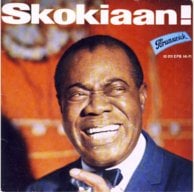
Wow what a repertoire! Your statement "The Greatest Music Producer You’ve Never Heard of Is . . . Tom Wilson" is pretty accurate too! Good stuff!
 
"You Don't Bring Me Flowers" is a song written by Neil Diamond with Alan and Marilyn Bergman for the ill-fated daily TV sitcom All That Glitters. The song was intended to be the theme song, but Norman Lear, the show's creator, changed the concept of the show and the song was no longer appropriate. Diamond then expanded the track from 45 seconds to 3:17, adding instrumental sections and an additional verse. The Bergmans contributed to the song's lyrics, which tell the story of two lovers who have drifted apart while they "go through the motions" and heartache of life together.

In 1977, Diamond released the album I'm Glad You're Here With Me Tonight, which included the track "You Don't Bring Me Flowers" as a solo performance. Early in 1978, Barbra Streisand covered the song on her album Songbird. These recordings were spliced together by different radio stations, creating unofficial duets, the success of which led to the studio bringing them together for an official duet recording, which reached number one on the U.S. Billboard Hot 100 pop chart and an international hit.


"You Don't Bring Me Flowers" is a song written by Neil Diamond with Alan and Marilyn Bergman for the ill-fated daily TV sitcom All That Glitters. The song was intended to be the theme song, but Norman Lear, the show's creator, changed the concept of the show and the song was no longer appropriate. Diamond then expanded the track from 45 seconds to 3:17, adding instrumental sections and an additional verse. The Bergmans contributed to the song's lyrics, which tell the story of two lovers who have drifted apart while they "go through the motions" and heartache of life together.

In 1977, Diamond released the album I'm Glad You're Here With Me Tonight, which included the track "You Don't Bring Me Flowers" as a solo performance. Early in 1978, Barbra Streisand covered the song on her album Songbird. These recordings were spliced together by different radio stations, creating unofficial duets, the success of which led to the studio bringing them together for an official duet recording, which reached number one on the U.S. Billboard Hot 100 pop chart and an international hit.


That's a great song, and SO powerful. I've always loved the duet version.
 
“There’s a theory that I maliciously worked Stu Sutcliffe out of the group in order to get the prize chair of bass,” Paul McCartney told biographer Barry Miles. “Forget it! Nobody wants to play bass, or nobody did in those days.”
Love old Beatle trivia!
Stu and his Girlfriend Astrid were art Students that shaped the Beatles image.
Stu couldn’t play a note but he was cool like James Dean!
upload_2022-9-30_10-47-41.jpeg
 
Before Three Dog Night was formed, Cory Wells was a member of The Enemys.

Following his military service, Wells returned to Buffalo, NY and joined a band named the Vibratos. The brother-in-law of the Vibratos guitar player suggested the Vibratos travel to California if they were serious about making it in music. They took his advice and changed the name of the band to "The Enemys." They soon began working the clubs in Los Angeles, San Diego, Las Vegas, and Sacramento, and they became the house band at the Whisky A Go Go.

They were also featured in the television shows The Beverly Hillbillies, Burke's Law, Riot On Sunset Strip, and the film Harper, with Paul Newman. While at the Whisky a Go Go, Cher asked the band to tour with Sonny & Cher. It was on this tour that Wells met Irishman Danny Hutton, a former songwriter/performer for Hanna-Barbera Productions who became his future partner in the rock band Three Dog Night.

The Enemys had recordings of "Hey Joe" and "Sinner Man". Wells moved to Phoenix in 1967 where he formed The Cory Wells Blues Band, whose bass player was future Three Dog Night bass player, Joe Schermetzler (stage name Joe Schermie).


Not rock and roll, but definitely unusual!

The octobass is an extremely large and rare bowed string instrument that was first built around 1850 in Paris by the French luthierJean-Baptiste Vuillaume (1798–1875). It has three strings and is essentially a larger version of the double bass – the specimen in the collection of the Musée de la Musique in Paris measures 3.48 metres (11 ft 5 in) in length, whereas a full-size double bass is generally approximately 2 m (6 ft 7 in) in length.

7D25025D-D444-4ABB-9B5F-1319C1A77557.jpeg
 
Not rock and roll, but definitely unusual!

The octobass is an extremely large and rare bowed string instrument that was first built around 1850 in Paris by the French luthierJean-Baptiste Vuillaume (1798–1875). It has three strings and is essentially a larger version of the double bass – the specimen in the collection of the Musée de la Musique in Paris measures 3.48 metres (11 ft 5 in) in length, whereas a full-size double bass is generally approximately 2 m (6 ft 7 in) in length.

View attachment 4830161
If you forgot the step ladder you can’t tune it!
 
Not exactly rock, but still.
Buddy Rich began playing drums in vaudeville when he was 18 months old, billed as "Traps the Drum Wonder." At the peak of Rich's childhood career, he was reportedly the second-highest paid child entertainer in the world.
"Photo of Buddy Rich as a child performer, from 1923, when Buddy would have been about 6 years old, contributed by Rex Strother, from Salt Lake, Utah."
Invalid Link Removed
 
Although technically not unusual Rock trivia You may recall watching Elvira, Mistress of the Dark, on Elvira's Movie Macabre. Cassandra Peterson played Elvira who like Cher has aged amazingly well. Cassandra has previously stated that she has always enjoyed horror films. She used to prefer horror-themed toys to Barbies when she was a kid. Later, before becoming an actress, she worked as a dancer.

Her unusual Rock trivia ties in when Cassandra moved to Italy in the early 1970s and was a member of the Italian band The Snails. She met a film producer and began her acting career in Roma's small film. She also performed in the United States with the comedy/musical act Mammas Boys. Of course, her career skyrocketed after playing a casting role as Elvira in Mistress of the Dark in 1981. She played a role as Elvira in the series mistress of the dark. In a few years, her character has become popular as Elvira. Her popular, campy show can still be watched on various cable channels showing B grade, horror, Sci-Fi movies interjected with her witty humor. In her memoirs she wrote about a youthful encounter with Jimi Hendrix!
Elvira Recalls Tear Gas Attack That Led to Jimi Hendrix Kiss

upload_2022-10-4_1-29-20.jpeg
 
Although technically not unusual Rock trivia You may recall watching Elvira, Mistress of the Dark, on Elvira's Movie Macabre. Cassandra Peterson played Elvira who like Cher has aged amazingly well. Cassandra has previously stated that she has always enjoyed horror films. She used to prefer horror-themed toys to Barbies when she was a kid. Later, before becoming an actress, she worked as a dancer.

Her unusual Rock trivia ties in when Cassandra moved to Italy in the early 1970s and was a member of the Italian band The Snails. She met a film producer and began her acting career in Roma's small film. She also performed in the United States with the comedy/musical act Mammas Boys. Of course, her career skyrocketed after playing a casting role as Elvira in Mistress of the Dark in 1981. She played a role as Elvira in the series mistress of the dark. In a few years, her character has become popular as Elvira. Her popular, campy show can still be watched on various cable channels showing B grade, horror, Sci-Fi movies interjected with her witty humor. In her memoirs she wrote about a youthful encounter with Jimi Hendrix!
Elvira Recalls Tear Gas Attack That Led to Jimi Hendrix Kiss

View attachment 4833190

FWIW, Casandra posed nude in the Men's Magazine High Society in 1974. :drool:

She also was in the running to play Ginger Grant in Gilligan's Island, but lost out to Tina Louise.
 
  • Like
Reactions: SubHuman