• TalkBass has been independent since 1998. Add your voice.
    Create a free account to reply to discussions, view embedded media, and browse with fewer display ads.
    Join freeLog in
    Want zero display ads or expanded classifieds tools? Compare plans.

Unusual Rock Trivia?

Rock Stars Are Just Like You & I!
Do Ya Think I'm Sexy??? Rod Stewart choo-choo-chooses to build model railways in his spare time.
On this day in 2019 Rod The Mod was featured on the cover of Britain’s Railway Modeller magazine. The singer had put the finishing touches to a 25-year project building a railway city, which was modelled on both New York and Chicago around 1945. The model railway which spans 1,500 square feet was housed in the attic of his Los Angeles home.
Speaking to Railway Modeller, Stewart revealed that he has spent almost 26-years building a huge, 124-ft-long intricate model of a city influenced by both New York and Chicago.
Later, after the interview was shared, Stewart rang BBC Radio 2’s Jeremy Vine Show to refute accusations that he hadn’t made the model railway himself.
Sir Rod said: “I would say 90% of it I built myself. The only thing I wasn’t very good at and still am not is the electricals, so I had someone else do that.”
“A lot of people laugh at it being a silly hobby, but it’s a wonderful hobby,” he continued.
Parts of this story were written by Elizabeth Aubrey at www.nme.com
Invalid Link Removed

Here's another from Jools Holland.


Neil Young is deep into that as well…
Neil Young’s O gauge railroad - Trains
 
"Ringo, I Love You" is a rock song performed by American singer-actress Bonnie Jo Mason, the name she used at the start of her career when based in Los Angeles. The song was released as a promotional single in 1964 during the height of Beatlemania. It was a tribute to The Beatles. The original vinyl is now a valuable rarity.

The single was released under the name of Bonnie Jo Mason because producer Phil Spector wanted American names for his singers, and Cherilyn La Piere was not a name he considered sufficiently American.


The single failed to chart nationally, and did not pick up much local radio play. The track does not have Spector's usual Wall of Sound production techniques, instead featuring more of a crudely arranged "beat group" sound. Spector, if he did indeed produce the track, took no producer credit, and the record did not appear on Philles Records, Spector's usual label.

Of course you recognize the lead singer, Cherilyn La Piere as Cher.
 
Here’s a rare bit of lush 60’s Sunshine Pop…


Roger Nichols(not to be confused with the other Roger Nichols, recording engineer for Steely Dan and many more)went on to co-write a number of hits for The Carpenters, but in this earlier outfit he is joined by Murray MacLeod and his sister Melinda; MacLeod was also involved in another one-hit-wonder outfit, The Parade…

…and went on to be a successful TV actor in the 70’s, “The Incredible Hulk” being one such credit.
 
Three people involved with the Top 40 hit "A Question of Temperature" in 1968 by New Jersey psychedelic garage band The Balloon Farm gained greater fame after the band dissolved.

Guitarist, singer, and songwriter Mike Appel would become Bruce Springsteen's first manager and record co-producer. and co-write songs for The Partridge Family and other bands. Producer Peter Schekeryk became Melanie's manager and husband. Arranger, Charlie Morrow would become internationally known for jingles and the invention of MorrowSound True3D (3D audio effect) among other things.

 
Neil Innes wrote the songs and played keys on the Rutles recordings. John Halsey, who played Rutles' drummer Barry Wom in the movie, also played drums on the recordings. The guitar and bass parts were played by Peter "Ollie" Halsall, who also sang the Paul McCartney-esque Dirk McQucikly vocal parts that Eric Idle mimed to.

In fact, Halsall was originally recruited to play McQuickly (he was a superlatively skillful left-handed guitarist and bassist whose doe-eyed looks made him the obvious choice), but producer Lorne Michaels insisted that the only way the movie had a chance of getting sufficient viewership in the U.S. would be to cast Eric Idle in a prominent role---i.e., as a member of the band---despite his being unable to play or sing.

Halsey and Halsall had been members of the terrific but little-known early '70s British jazz-rock band Patto. Patto's music and history is a whole other topic, but here's a live-in-the-studio example of Halsall's and Halsey's playing, from a 1972 album. (I bought the album Roll 'em, Smoke 'em, Put Another Line Out when it came out; I suspect that a young Eddie Van Halen did, too. And maybe Randy Rhoads.)


Thanks for this! I had been completely unaware of him after 50+ years of being a muso and fan.
Clear that as a guitarist he was right there with Holdsworth, whom I was way into.
EVH mentioned Allan H as. an influence, but I think you may be right about Halsall as well.
Upon listening to more Halsall, however, unlike either of them, he had serious mainstream jazz knowledge and chops.
 
Crosspost! But more trivia!
@marchone

One of Tower Records most loyal customers in Los Angeles was Elton John, who states in the movie doc “All Things Must Pass” that he probably spent more money in Tower than any other individual.

C9CEC366-7FFC-4119-81B1-B2CB5FB1A936.jpeg
 
Crosspost! But more trivia!
@marchone

One of Tower Records most loyal customers in Los Angeles was Elton John, who states in the movie doc “All Things Must Pass” that he probably spent more money in Tower Records than any other individual.

View attachment 4878759
You got a twofer out of one post! TB’ers saving the planet one post at a time.
 
While Brian Eno is an accomplished musician himself, his engineering and production skills are equally as impressive.

The work he did with The Talking Heads is an exercise in experimental recording strategies.

Eno introduced the group to a multiple rhythm style. Each band member would start on a different count. This technique lets each part of the song flow in and out of one another in unique ways.

Additionally, Eno had each band member record their parts on ‘Once In A Lifetime’ without knowing what their bandmates had recorded. They played each part in isolation from one another. Eno then mixed the ’blind overdubs’ into the original track for effect. What results is a song that is fluid and fragmented all at the same time.
 
Pete Best Finally Gets To Make Some Money From His Tenure In The Beatles :
When The Beatles’ Anthology was released in November of 1995 former Beatle Pete Best was finally able to make some money of his performances of an early sessions with George Martin, most notable a early version of “Love Me Do”. Some tracks from the famous “Decca Audition” and tracks from the sessions he played drums on when the band backed up Tony Sheridan.
Up until that point in 1995 it’s hard to believe that Best had lived a middle class lifestyle since he was fired from the band. Granted no one expected him to have the type of money that John, Paul, George, and Ringo had acquired, but many figured he was at least a millionaire, since he’s part of the history of the most successful act of all time. Yet that was hardly the case.
Since leaving The Beatles Pete tried to have his own success in the music business but it didn’t really work out. By the time The Beatles were the biggest band in the world Pete was actually working at a bakery making just above minimum wage. He later became a civil servant in Liverpool, a job he kept for many decades where he helped his fellow Liverpudlians find jobs.
He also gave occasional interviews and even performed from time to time with his own band . It apparently totally caught him off guard when his old friend Neil Aspinall (the head of Apple Corps.) called to inform him that he would be receiving performance royalties off the sales of “Anthology 1”. When it was all said and done Pete received between $6 to $8 million dollars (in U.S.money.) Unfortunately though his face was cropped out on the cover of the Anthology release.
As far as cashing in it was long overdue to say the least. For decades Pete had to endure the humiliation of being fired by The Beatles with people reminding of of it every day of his life. Though it all he’s handled it with class.
He more then deserved that money. Actually he’s been underpaid.
Link Removed
 
10cc – I’m Not In Love
10cc were flat out studio wizards. Their list of experimental recording processes is dizzying. But of all their strange studio tricks none is more bizarre than the sugary whoosh heard through out their hit ‘I’m Not In Love.’

10cc recorded members of the group singing just the word ‘ahhh’ for three weeks straight and recorded it to tape. The aim was to create a soundscape of backing vocals that could run forever and layer with the other instruments no matter what note was needed.

When all was said and done they had layered 256 voices onto 16 tracks. Each voice in the chromatic scale was loaded into the mixing desk. As the song changed, the faders were raised or lowered to fit the song. This allowed them to play the mixing board like a voice synthesizer. Which is why no record before it sounded quite like it.
 
Pete Best Finally Gets To Make Some Money From His Tenure In The Beatles :
When The Beatles’ Anthology was released in November of 1995 former Beatle Pete Best was finally able to make some money of his performances of an early sessions with George Martin, most notable a early version of “Love Me Do”. Some tracks from the famous “Decca Audition” and tracks from the sessions he played drums on when the band backed up Tony Sheridan.
Up until that point in 1995 it’s hard to believe that Best had lived a middle class lifestyle since he was fired from the band. Granted no one expected him to have the type of money that John, Paul, George, and Ringo had acquired, but many figured he was at least a millionaire, since he’s part of the history of the most successful act of all time. Yet that was hardly the case.
Since leaving The Beatles Pete tried to have his own success in the music business but it didn’t really work out. By the time The Beatles were the biggest band in the world Pete was actually working at a bakery making just above minimum wage. He later became a civil servant in Liverpool, a job he kept for many decades where he helped his fellow Liverpudlians find jobs.
He also gave occasional interviews and even performed from time to time with his own band . It apparently totally caught him off guard when his old friend Neil Aspinall (the head of Apple Corps.) called to inform him that he would be receiving performance royalties off the sales of “Anthology 1”. When it was all said and done Pete received between $6 to $8 million dollars (in U.S.money.) Unfortunately though his face was cropped out on the cover of the Anthology release.
As far as cashing in it was long overdue to say the least. For decades Pete had to endure the humiliation of being fired by The Beatles with people reminding of of it every day of his life. Though it all he’s handled it with class.
He more then deserved that money. Actually he’s been underpaid.
Link Removed
I don't think John Lennon, if he were still here, would agree that Pete had been underpaid. He expressed his thoughts about Best in an interview.


The Beatles simply acted on our well known adage ... "Fire the drummer!" :)
 
In 1962 Jim McGuinn was hired by Bobby Darin to be a backup guitarist and harmony singer; at that approximate time, Darin wanted to add some folk roots to his repertoire because it was a burgeoning musical field. About a year and a half after McGuinn began to play guitar and sing with Darin, Darin became ill and retired from singing. Subsequently, Darin opened T.M. Music in New York City's Brill Building, hiring McGuinn as a songwriter for $35 a week.

During 1963, McGuinn worked as a studio musician recording with Judy Collins and Simon & Garfunkel. At the same time, he was hearing about the Beatles (whose first American appearances would come in February 1964) and wondering how Beatlemania might affect folk music. When he saw George Harrison playing a 12-string Rickenbacker in the film A Hard Day's Night, it inspired him to buy the same instrument.

lf


McGuinn played at the Troubadour nightclub in Los Angeles, and he had begun to include Beatles' songs in his folk act. He gave rock style treatments to traditional folk tunes and caught the attention of another folkie Beatle fan, Gene Clark, who joined forces with McGuinn in July 1964. Together they formed the beginning of what was to become the Byrds. Jim subsequently changed his name to Roger McGuinn due to religious reasons.


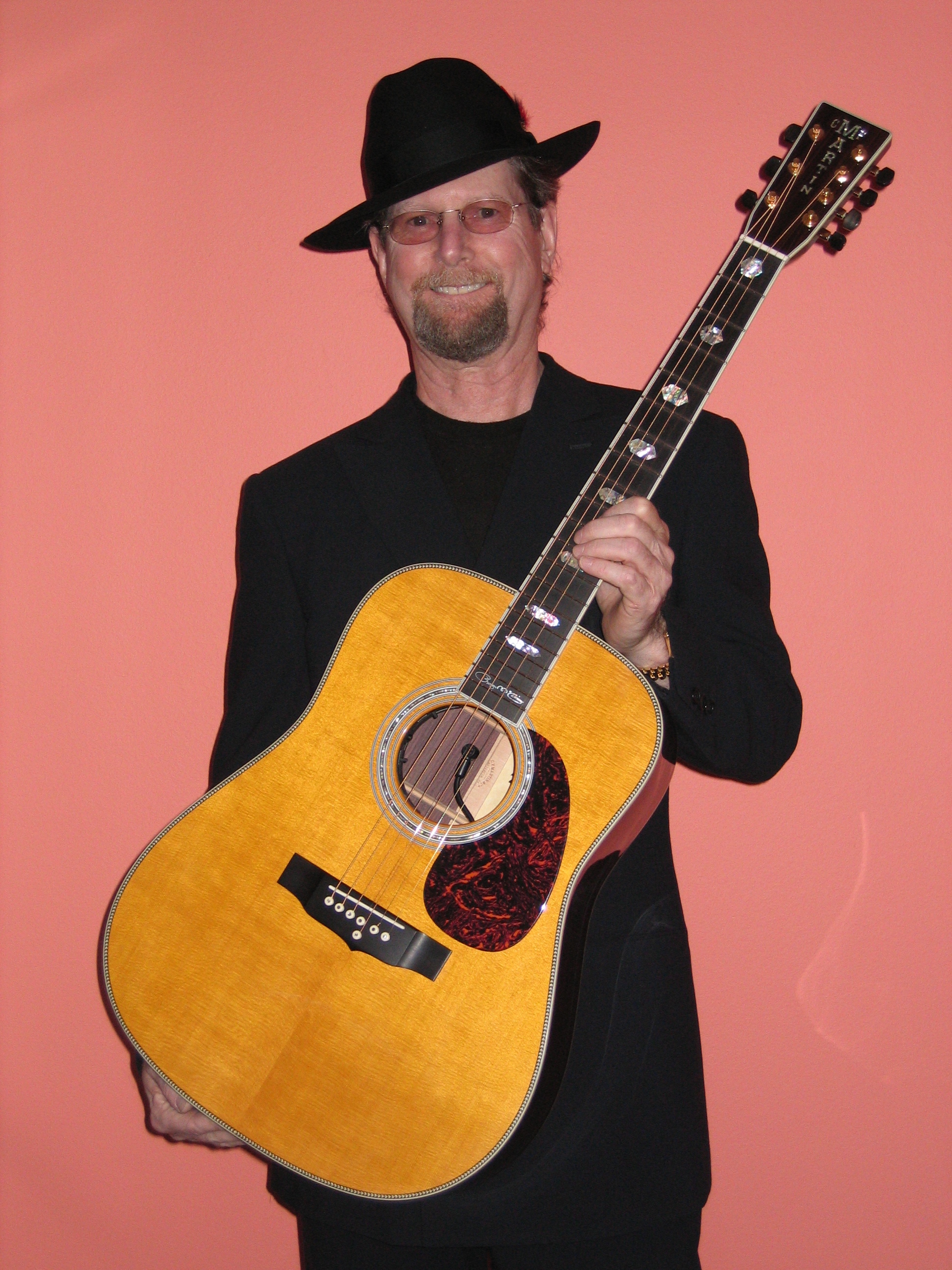
Another sound that McGuinn developed is made by playing a seven-string guitar, featuring a doubled G-string (with the second string tuned an octave higher). The C. F. Martin guitar company has even released a special edition called the HD7 Roger McGuinn Signature Edition, that claims to capture McGuinn's "jingle-jangle" tone which he created with 12 string guitars, while maintaining the ease of playing a 6-string guitar.
B1xa+Udk5gS.jpg
 
The band was The Aerovons. The album was called Resurrection. Signed to The Beatles’ label Parlophone, The Aerovons recorded this masterpiece in 1969 at Abbey Road. Beatles’ sound engineers Geoff Emerick, Alan Parsons and Norman Smith worked on the sessions. The album was produced by the prodigious 17-year-old leader Tom Hartman from Florida.
Although two singles were released in 1969, The complete Resurrection album was finally issued in 2003. The young Aerovons had hung out with The Beatles, went to the pub with The Hollies and met Jimi Hendrix at The Speakeasy. Finally, they got their day in the sun.
This obscure album is very good too!
 
  • Like
Reactions: Eli_Kyiv
Brian Wilson is a recording savant.

Wilson was notorious for recording his tracks in pieces from multiple sessions. After he had multiple recordings of each session, he would cut them up and splice them together into a fully realized song.

The effect this had on the records was strange but groundbreaking. Subtle shifts in mood and groove exist through out the Beach Boys later catalogue because of it.

In addition to experimenting with tape techniques, Wilson also mixed in interesting instruments that were uncommon in rock. On ‘Good Vibrations,’ the wee-ooo wail heard at the start of the chorus is often mistaken as a Theremin.

But in reality, it was an experimental instrument made by Paul Tanner called a Tannemin. The Tannemin was a synthesizer that applied the same concept as a trombone to the Theremin idea.

His design made it easier to use than the Theremin. Wilson’s ear seemed drawn to these types of experimental sounds that may have seemed out of place.

But something clicked, because the album lives on as one of the most iconic records of all time.

F7987693-E5AB-41A5-A666-1C1D846107E8.jpeg


The Tannerin, an electrotheremin inspired by Paul Tannen's own version of a theremin
 
Last edited:
Old Brown Shoe is a song written by George Harrison that was first released by the Beatles as a B-side to The Ballad of John and Yoko. The Beatles recorded four takes of the song. Take two, the first complete run-through, was included on some formats of the 50th anniversary reissue of Abbey Road. Take four, meanwhile, became the basis of the single version.

upload_2022-11-26_18-58-14.png


George premiered the song to The Beatles and Billy Preston at Apple Studios on January 27th, 1969. The melody of the song came first, George writing it on piano. “I started the chord sequence on the piano, which I don't really play,” he wrote in his book “I Me Mine.” When he premiered the song to his band-mates he first played it on piano for Billy Preston in order to teach him the chords. “Pianos are very difficult, aren't they?”, he exclaimed while teaching Preston and The Beatles his new composition.

upload_2022-11-26_19-16-49.png


During a 1987 interview for Creem Magaine, interviewer J. Kordosh remarked that the bass playing on this song "sounds like McCartney was going nuts again," which prompted George to reply, "That was me going nuts...doing exactly what I do on guitar".
George stated that he played that sweet bass part on the studio release of Old Brown Shoe.
It is a nice, fluid bass part!


Writing a new tune and stuck on that next rhyme in the verse? Try the Bowie cut up method!

David Bowie misdirects autobiographical interpretation, often, by laying claim to reportage and fiction as songwriting methodologies, and he cloaks himself, further, in the cut-up. Anyone acquainted with the work of William S. Burroughs will recognize that term, which refers to the process of literally cutting up existing texts in order to generate new meanings with their rearranged pieces.

You can see how Bowie performed his cut-up composition in the 1970s in the clip above, in which he demonstrates and explains his version of the method. “What I’ve used it for, more than anything else, is igniting anything that might be in my imagination,” he says.