• TalkBass has been independent since 1998. Add your voice.
    Create a free account to reply to discussions, view embedded media, and browse with fewer display ads.
    Join freeLog in
    Want zero display ads or expanded classifieds tools? Compare plans.

Unusual Rock Trivia?

After The Firm, Paul Rodgers started a band called The Law. Track 1 on their only album was co-written by Mark Mangold who also wrote Touch's "Don't You Know What Love Is." Other songs include "Miss You In a Heartbeat" written by Phil Collen and later included on Def Leppard's album Retro Active. Guest guitarists on The Law's self titled album include David Gilmour, Chris Rea, and Bryan Adams. Bassist duties are handled by Pino Palladino (Elton John, Jeff Beck, The Who, Eric Clapton).

220px-The_Law_album_cover.jpg
 
Oh well. If you can’t beat ‘em, try to milk something out of it.

Leonard Skinner. The inspiration for the Lynyrd Skynyrd band name.

The band would eventually have a good relationship with their former coach. Although he still did not like their music and disapproved of their appearance, Leonard Skinner respected the success of his old students and occasionally use the attention that he had gotten as the inspiration behind the iconic band’s name to benefit his Real Estate career.

FB2F92DD-BF72-4CE6-B0F4-524E9AD09E8D.jpeg
 
Pop rock legends Daryl Hall and John Oates might have become famous for their slick sounds, but their initial meeting was anything but smooth. The were both due on stage in different acts at the Adelphi Ballroom in West Philadelphia one night in 1967, when an almighty ruckus broke out amongst some frat boys. Things soon escalated, with knives and chains appearing, followed by a panic as shots rang out.

“We were on the upper floor and there was a lift down to the street, so I ran and jumped into it, and John Oates was in it too,” Hall told the Independent. “I said, 'Oh, well, you didn't get to go on, either. How ya doin'? You go to Temple University, I go to Temple University. See you later, bye.' And that was it, that's how we met.” The pair began to see each other around more often as they socialised in similar circles. A shared interest in music led to them firstly becoming roommates, and ultimately to six American No.1 singles, selling 13 million albums in the US alone.
 
Billy Nicholls was only 16 in 1966 when he worked up the nerve to ask George Harrison for help in getting his songs heard and recorded. After some demos for Beatles publisher Dick James, Nicholls came to the attention of Rolling Stones manager Andrew Oldham, then starting his progressive but short-lived Immediate label. Nicholls was hired as a staff songwriter for Immediate and wrote songs for fellow Immediate act Del Shannon; the Nicholls compositions "Led Along, " "Cut and Come Again, " and "Friendly with You, " none of which were on Nicholls' own album, were all recorded by Shannon in February 1967.

Nicholls soon became a recording artist for the label as well, putting out the "Would You Believe"/"Daytime Girl" single in January 1968. This was a collision of Los Angeles sunshine pop and Swinging London, as was the album of material that Nicholls cut. Nicholls' vocals were spruced up with plenty of vocal harmonies and orchestral-depth layers of guitars and keyboards, with contributions from members of the Small Faces like Steve Marriott, future Humble Pie drummer Jerry Shirley, and top session musicians like Nicky Hopkins, John Paul Jones, and Big Jim Sullivan. Although the prodigy's record was planned for an April 1968 release, it was -- for still-foggy reasons -- withheld, with the exception of some copies sent to radio stations and reviewers.

However, Nicholls is most recognized for his work with the Who. He co-wrote, played, and sang on "Forever's No Time at All" on Pete Townshend's debut solo album, Who Came First. He wrote singles for Roger Daltrey and Leo Sayer and did some backing vocals on the Who's Who Are You album, as well as the Tommy film soundtrack. In the post- Keith Moon years he did some work as the Who's musical director. The Would You Believe album, sold for astronomical prices on the collectors' market due to its rarity.


If you listen close you can hear Steve Marriott's background vocal towards the end.
 
When the need arises, BS your way in!


Paul Westerberg recruitment by post-punk pioneers The Replacements is an American tale of slackerdom so full of odd detail that it could have been written by Thomas Pynchon. While working as the janitor for US senator David Durenberger during the late 70’s, Westerberg discovered a band called Dogbreath practicing Yes covers in a basement on his way home from work. Though he hated the progressive rockers they were attempting to emulate, his fascination with the group in the basement led to him hiding in the bushes each night listening to them play.

He eventually became acquainted with Dogbreath and even suggested that the singer from his own band Oates audition when they were on the lookout for a vocalist, though when it looked as though they’d found their man, Westerberg staged an intervention."I pulled him aside afterwards and told him that I liked his singing, but the other guys weren’t into it," he told Magnet Magazine more than 35 years later. "I told them he wasn't into it and I would sing until we found somebody else."

Westerberg taught his new band Tom Petty covers passing them off as his own work. The Replacements would eventually go on to become cult heroes with songs they made up themselves, even scoring something approximating a mainstream hit with I’ll Be You in 1989 (it reached No.51 on the Billboard chart)
 
Not rock, but I think we’ve all been through something similar….:roflmao:

During the Chicago Symphony Orchestra's world premiere of Elliott Carter's Partita the lights suddenly went out. After electricity was restored, conductor Daniel Barenboim continued with the piece, but soon the orchestra was again surrounded by darkness. When the distracted maestro resumed, he began conducting in 4/4 instead of the prescribed 3/4 time. The work lacked a recognizable melody but the orchestra struggled to match the notes to the innovative beat. Near the end of the work, a bar of nervous silence was followed by a climactic brass players negotiated correctly, and the music mercifully ended. Local music critics, never having heard the music before, gave the performance rave reviews.
 
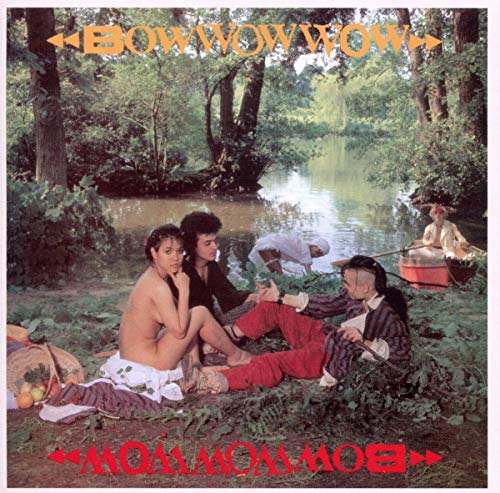
How Annabella Lwin became the singer for Bow Wow Wow.

Lwin was fortuitously spotted singing at Shamrocks Dry Cleaners in West Hampstead by an A&R working for music mogul Malcolm McLaren: "I used to sing along to the Top 40 radio every Saturday morning, and the scout came in to the dry cleaners and I guess he heard me singing to the radio,” she told Ham & High. "He came in quite often and one day he asked if I sang professionally, and I said no. He said: 'There’s a band looking for a singer, and you sound like you can sing. Would you come to an audition?' I said: 'I'm at school and I'm 13-and-a-half.' But he said I could take a friend, so I did, and the rest is history."
 
How Annabella Lwin became the singer for Bow Wow Wow.

Lwin was fortuitously spotted singing at Shamrocks Dry Cleaners in West Hampstead by an A&R working for music mogul Malcolm McLaren: "I used to sing along to the Top 40 radio every Saturday morning, and the scout came in to the dry cleaners and I guess he heard me singing to the radio,” she told Ham & High. "He came in quite often and one day he asked if I sang professionally, and I said no. He said: 'There’s a band looking for a singer, and you sound like you can sing. Would you come to an audition?' I said: 'I'm at school and I'm 13-and-a-half.' But he said I could take a friend, so I did, and the rest is history."
Not a fan of Bow Wow Wow music but had a little crush on Annabella at some point.
51KVXX9c1LL._SY580_.jpg
 
Not a fan of Bow Wow Wow music but had a little crush on Annabella at some point.
Yeah, the record company got into bit of hot water over this cover. Annabella’s mother raised hell and I guess Scotland Yard did some investigation. Guess it was settled since the cover is still out there.
 
Last edited:
Stewart Copeland of The Police was not the only Copeland brother involved in the music industry.

Miles Copeland III co-founded I.R.S. records and became manager for The Police and Sting's solo musical and acting career. Many well known acts were signed to I.R.S. Records the label such as R.E.M., The Alarm, The Bangles, The Go-Go's, Black Sabbath, Berlin, Marillion, The English Beat, Fine Young Cannibals, and many more.

Ian Copeland was a booking agent who represented the Police, Wishbone Ash, Squeeze, The B-52's, The Cure, Simple Minds, The English Beat, R.E.M., Sting, Nine Inch Nails, and many others. He founded Frontier Booking International (FBI). He also write song lyrics.
 
As it turns out, Nine Inch Nails, the iconic Goth rock band, came to be because Trent Reznor was the janitor of a recording studio. And the owner of that studio was kind enough let Reznor record for free during open studio time. Before that, Reznor played keys in the New Wave synth-pop band, Exotic Birds.

He then left the band and his ‘80s hairdo after only three months. Instead, he took a job at Cleveland’s Right Track Studio as the janitor. Studio owner Bart Koster remarked on his remarkable abilities at waxing the floor. Koster agreed to let Reznor use the studio to work on some of his new material. Eventually those demos landed Reznor a deal with TVT Records. That early janitor/studio material later appeared on Pretty Hate Machine, NIN’s debut album.
 
John Roberts and Joel Rosenman planned to pitch a television sitcom about two naïve young venture capitalists with more money than brains who get involved in wacky antics. Humor and drama follow. The two men ended up being the main characters in their own real life sitcom. They invested money in the idea of a recording studio in upstate New York, which turned into a idea for a Dylan concert, which turned into Woodstock.