The Chantays doing surf music on the Lawrence Welk Show

TalkBass has been independent since 1998. Add your voice.
Create a free account to reply to discussions, view embedded media, and browse with fewer display ads.
Join free Log in
Want zero display ads or expanded classifieds tools? Compare plans.
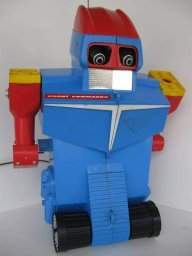

Frank Zappa wrote this weird song and dialogue by Burt Ward (aka Robin from Batman) and arranged and conducted it. The flip side was arranged and conducted by Zappa.
From 1987 to 1988, Steve Morse worked as a commercial airline co-pilot
Original Dixie Dregs violinist Allen Sloan is an anesthesiologist.
Suzanne Vega's hit "Tom's Diner" was the first song converted to MP3.
In the early 1980s, German electrical engineering doctoral candidate Karlheinz Brandenburg was working on his dissertation. The focus of his research was digital audio encoding and perceptual measurement techniques—research that would go on to become the basis for the digital music revolution and the ubiquitous MP3 format.
To test the quality of the compression algorithms he was crafting, he focused on human vocals. Instrumental music compresses fairly well, but the human ear is highly tuned to detect irregularities in the human voice. Brandenburg was confident that any compression algorithm that could successfully compress the human voice without problems would handle everything else thrown at it just fine.
In order to test his algorithms, he selected the 1987 a cappella version of the hit "Tom’s Diner" by Suzanne Vega as, in his words, “I knew it would be nearly impossible to compress this warm a cappella voice.” He used her voice as a benchmark and refined the algorithms so that not only could they compress instrumental work, but preserve the warmth of human vocals too.
As a result of Brandenburg’s extensive use of "Tom’s Diner" to test audio compression techniques, modern audio engineers informally refer to the song as “The Mother of the MP3”.


Frampton was Bowie’s lead guitarist on the ‘87 Glass Spiders tour. Years later I met the tour drummer, Alan Childs, who was doing a “Rock Of Ages” road show(a friend of mine was the bass player). Alan now works in Las Vegas, and has a very cool podcast...Peter Frampton and David Jones (David Bowie), who was three years older, were pupils at Bromley Technical School in England (where Peter's father Owen Frampton was Bowie's art instructor). Peter's band, The Little Ravens, played on the same bill at school as Bowie's band, George and the Dragons. Peter and David were friends and spent time together.
Actor Joe Mantegna played bass guitar in the Chicago area band called The Apocryphals. He is friends with members of the band Chicago as well.
View attachment 3714863
View attachment 3714864
View attachment 3714858
View attachment 3714865
View attachment 3714866


This is the story I've always heard.No, I read it the other way, that Keith Emerson didn't really want any guitarist since all of them where too ... inane. If there was one, it would be Hendrix only, but since he had his thing going already, he actually offered the spot to Steve Howe who bowed out*. Now guess what? The initial of those two peoples surnames....
So they stuck with a trio, and cried for ELP.
- - - - - -
* Steve Howe (musician) - Wikipedia
"He then played with members of the progressive rock band The Nice as a potential new member, but decided it was not for him, and left the next day.[18]"