• TalkBass has been independent since 1998. Add your voice.
    Create a free account to reply to discussions, view embedded media, and browse with fewer display ads.
    Join freeLog in
    Want zero display ads or expanded classifieds tools? Compare plans.

Update to the G2220 saga

If you have one bass that is defective, it stands to reason that others in the batch have a material chance of having the same issue.

Basically quality control would have you pull a few samples and test. If it turns out the batch is bad, you then expand beyond that.
Maybe, but I have a hard time imagining that each time a defective product is returned, a thorough investigation into that is launched. Seems like a stretch, given the number of returns of various types they must receive.

When there's a simple explanation for the defect, I think you'd wait to see if you start receiving more returns rather than spending the money in manpower to investigate each return you receive.

But there I go, just being logical again.
 
  • Like
Reactions: doran.dragic
Maybe, but I have a hard time imagining that each time a defective product is returned, a thorough investigation into that is launched. Seems like a stretch, given the number of returns of various types they must receive.

When there's a simple explanation for the defect, I think you'd wait to see if you start receiving more returns rather than spending the money in manpower to investigate each return you receive.

But there I go, just being logical again.

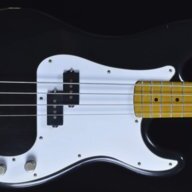
finding 2 single coil bridge pickups in a supposed humbucker instrument would set off pretty big alarms that would probably trigger some investigating.. at least to one of the multiple people at Gretsch/Fender that Ashen communicated with, I would think.
 
LOL! Drat I wish I snagged screencaps. XD

I was refreshing every so often and AFAIK I had the last post. "Synchro" is possibly the biggest fan-boy I've ever come across in 25 years on the net; and of course he's a "staff member". I had no doubt he/she nuked the thread.

There was a line in his last (and highly overwrought) post concerning how your video "isn't the way to go about fixing these sort of things." (Words to that effect.) I posted that your video has been up under three weeks, and FMIC/Gretsch is issuing refunds, have corrected their websites, and will be sending notices to the entire distribution network about this.

"Not the way to get this sort of thing fixed, eh?"

KABOOM! Thread gone.

/bows head
 
finding 2 single coil bridge pickups in a supposed humbucker instrument would set off pretty big alarms that would probably trigger some investigating.. at least to one of the multiple people at Gretsch/Fender that Ashen communicated with, I would think.
You think? You think they wouldn't just shrug and say someone packed the wrong pickups into the wrong box, or someone grabbed the wrong set?

Having worked in a store that saw many authorized warranty repairs, these things generally don't get escalated very far. If it's fixable, it gets fixed at the store and handed back to the consumer. I'm not sure why the OPs bass wasn't handed back to him with humbuckers installed. That's a bit of a logical mystery that I'm not comfortable with here. But it's not realistic to assume that this would have been escalated beyond someone's workbench.
 
Last edited:
Anyone know how to reverse the polarity of one of the pickups to get noise cancelling in the middle position of the switch?
Can't be done. It doesn't work that way.

One coil has to be wound in the opposite direction of the other.

Hum is detected by the pickup coil. String vibration is detected by the magnets and passed through the coil. The magnets do not detect hum.

Hum cancelling works by having one coil wound in the opposite direction of the other. This flips the phase of one pickup 180 degrees in relation to the other. When you combine two otherwise identical signals that are 180 degrees out of phase, you get a signal that is exactly -0-. No sound. This cancels the hum, but also cancels the sound of the string vibration*.

So now, you flip the magnets in one pickup over so that one pickup has the + poles up, the other has the - poles up. This flips the phase again, but since the magnets do not detect hum, only the string vibration phase is flipped. So now, the hum signals of the two pickups are still 180 degrees out of phase, but the string signals are now back in phase. The hum is cancelled out, while the string signal is not.

*mostly. Since the two pickups are in different positions along the string, the string vibrations are not identical. Because of this, you will still get some sound when one pickup is completely out of phase with the other, but it will be very weak.

Edited to add - the reason it's impossible here is because the pickup is encased in epoxy so there's no way to rewind the coil or flip the magnets. You'd destroy the pickup trying. Higher quality/more expensive pickups are usually potted/encased in wax, so if there's ever a need to service the pickup the wax can be melted away and the coil can be re-wound. This is why you can send pickups out of vintage strats/jazz basses/ P basses/etc. out to people like Seymour Duncan or Lindy Fralin to be repaired/rewound if they ever have a problem and so preserve the originality of a vintage (read "expensive") instrument.
 
Last edited:
upload_2022-4-22_13-53-12.png

upload_2022-4-22_13-53-36.png
 
Can't be done. It doesn't work that way.

One coil has to be wound in the opposite direction of the other.

Hum is detected by the pickup coil. String vibration is detected by the magnets and passed through the coil. The magnets do not detect hum.

Hum cancelling works by having one coil wound in the opposite direction of the other. This flips the phase of one pickup 180 degrees in relation to the other. When you combine two otherwise identical signals that are 180 degrees out of phase, you get a signal that is exactly -0-. No sound. This cancels the hum, but also cancels the sound of the string vibration*.

So now, you flip the magnets in one pickup over so that one pickup has the + poles up, the other has the - poles up. This flips the phase again, but since the magnets do not detect hum, only the string vibration phase is flipped. So now, the hum signals of the two pickups are still 180 degrees out of phase, but the string signals are now back in phase. The hum is cancelled out, while the string signal is not.

*mostly. Since the two pickups are in different positions along the string, the string vibrations are not identical. Because of this, you will still get some sound when one pickup is completely out of phase with the other, but it will be very weak.

We have seen that these pickups have a steel (magnetizable) slug in the middle and bar magnets on the bottom. It may be fairly easy to flip the magnets in this case. What about the coil? Does simply swapping which lead is ground and which is out give you the needed reversal? Or would the coil need to be physically flipped?

That would be a pretty cool follow-up to this whole thing - to convert one of these dual-single-coils to a properly noise-canceling single-coil configuration.
 
Does simply swapping which lead is ground and which is out give you the needed reversal?
No
Or would the coil need to be physically flipped?
Not flipped, but rewound in the opposite direction. It’s like threads on a bolt or screw. Hold a screw with head up. Observe the slope of the threads. Now, hold the screw with the head down. Observe that the threads are still the same slope. You would need a reverse threaded screw to observe an opposite slope.
 
Last edited:
Anyone know how to reverse the polarity of one of the pickups to get noise cancelling in the middle position of the switch?
I believe the first luthier I took it to just switched the hot and ground (reversing the coil) and then flipped the magnets. It's a dicey move though, because it risks breaking the coil.
I'd just leave it alone if you are happy with it, or contact Gretsch Consumer relations about it... or get some mini-hum sized whatever pickups you want in there.
There was a line in his last (and highly overwrought) post concerning how your video "isn't the way to go about fixing these sort of things." (Words to that effect.) I posted that your video has been up under three weeks, and FMIC/Gretsch is issuing refunds, have corrected their websites, and will be sending notices to the entire distribution network about this.

"Not the way to get this sort of thing fixed, eh?"

KABOOM! Thread gone.

/bows head

People made an issue of the time I ran for State Senate, but I think it's actually an asset for insight here-- I find that quite often when people say "that's not the proper way to get things done!" it's because they have some sort of vested interest in keeping things the way they are, and the alternative channel that they offer you will not produce the result you seek.

It's not always financial, it could be emotional, or ego.

But when they say it, it's usually because you are getting very close to actually getting things done.

After the way I was treated by Fender customer service, I've been delighting in watching this blow up in their faces now, a year later.
 
Not flipped, but rewound in the opposite direction.

I think this is incorrect. For a scatter wound pickup like this, winding direction makes no difference. Visualize winding two pickups in opposite direction and set them side by side. They will be the same, except it changes which wire is buried at the bottom and which is on top. But that has no impact on the response of the coil to a moving magnetic field.

I think you can flip the bar magnet and swap the leads on one of the pickups and have a proper J-bass type configuration.
 
  • Like
Reactions: Asher Platts
No

Not flipped, but rewound in the opposite direction. It’s like threads on a bolt or screw. Hold a screw with head up. Observe the slope of the threads. Now, hold the screw with the head down. Observe that the threads are still the same slope. You would need a reverse threaded screw to observe an opposite slope.

Perhaps in this instance, you are right. But I've done that exact same thing to my Rick neck pickup (flipping the magnet, and swapping the leads); perfect hum-cancelling RWRP in the mid position. These (as we now know) are single coils, so in theory it's possible?
 
Maybe, but I have a hard time imagining that each time a defective product is returned, a thorough investigation into that is launched. Seems like a stretch, given the number of returns of various types they must receive.

When there's a simple explanation for the defect, I think you'd wait to see if you start receiving more returns rather than spending the money in manpower to investigate each return you receive.

But there I go, just being logical again.

Except you aren’t being logical.

It’s not a defect, it’s a product that didn’t meet the specifications that they intended.

It’s one thing to say, “oh, the pickups are faulty” but it’s an altogether different thing to say, “instead of pickups, they glued matchbox cars to the guitar”.

There are the following possibilities:

1) They purchased “humbuckers” and were given something else. If so, they would want to get on top of this and recover funds from the supplier.

2) They purchased humbuckers, but someone in the factory didn’t get the memo to use them, and went with something different. If so, they have an oversight problem on their hands if they are using an outside company to build the instruments, and an internal controls issue if it is a company owned facility.

3) Someone changed the specs in order to maintain their pricing structure, and that change in spec did not get pushed to the folks in charge of maintaining the product descriptions. If so, they have an internal communications issue that needs to get fixed, and should probably check their other product descriptions.

4) They went with cheaper pickups to hit a price point and basically decided not to change the description because nobody would notice.

This runs the gamut from unintentional and unknowing misrepresentation to intentional misrepresentation.

At the end of the day, this has never been about a defect, but rather a question of whether the product is what it is claimed to be. The ability for a single item to be the wrong specification is so incredibly unlikely that a company manufacturing the items would know something is up if it was reported to them.
 
I was refreshing every so often and AFAIK I had the last post. "Synchro" is possibly the biggest fan-boy I've ever come across in 25 years on the net; and of course he's a "staff member". I had no doubt he/she nuked the thread.

There was a line in his last (and highly overwrought) post concerning how your video "isn't the way to go about fixing these sort of things." (Words to that effect.) I posted that your video has been up under three weeks, and FMIC/Gretsch is issuing refunds, have corrected their websites, and will be sending notices to the entire distribution network about this.

"Not the way to get this sort of thing fixed, eh?"

KABOOM! Thread gone.

/bows head
As a Gretsch owner and member of that site for a good few years, I have always found Synchro to be very informative and level-headed. I did not recognise him in his recent posts on this (contentious for some) subject.

I found the reaction/input of certain other members a bit like the classic internet pile-on; these things happen. But when the FMIC released that statement, I wasn't expecting humble pie to be scoffed but an acknowledgement of settling the issue would have been appreciated. If I missed that, apologies.
 
Last edited:
  • Like
Reactions: BlueTalon
It’s not a defect, it’s a product that didn’t meet the specifications that they intended.

Oh dear. Let me walk you through this.

Tech opens up bass, finds the wrong pickups in there.

Tech goes "hey, someone put the wrong pickups in this bass!"

Tech writes up a warranty claim which gets filed in a database at Fender that nobody ever looks at (because the tech is authorized to ascertain warranty coverage), and then does whatever is needed to fix the problem.

The end.

--------------------------------

EVERYONE in these discussions forgets about process. Process is how work happens in the real world. You don't call the CEO (or even a regional manager) because you found a defect in a bass when your job is to find and fix defects. You'd get fired if you did that. You do your job. If you find a problem and you can fix it, you'll get your paycheck.

Now, if you're that tech and you see three of these in one week, you're possibly going to start to wonder why. You may or may not contact your regional guy at that point to ask if they're hearing other complaints. It's when that sort of noise begins to happen that these issues get escalated.

You want to fight with me over what you THINK should have happened based on information we now have after the fact. That's not the way to mount a logical argument.

--------------------------------

So, here is what doesn't make logical sense to me. Why didn't they just put humbuckers in the OPs bass? The defect wasn't unfixable. Did they claim supply chain issues, or what? That would give us more info.