• TalkBass has been independent since 1998. Add your voice.
    Create a free account to reply to discussions, view embedded media, and browse with fewer display ads.
    Join freeLog in
    Want zero display ads or expanded classifieds tools? Compare plans.

Using a B string “correctly”

If the mix was bad it's because the mix was bad. That's more of an engineer issue and a tone/eq issue, as well as an arrangement issue to some extent (especially with a lot of low left hand stuff in the keys).

There's no right or wrong way to use the B string. I use it both for low notes and to be able to play higher up the neck without shifting around as much.

As far as getting tones evened out, I finally just got a set of balanced strings for my 6 string. Since it's tuned all in 4ths, the string gauges are pretty close to proportional (as are the frequencies of each open string. They're still close to new, but at least so far I'm really liking them more than a standard set. Typical bass string sets seem to go really heavy especially on the A and D strings for no apparent reason. The result of this seems to be a lot more low mids in the sound, which can definitely contribute to muddiness. Then the E and B strings are often a bit too light, which can result in flabbiness. Having that smooth gradation of gauges/tensions seems to smooth all that out a bit. And they feel pretty good too. The gauges I went with for B to G are 130, 100, 75, 55, 40, you'll probably have to order online if you want to do that, because GC and most other stores suck for bass strings, but especially extended range basses. I went to basstringsonline.com for mine and they were run of the mill DAddario nickels.

Also regarding strings, if you play with dead ass strings and/or with your treble rolled way off or bass really boosted, it can definitely create a lot of mud in the mix. MOST bass players (I say this as a bass player and live sound engineer) don't realize that they need a lot more highs in their onstage sound than they probably realize. Because in the audience, as soon as you get a little ways off axis from the cab (or the PA), you lose a lot of what highs are there, and all that's left is a few hundred Hz and below basically. So you don't want too much in the lows or too little in the highs. And if you're going for more of a flatwound thuddy sound, you probably need to cut around 80-100 Hz or so and boost maybe around 800-1500 to add some definition. It may not sound amazing soloed or in the stage mix, but in the room it will be a lot better and more defined. Honestly it should probably seem like it's too bright to you on stage.
 
It's a string on a stringed instrument. Use it however you feel the need to use it.

Having it does allow you to play in a higher position on the neck and still have access to low notes without changing position.

As for sound being muddy, that's an eq issue, not a 5 string issue. Try easing up on the low end freq of your bass. I don't know what the ideal x-over freq for your bass and the kick would be for your church, but find it and cut everything below that freq from your bass FOH signal. Gives the kick room to thump and your bass will be mud free.
 
I don't believe that scale length is the most important factor. I have been getting excellent clarity and growl without ever being muddy with the low B on my Warwicks, which have their pickups placed closer to the bridge then, say, my Fender and Zon fivers. On the Warwick the B has the same timbre as the E and A strings. I do believe this is caused by pickup placement and tonewood (ovangkol) choices that Warwick made. These basses have a standard 34" scale.
Is that a Warwick Thumb?
 
*background info here to start, you can skip* I’ve had a bit of change of heart lately. I recently moved to a new church where I am probably the most knowledgeable bassist. As such I don’t have anyone telling me how to play (as happened in my last church). In my last church I was told to use my B string heavily. I was asked to use low C, D, and E, etc. as the root of many songs and to use the B strings notes as much as possible. Since that is how I learned to play, I thought that was just the way it should be. However, the sound was usually very muddy in the PA, and we always thought it must be a high pass filter/crossover/low frequency problem. I’m now suspecting it was the heavy B string use. I was told to use it often so that the low end would be very present in the church and because playing higher would make me lost in the mix.

*The question: was I using the B string the “wrong” way? I’m starting to think that it should only be used for accents and not as a starting point for songs (at least not a starting point for anything below E). If I play in regular 4 string territory, will the overall low end of the band be lost? I’m the sound tech at my church as well so any mixing advice is appreciated as well (I’m still learning). Thanks for any help in advance!
Given the number of posts here, I am guessing you already got some good advice. What I will say is that I generally agree with this initial post. I tend to use the B string for maintaining patterns below the low E, accents down from a root on the E (like 1-5 types of things), occasional root playing down to D, and sometimes to kick the song into another level on, say, the last chorus or something -- everything becomes bigger.

It is subjective in the end, but I am personally not a big fan of people who ride the low B and always play as low as possible. I think it is possible to get plenty of low end on the A (5th fret of E string) and even up to the next octave E. It depends on a lot of factors, but I would say you have the right idea in your initial post.
 
The correct way to use the B string is the way I use it. However the way everyone else uses it is also correct. It is useful to get more depth of sound by playing off the B string from the 5th fret rather than from the open E which also means you can limit position changes by playing across the neck. But then if you are finding the result muddy then maybe some EQ or an LPF would be idea. It is not correct to use the B string as a bow string to shoot arrows at other band members.

I disagree - I have done this in every band I have ever been kicked out of with great success.
 
Generally, I try to use the EADG strings on my 5'er to craft the main bass part of a song, and if I have the opportunity to use any sub-E notes on the B string to either fatten up a certain part of a song or nail a lower octave note to give the rhythm element (drummer/percussionists/bassist) an extra punch at a critical point in a song I'll happily do so.
 
  • Like
Reactions: BritFunk
I don't play a 5 stringer myself yet but I've been GASing for one so obviously that makes me an expert :). Here is what my very talented instructed told me about one reason he plays mainly 5 stringers (very nice custom MTD) basses. One advantage to a 5 string is that you can play part a typical song lower when you otherwise could not on a 4. For example, using a 4 string bass in a twelve bar blues song in the key of "E" you would play 4 bars of low "E" then 2 bars of low "A" followed by 1 bar of low "D", back down to 1 of "A" and 2 of "E", 1 of "D", one "A" and then finally 1 "E". Rinse, lather, repeat.

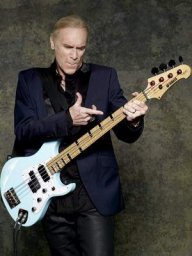
When playing 12 bar blues on 5 string bass (with low "B") you have the option to substitute the low "D" chord with an even lower "D" chord instead, or not but you have the option. That is the beauty of a 5th low B string. You have more options in many areas. It doesn't mean you always have to go low all the time. This is just one example.

Also, I think basses that have a low 5th string may need the right amp/cabinet or at least eq to take full advantage of the lower freqs. The FOH may not be design to handle the ultra low range and that will result in the lows being muddy or not being heard at all.
 
Last edited:
Nothing inherently muddy about a B. First thing to sort out is EQ. Second, it could be the string itself. Maybe it's too loose, and you could use a heavier gauge. Maybe your technique favours plucking around the neck with a fingerstyle with flatwound strings. No idea. Could be many things, but certainly not to do with it being a B.

One thing to consider is that the lower the frequency of an instrument the more power it will require to reproduce accurately. This is why bass amps require so much more power than guitar amps. Additionally, the speaker cabinet needs to be designed to properly accommodate the lower freqs. Otherwise, the bass will be distorted (and not in a good way) from what was intended to be heard or may not heard very much. It will sound muddy. You want the bass sound to be tight across the whole range of the instrument. Same principles apply to any FOH setup.
 
Last edited:
  • Like
Reactions: KickingBass
For me the B string is this super powerful tool on the bass that you don’t use often. Most of the time you ignore it because If you use it too much it looses its effect but when you really want the band to hit hard during a song you pull out those below low E notes and blast everyone with the subs for a moment. If you are ever at a big concert and you get those goose bumps happening... that’s probably because the bass player pulled out the low B. It’s powerful stuff... not for everyone.
 
If the PA sounds muddy with your bass, Maybe you simply need to add crossovers and subwoofers to your PA. Many speakers and amps do not do justice to the low notes. They sound bad because they cannot handle the low frequencies properly. You may be playing fine, but the equipment cannot handle the low frequencies. I went through a bunch of amps and cabs to find something that let my bass's low end sound as good as my home audio subwoofer.


IME that would have to be a fairly lame PA to not be able to handle the lows of a five string bass. More likely the issue is the nut behind the wheel.
 
I think Journey had a song something like...

Anyway you play it
That's the way you do it

I was alone
I never knew
What good B string could do
Ooh, then we touched
Then we sang
About the noted things

Okay, it's late on a Friday night, and I'm probably done. Later gents, and ladies.

* No bottles of beer were harmed during the creative making of this post!
 
  • Like
Reactions: KickingBass
Well, it wasn't the case for squillions of years before the B string became more prevalent, soooo.......

Could you get lost in the mix? Sure, if the FOH isn't doing a good job. Is there a right and wrong way to use the B string? Not really. You do what serves the song, what serves the sound of the venue. Which means let your ears dictate where you play. Some songs are great to start out on a lower note (Coperhead Road comes to mind). in others, using it as an accent for emotion is what's called for (Help Me Make It Through The Night comes to mind - I start up higher and go to the low D as the first note of a chorus for impact). If you're not being dictated to as to what to play, then you experiment as to what sounds best to you. There is no right or wrong approach, only good or bad music.
Very well said and very true..
 
  • Like
Reactions: QweziRider
One of my favorite bassists is Brandon Aaronson from Jesus Culture. He's a 5 guy, in fact his tasteful use of the B is what influenced me to pick up a 5er. He saves it for those "special moments." He's basically a 4 string player, and then he'll hit a "ludicrous range" B string bomb just when it hits with maximum impact.

I do not like the B being played too much. The tenor range of the bass to me is much more musical, with some nice low accents when it counts. Aloha.

Have you visited the Praise and Worship bassists forum? Check us out ;-)
 
It depends a lot on the music, the other musicians/instruments, and the sound in the room.

In CCM or more 'white' church music, it is like you say — usually the bass doesn't go below a D. (And some 4-string players tune down to DGCF. A lot of Nashville and pop (including CCM) bassists re-string BEAD, with the 4 lows on a 5-string.) In Gospel music it is very typical for the bass to play low, and the low C on the 5-string bass corresponds with the low C on the foot pedals of the organ. Many Gospel bassists tune a 5-string or 6-string bass down to Bb or A.

Sometimes a piano player will play with a heavy left hand or or guitarist with their amp bass EQ'd up, especially if they are less experienced or used to playing solo. If this is the case, ask the pianist and guitarist to turn their low end down, or to try playing lighter (or not at all) on the bass notes. On the other hand, in Gospel you will be playing in unison with the B3 player's feet some of the time.

With the sound in the room it's the same situation. Lots of factors go into this: the players' & Front-of-House person's experience, the stage volume, the acoustics in the room, and the quality of instruments & amps. In general, less stage volume, and less low end on stage from everybody works best. (The greatest FOH people I've worked with have all asked me to turn my bass EQ *down* on my bass amp, so that they can control the low end.) In almost any live situation, the overall sound improves when bass exaggerates dynamics and plays quieter anytime the vocals are in.

It's always useful to listen (or re-listen) to the original versions of the songs that you are playing — try copying the bass lines note-for-note, and hear if it works in your situation. When it comes to taking or giving direction/advice/suggestions, don't take (or give) anything personally — always approach it with the singular goal of making the music better! (This approach helps a lot when asking pianists & guitarists to turn down their low end.) If you have a lot of people telling you what to do or how to play, take it all with a grain of salt, unless it is coming from the Musical Director or from the person who signs & dates your checks.

This is all talking in the context of your church gig. In rock you can usually get away with a 4. In R&B/soul and heavy metal it varies. There is a really awesome style of African dance music where the bass always plays at least an octave *above* the lowest E.

All that said, to get back to your original question, low end tends to eat up all the sound in the spectrum so use it sparingly. Keep in mind the wisdom of the ancestors: most Western music, from the beginning of recorded history until the 1970's/80's, didn't go below that low E very often. :)
 
try a lighter gauge.. .125 a hpf on 35hz.. a good 5 string player know to keep the low b muting when not on use.. either with a finger or a gruv gear string mute. something like that.. low b is a less is more.. kind of thing. even in hip hop.. controlling the low end important.. church music is deeper keys.. but only an idiot says more bass is better.. mud city baby.. I like a 5 string thru 8inch speakers.. lol cause it quicker.. and less bass.. kinda funny for a bassist not to like bass..
 

Latest posts