I have heard this before. Along the same line of thought you want to record all the drum tracks with one setup to get a uniform drum sound as well. I think this kind of production strategy is mostly applicable to pop music where you want to establish a band sound for the entire album, and there are not significant changes in genre across the tracks of the album.
For anything but the most pop of popular music I think this is not a great approach. Seems now textural variety from track to track is pretty common, even in some pop music settings, but certainly in pretty much any other genre. If your band explores music influenced by various different genres then sonic variations from track to track is almost a given.
I think posing the question to him about the sounds he will use: which single acoustic piano patch, which organ sound, and which electric piano sound, etc, might give him some insight into how narrowly he is scoping the palette for your album. But in the old days this was pretty common: one piano in the studio, one organ, one electric piano, either Wurly or Fender Rhodes, and the artist would use what was in the studio. But honestly times have changed.
If he’s trying to cop a 60’s or 70’s vibe with the recording then it may be a valid artistic choice, but if he’s saying it as dogma not to be questioned, and/or out of laziness, I would push back, if I felt strongly about varying tonal choices on the tracks.
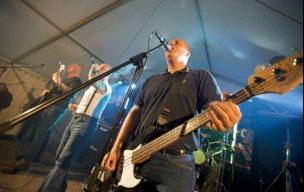
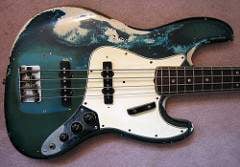
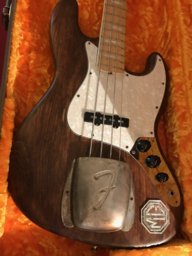
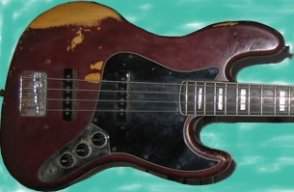
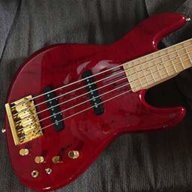
The last album I worked on we paid a really good engineer to record it, and he specializes in all-analog signal chain. Now to save money we went digital/hard-drive at the end of the chain instead of 2” tape, but the vast majority of the signal chain was analog and nothing newer than mid-70’s gear. I used my Warwick Streamer Stage I On all tracks except for the most country of the songs we were doing, where I used my Fender Jazz, favoring the neck pup. The sonic difference between the two basses were entirely negligible the way he was compressing the bass and mixing things. I was really surprised.
Also, we were all beyond impressed, it is definitely the best sounding recording any of have ever been a part of, so it’s not like I am bummed, but pretty surprised at how he got both of those basses to sound pretty much exactly the same, and just with compression and mild EQ on the input. He used no EQ when mixing, just volume and panning!
So in the end using different basses might not make that much difference, unless their tones are markedly different, depending on how they are recorded and mixed.