I barely go through the 1st page. Wow!
While I agree the keyboardist's guidance seems to be extremely limiting, there are also valid reasons behind this approach.
Whenever I have gone into a studio, they didn't just throw out DIs and mics and hit record. They spent considerable time dialing in each instrument to get the sound just right before any tracks were cut. Half a day was set aside to the tune the drums and experiment with different mics and mic positions. Another half day was set aside to dial in bass, keys, and guitar. If you switch instruments or amps, all of this prep work is out the window, and you have to do the work over. That's fine if you have an infinite amount of studio time, but not if your time is limited.
Then when you do the mix down, you have to consider how you will deal with masking and frequency slotting. If you change one instrument, the engineer may need to adjust the EQ and compression on the other instruments to get everything to lay just right in the mix. This can be difficult, frustrating, and time consuming.
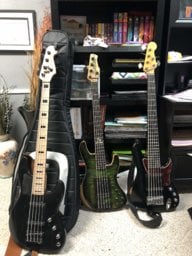
Because the studio time was very limited, I have only been able to use one bass on pretty much every project I remember doing. The other players were also significantly limited from switching instruments.
That's not to say that it's not better if you have the time and resources to play whatever instrument you want to play...or even to play multiple instruments on each song. From creative stand point that kind of artistic freedom would obviously be ideal. But you also have to consider the project from the production side of the equation. I.E. how much work is necessary and how difficult is it to achieve consistent quality when everyone is free to switch instruments anytime they feel like.
IMHO that sort of freedom is probably unrealistic, so perhaps a compromise can be made, and some sort of plan can be drawn up so material can be recorded in a certain order that facilitates as many of the desired instrument switches as possible. This may depend somewhat on how the recording will be made. For example if the goal is for everyone to record their part during the same take, you have less flexibility. For more flexibility the person who wants to change instruments can lay down a second track at a later time. In other words do the whole project with one set of instruments. Then after all songs are recorded, as time allows, spend time to get a good sound with the second instrument and record a second track for the songs where the instrument is desired. You never know, you might wind up actually preferring the original track, or you might wind up using both tracks.
Whether this sort of approach is possible depends on how much time and effort people are willing to put in...and possibly how much studio time is available.