I used two basses on the same song. P style bass, tuned D#ADG and a BEADG 5 String Jazz style bass. Played the same lines on both basses, then blended them together, got the warm mellow P sound with the grind of a jazz combined. Turned out great. Not the most practical way to do it maybe, but in the end it worked.Hello everybody,
we are going to start soon tracking our debut album. This is a self-produced album, and the keyboards player just told us that for guitars and bass we should strictly use the same gear for all the tracks, meaning if I use my Spector active bass on a track I cannot use fender precision on another as the bass and the guitars should have the same timbre all throughout. The same goes for amps. we can use different pickups configurations or EQing.
How true is that?

Enjoy the benefits of a premium membership!
Upgrade Account
-
TalkBass has been independent since 1998. Add your voice.
Create a free account to reply to discussions, view embedded media, and browse with fewer display ads.
Join free Log in
Want zero display ads or expanded classifieds tools? Compare plans.
You are using an out of date browser. It may not display this or other websites correctly.
You should upgrade or use an alternative browser.
You should upgrade or use an alternative browser.
Using more than one Bass on a Record
- Thread starter chaak
- Start date
More options
Who Replied?
drumvsbass
Commercial User
- Aug 20, 2011
- 1,980
- 4,323
- Disclosures
- I work for Long and McQuade Musical Instruments Canada in Sales.

- Aug 21, 2003
- 11,588
- 18,607
- Disclosures
- A-Designs Mike Lull GK Tsunami Cables GHS Strings RMI Basswitch Nordstrand Pickups Darkglass
You need a keyboardist that either
-Is not lazy
-Has a clue
-Or more respect for your creative input
I say this because this person is partaking in at least 1 of the above behaviors or perhaps even more.
#straightdope
-Is not lazy
-Has a clue
-Or more respect for your creative input
I say this because this person is partaking in at least 1 of the above behaviors or perhaps even more.
#straightdope


I usually record each note with a different bass


He's talking tattie.
When my old band recorded our first album, I used 3 basses. My own '74 Rickenbacker 4001 and Epiphone Thunderbird, and the studio bass which was a Gibson Grabber with the sliding pickup. And the funniest thing? Because they were all through the same amp, compressor, interface and software, they all sounded similar save for some very slight differences. If it wasn't for me remembering which bass I used on which track, I'd have a hard time telling the difference at a quick listen.
Just hope the sound guy is sympathetic to bass and can make you sound like you!
When my old band recorded our first album, I used 3 basses. My own '74 Rickenbacker 4001 and Epiphone Thunderbird, and the studio bass which was a Gibson Grabber with the sliding pickup. And the funniest thing? Because they were all through the same amp, compressor, interface and software, they all sounded similar save for some very slight differences. If it wasn't for me remembering which bass I used on which track, I'd have a hard time telling the difference at a quick listen.
Just hope the sound guy is sympathetic to bass and can make you sound like you!

Hello everybody,
we are going to start soon tracking our debut album. This is a self-produced album, and the keyboards player just told us that for guitars and bass we should strictly use the same gear for all the tracks, meaning if I use my Spector active bass on a track I cannot use fender precision on another as the bass and the guitars should have the same timbre all throughout. The same goes for amps. we can use different pickups configurations or EQing.
How true is that?
So the keyboard player is able to set all his instruments up and pick and choose what he will play when he likes. (Or use a midi and pretend he’s only using one instrument).

In my opinion It’s more of an old school mentality imo. Back from when people bought and listened to entire records and bands recorded to tape. It can help the mix from song to song be more consistent throughout the entire album. But it’s not really a rule. And these days with everything being so single oriented (people downloading individual songs instead of a full album) I wouldn’t be too worried about it. Lot of the up to date studios are used to mixing by song And even in certain cases by sections of songs instead of just one overall mix for the full album. So yeah it can help in some ways mainly by being less work to mix. Personally though I left that mentality behind when I started using pedals and multiple basses more. For example because of my use use of pedals The mix will be different from song to song anyways so if it’s already going to be a different mix there’s really no negative about it. I do try to not get too crazy though. For example, if I want to play fretless or acoustic on a song (basically something more noticeably different I’m going to. But personally I’m not going to use two different fretted basses like a jazz and a P. That said lot of people do exactly that.Hello everybody,
we are going to start soon tracking our debut album. This is a self-produced album, and the keyboards player just told us that for guitars and bass we should strictly use the same gear for all the tracks, meaning if I use my Spector active bass on a track I cannot use fender precision on another as the bass and the guitars should have the same timbre all throughout. The same goes for amps. we can use different pickups configurations or EQing.
How true is that?
Last edited:

Just some pesky facts, thinking inside the box, devil's advocate, etc: A bajillion successful LPs were done entirely with just one P or J four. Even far more concerts and even more cover gigs have been played on a single bass. Basses have knobs, so do amps and mixers; and playing style can be varied a tremendous amount for each song. Then there's post. Unless an ERB or a fretless is required or the material is tremendously varied, maybe, just maybe one will do.

To add on to this, maple fretless isn’t too common from what I have seen but it looks super cool on yours!

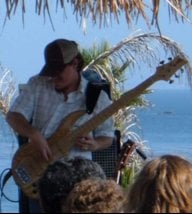
I did bass for an album produced by multi-Grammy award winning Ross Hogarth (Ziggy Marley, Van Halen, Doobie Brothers, etc), and he had me play four or five different basses over 12 songs. He wanted to choose a bass that served each song best. I used a P, Sting Ray, F Bass, Warwick, and I think one other, but this was 15 years ago. With proper mixing and mastering, this isn’t an issue.Hello everybody,
we are going to start soon tracking our debut album. This is a self-produced album, and the keyboards player just told us that for guitars and bass we should strictly use the same gear for all the tracks, meaning if I use my Spector active bass on a track I cannot use fender precision on another as the bass and the guitars should have the same timbre all throughout. The same goes for amps. we can use different pickups configurations or EQing.
How true is that?
Last edited:
I watched a video about the making of an album by an artist I like and whose work I generally admire. I was expecting wonderful things as classic guitars, amps and pedals were all used; the bass and keyboards carefully selected and lots of experimenting all around a solid drummer's tracks. At the end of the tracking the snippets played on the video had me really excited so I had a listen to the album - and it all turned bland.



The engineer will probably insist you use something they have in the studio anyways. haha. A uniform bass sound is kind of hilarious.
Who is "producing" the album? If you have limited time/funds, then I can see wanting consistency with the sounds. If the person doing the mixing isn't sympathetic to bass guitar and willing to put in any work to get good sounds, then it might be better to just go with the flow? A lot depends on the methodology of how you are going to record. Drum/bass/rhythm tracks recorded first? I'm afraid the keyboardist wants you guys to get your parts down quickly and easily so that he can then spend hours/days/weeks/months going nuts on his keyboard parts!
I used to play with a keyboardist who took SO LONG to record his solos - he was never satisfied, couldn't see the big picture of the whole project. And he expected to be reimbursed for the studio time!
we are producing the album, by that i mean the guitarist is engineering it myself and the keyboardist we don't
Thanks for the comment. It is very collaborative, what we have been doing for the past year is record guides for each track, those contain an elaborate draft of how the songs should end up sounding like. The drummer will have both a click and the guides (with whichever layers he feels are unnecessary and distracting removed). Based on the drummer's cut i'll adjust my bass (the drummer has programmed the entire drums for the guides on MIDI) and expand on the bass guideOK, that's interesting. In your original post, it sounded like the keyboardist was being an arrogant tool, trying to dictate to the band. But having read this, I think he could have just offered it as a (badly worded?) suggestion. If he's being a control freak then I'd be worried, but it sounds like the band has something interesting going, so I'd investigate further.
Also, now we know more about the concept of how it will be recorded. It sounds like the band is fairly collaborative - you should collaborate on the recording process too, at least to be aware of what's going on and how it's going down. Last thing you want to do is end up leaving the keyboardist alone at the end and then lose control of the project. (I could be totally misreading this, I'm traumatized, read one of my previous posts.) Is the drummer going to record the drums out of the blue? With a click? Couldn't you be there playing along in the headphones even if what you're playing may not make it to the final recording? Heck, record it anyway, you might come up with some good takes. If this is the route you took, then I think it makes sense to use one bass and bash them out!!! Then, since the original idea was to overdub bass anyway, take a listen and maybe change stuff, redo entirely with another bass, whatever works.
There are very few absolutes in recording - there might be "accepted wisdom" or "common knowledge" but often the interesting stuff comes from not following those kinds of "rules." Learning that you'll be overdubbing anyway opens up a lot of possibilities in my mind.
TL;DR - Get the basics done, then experiment. And get everyone on the same page.
Horse puckey!!! I use more than one bass on a single song, sometimes. This one has a fretted jazz, a fretless jazz and a Warwick something or other I had to use because they gave it to me

Wow, the bass sounds great I am going to look more into your band, i love this mix of progressive rock and Alice in Chains
- Sep 26, 2005
- 1,955
- 641
- Disclosures
- endorsing artist: Dean guitars, Marshall , Rotosound strings
The last album I recorded I used 4 basses. Each of which was selected to fit the general vibe and feel of specific tracks.
personally I find that if there is not any slight variance in tone and timbre across a whole album, I tend to find it quite bland and difficult to listen to.
personally I find that if there is not any slight variance in tone and timbre across a whole album, I tend to find it quite bland and difficult to listen to.


Hello everybody,
we are going to start soon tracking our debut album. This is a self-produced album, and the keyboards player just told us that for guitars and bass we should strictly use the same gear for all the tracks, meaning if I use my Spector active bass on a track I cannot use fender precision on another as the bass and the guitars should have the same timbre all throughout. The same goes for amps. we can use different pickups configurations or EQing.
How true is that?
Absolutely untrue.
It may save you time, of course, which if translates into money, maybe that was his angle: trying to save money. However it is debatable how much time you'll save. Yeah, if you're using three different instruments with 5 wildly different FX each, maybe that's a factor, but otherwise... come on. Play what you have to, play what sounds right, don't just change instruments for the fun of it, but if certain tracks call for a different kind of sound then that's what you must do.
Another thing is, and I suspect this is really what your keys player was about, that when you have an album it tends to be better if there's a consistent sound in all tracks. That still gives you the freedom to use a variety of sounds, but overall try to keep it consistent, not like each track was recorded by a different band at different times, if you know what I mean. BUt that's a conscious decision and there's no right or wrong: whatever you (the band) choose then that's correct.