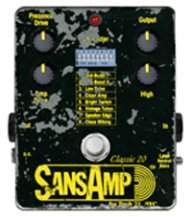
i totally agree with you, chris. that's half the attraction for me. but the people spoke and they wanted a speaker sim defeat.

TalkBass has been independent since 1998. Add your voice.
Create a free account to reply to discussions, view embedded media, and browse with fewer display ads.
Join free Log in
Want zero display ads or expanded classifieds tools? Compare plans.
Hello. I just ordered VT bass from tech21 website today, and i just want to know which one im getting... probably old one with no defeat switch right? hmm maybe i shoulda wait few weeks more for new one but is it worth waiting for? what do you guys think?
Defeating speaker sim will slightly boost high and low ends (correct me if I'm wrong). Not sure if I would do so. I never turn the Low knob past 1 o'clock and the High knob 10 o'clock on my VT. More low and high ends would be too much for me.
I had my VT modded to include a speaker sim defeat switch by Putnam Guitars. I agree that for standard "bass" tones, there's plenty of highs and lows present in the VT. However, using it at the end of the chain with various other effects that have lots of crispy highend content (fuzz, synths), the speaker sim can sound like a blanket over your crazy sounds. Defeating the sim brings back the fizz. For most on this forum, I think that is the selling point for the new version.
Not on the updated version with the defeat switch. While the switch does disengage the speaker emulation part of the circuit it also provides a 6db per octave high end roll off. This allows the pedal to interface a little more easily into an amp that has it's high end boosted.
The Putnam nod does add quite a volume boost when defeating the speaker sim. About not needing more highend on the non-modded version- with a fuzz pedal before the VT, even with VT's high all the way up- the fuzzes higher frequencies still sound muted. Don't get me wrong, this boosted treble setting is extremely bright. But it seems like it is boosting a lower frequency treble while also rolling off frequencies that contains fuzz content. What I'm trying to get accross is that the high knob doesn't compensate for the frequencies that are rolled off.
Not on the updated version with the defeat switch. While the switch does disengage the speaker emulation part of the circuit it also provides a 6db per octave high end roll off. This allows the pedal to interface a little more easily into an amp that has it's high end boosted.
well to be honest, from all the intense scrutiny the vt's gone through with people making their own frequency plots of it, we've discovered there is far greater capability to add treble than to take it away. most of us agree that when you set the vt for near flat response, the treble knob is somewhere between 9:00 and 10:00, and anything past 12:00 is verging on insanity.The feedback we got from many players was that the pedal was too "bright" going into the front end of an amp which is more about your amp's preamp settings than the VT Bass.
 and i can roll off the treble knob on my bass if i need less. but i do kind of understand what people are saying. i thought you guys did it so you could get the full range of svt tones including those with the ultra-hi switch engaged. makes sense if you did, but i'll admit there are times i would like to be able to cut more treble directly from the pedal without messing with character setting.
 but if i were to nitpick anything about it, that would be it.
well to be honest, from all the intense scrutiny the vt's gone through with people making their own frequency plots of it, we've discovered there is far greater capability to add treble than to take it away. most of us agree that when you set the vt for near flat response, the treble knob is somewhere between 9:00 and 10:00, and anything past 12:00 is verging on insanity.
fortunately, the near flat settings work very well for me
don't get me wrong though...it'll always be the pedal of the future to me

well like i said, i enjoy the vt very much as is and i have no problems dealing. not sure what you mean by "correct tonal curve," though. do you mean it flatlines when the tone controls are at 12:00 and the character and drive are off, or that what you guys perceive as its best sound is the tone controls set flat?If you understand the architecture of the VT Bass pedal and think of it as an amp it is a little easier to explain though you probably know this already. The drive knob on the pedal is like the volume control on your SVT. It allows your bass signal to be boosted and shaped in the preamp section of the amp and in turn hits the power section of the amp. The Character control adjusts frequency response as well as the drive and attack characteristics of the amp. It basically gives you the ability to "mod" the amp on the fly and is very interactive with the drive control. Afterwords comes the speaker emulation circuitry which does what your bass amp's speaker cab does. It's a final tone shaper and is designed to give you the sound of the amp being mic'd at the mixing board but with a very even frequency response and without all the artifacts that can occur with using a single mic. That's really the amp portion side of things. The SansAmp circuitry.
The level, low, mid and high controls are all post SansAmp and are designed to give you the same control you would have in the studio post microphone.
What all this means is that when the low, mid and high controls are at noon they are neither boosting or cutting any frequencies. They are flat. When people run their own frequency plots they are confusing the fact that the frequency curve with the controls flat is the correct tonal curve of the VT Bass. It's emulating an amp. For that matter your bass amp is not really flat either. Most guitar and bass amp's are anything but flat. The problem that you experience with too much high end is the same problem guitarists have with overdrive and distortion pedals. They assume there amp is "flat" and then run a pedal into the amp and hear too much high end and fizz when the pedal is engaged. The thing is if you are using the bright channel of the amp there is a bright boost cap on the input which boosts high end. Unfortunately this high end boost might sound great with your straight bass tone but when you add a gain producing device such as the VT Bass it will over accentuate the high end harmonics. This can get even worse for players running full range systems.If you could bypass your amp's preamp and go straight to the power section you would find that the "pedal" is not as bright as you thought. The other problem is that the bright boost on amps do not work in a linear fashion. They are more intense when the volume is reduced and have less of an affect when the volume is raised. Depending upon how much high end you bass amp's preamp is producing will pretty much dictate how much high end you may need to adjust on the pedal. If your amp's preamp is too bright with the pedal you can either turn down a bit of the treble on your amp or just turn down the treble control on the VT Bass. You can turn it off if you want. Whatever "sounds" best. It won't hurt anything though you may have to compensate with the level control.
In your case since you have a vintage SVT with two channels you could actually set up the bright channel for your normal bass sound and route the VT Bass pedal to the second channel and eq it without the bright boost for a more neutral tone that will work better with the pedal.
well like i said, i enjoy the vt very much as is and i have no problems dealing. not sure what you mean by "correct tonal curve," though. do you mean it flatlines when the tone controls are at 12:00 and the character and drive are off, or that what you guys perceive as its best sound is the tone controls set flat?