Neve RNDDI bere; and a BSS AR133 as a backup since the Neve is absolutely outstanding, but it's quite picky when it comes to current

Enjoy the benefits of a premium membership!
Upgrade Account
-
TalkBass has been independent since 1998. Add your voice.
Create a free account to reply to discussions, view embedded media, and browse with fewer display ads.
Join free Log in
Want zero display ads or expanded classifieds tools? Compare plans.
You are using an out of date browser. It may not display this or other websites correctly.
You should upgrade or use an alternative browser.
You should upgrade or use an alternative browser.
More options
Who Replied?

ISP Beta Bass Preamp pedal, this is an overlooked pedal, it's analog, I love it.What Preamp/DI pedals are you folks using on your boards with your Wals? I'm not in love with the Darkglass AOU / Wal combo I've got going on at the moment.

I took her to the local guitar store telling here a new shipment of Rickenbackers came in...she paid for half of it!
 now that's a wife!!!!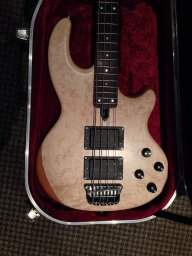
A true power couple.

Yes, I'm joking of course. It's more a case of justification to myself. If it was fretless it'd be a no brainer as I would give up my Yamaha BB fretless for a fretless Pro 2...ONLY!I stopped sneaking or even asking for permission years ago, I just include her or tell her I'm buying something again.
Took her to Wal HQ with me last year. And three weeks ago I took her to the local guitar store telling here a new shipment of Rickenbackers came in...she paid for half of it!

I always wondered how that toggle switch on my one bridge pickup later Pro really worked or what it does exactly since it it only one pickup. I hear a lot more bass coming on when toggling that switch. But somehow I prefer the sound without the switch kicked in. I has more clarity and with the switch it is a bit muffled.
No one knows this?
Here you go:No one knows this?
A HISTORY OF WAL BASSES: A minor diversion... (Reissue Passive Pro Basses)
Yes I am familiar with that website.
It says this but I don't fully understand it: "...included a tone shaping switch similar to those on the original passive Pro I basses - basically a series/parallel switch."
What does the tone shaping do exactly? Does it divide the coils of the pickup somehow? or is it something else?
I hear more bass and a bit muffled sound in the up position. But I am not sure if this is the normal position (full pickup) or if the other position is the normal position?
Last edited:
Firstly, I haven't played your bass so I will never know 100% for sure.Yes I am familiar with that website.
It says this but I don't fully understand it: "...included a tone shaping switch similar to those on the original passive Pro I basses - basically a series/parallel switch."
What does the tone shaping do exactly? Does it divide the coils of the pickup somehow? or is it something else?
I hear more bass and a bit muffled sound in the up position. But I am not sure if this is the normal position (full pickup) or if the other position is the normal position?
I have passive series/parallel switching on my Fender Roscoe Beck V and can appreciate the tonal variation. Series is thicker/basser and parallel is clearer/more middy.
I can't see what else a switch on a passive bass with a humbucker would be for, apart from engaging a capacitor (like a tone knob) which would be odd!
(...enter someone who actually knows lol).
. Series is thicker/basser and parallel is clearer/more middy.
I can't see what else a switch on a passive bass with a humbucker would be for,).
Ok thanks. It sounds like it is that. So the passive Wal humbucker normally is wired in series? That means the bassier sound (up position of the switch) is the 'normal' state?

Yes I am familiar with that website.
It says this but I don't fully understand it: "...included a tone shaping switch similar to those on the original passive Pro I basses - basically a series/parallel switch."
What does the tone shaping do exactly? Does it divide the coils of the pickup somehow?
Yes, that is exactly what it does.
Series wiring combines both rows of coils by feeding the output of one row into the other, you get a fatter midrange sound with a boost in output.
Switch to parallel wiring, and each row of coils is fed separately to the output, so you get -for lack of better term- more scoop type sound where you hear more sparkle highs and crisper lows, but slightly less output. This is pretty much the same if you compare a P Bass to a J Bass; P's are series, and J's are parallel.
Yes, that is exactly what it does.
Series wiring combines both rows of coils by feeding the output of one row into the other, you get a fatter midrange sound with a boost in output.
Switch to parallel wiring, and each row of coils is fed separately to the output, so you get -for lack of better term- more scoop type sound where you hear more sparkle highs and crisper lows, but slightly less output. This is pretty much the same if you compare a P Bass to a J Bass; P's are series, and J's are parallel.
Ok thanks. That's clear now. So if there was no switch the normal state of the passive humbucker is in series? Just to be totally clear. I never was good in electronics so sorry for the noob questions.
Ok thanks. That's clear now. So if there was no switch the normal state of the passive humbucker is in series? Just to be totally clear. I never was good in electronics so sorry for the noob questions.
Ya there is no 'normal' state...just two different options that the pickup can be configured in as far as a Wal pickup goes.
If you wanted a more technical explanation as far as humbuckers go this is the best one I found:
The two coils in a humbucker are typically wired in series. This produces the highest output, but also the darkest tone. ... When wired in parallel, the two coils still operate together, but the signal path doesn't travel from one coil into the other.

As @kulit17 said there's no "normal" as both options are offered. I suppose you could argue that since a standard P bass is usually wired in series that "normal". But series/parallel is a common option in humbucker. For example, my Aria SB700 has what's effectively a reverse P Bass pickup in a soap bar case. The little toggle switch on that is a series/parallel switch.That means the bassier sound (up position of the switch) is the 'normal' state?
Email Paul Herman at Wal if you're wondering if a standard active Wal pickup (no switch) is series or parallel.Ok thanks. That's clear now. So if there was no switch the normal state of the passive humbucker is in series? Just to be totally clear. I never was good in electronics so sorry for the noob questions.
I'd guess parallel, same as a StingRay. But I'm usually wrong!
Custom (mk series) pickups are not wired like a typical humbucker if your wondering. The pickup harness (for a 4 string) uses 5 wires; for a five string is 6 wires and 7 for for 6 string basses.... One is common and each string has it's own wire. Each string has two coils and I believe its parallel.
Last edited:
Oh also, if you want to define "normal".....I suppose you can say normal is how the Pro IIE or IE are wired up. I believe they are wired in parallel, but I have to see if I can find my notes to confirm this.
**edit**
Schematic shows pickup wired in series.

**edit**
Schematic shows pickup wired in series.
Last edited:
As @kulit17 said there's no "normal" as both options are offered. I suppose you could argue that since a standard P bass is usually wired in series that "normal". But series/parallel is a common option in humbucker. For example, my Aria SB700 has what's effectively a reverse P Bass pickup in a soap bar case. The little toggle switch on that is a series/parallel switch.
View attachment 3544814
Ok thanks guys. I played for a long time on an Aria SB1000 by the way. Nice bass.
To me the parallel sound of the passive Pro bridge pickup Wal sounds better than the series sound. It is more clear and less muffled. Better to use the switch in down position and add bass on your amp if desired (for me). Curious what other people prefer.
Also the passive Pro bridge pickup has a bit more bass than an Mk1 with the bridge pickup soloed even when using the parallel sound of the Pro. The MK1 has a bit more punch though.
I like the passive Pro because it is simple and always sounds good. With the MK1 I sometimes keep searching for the best possible sound. So more knob fiddling that can distract from playing.
I agree wholeheartedly with all of this, especially the passive vs. active.Ok thanks guys. I played for a long time on an Aria SB1000 by the way. Nice bass.
To me the parallel sound of the passive Pro bridge pickup Wal sounds better than the series sound. It is more clear and less muffled. Better to use the switch in down position and add bass on your amp if desired (for me). Curious what other people prefer.
Also the passive Pro bridge pickup has a bit more bass than an Mk1 with the bridge pickup soloed even when using the parallel sound of the Pro. The MK1 has a bit more punch though.
I like the passive Pro because it is simple and always sounds good. With the MK1 I sometimes keep searching for the best possible sound. So more knob fiddling that can distract from playing.
I also played an SB1000 back in early 90's, too. In passive mode, of course (preamp was broken)!


