
No joke I would play the hell out of that bass xD

Enjoy the benefits of a premium membership!
Upgrade Account
-
TalkBass has been independent since 1998. Add your voice.
Create a free account to reply to discussions, view embedded media, and browse with fewer display ads.
Join free Log in
Want zero display ads or expanded classifieds tools? Compare plans.
You are using an out of date browser. It may not display this or other websites correctly.
You should upgrade or use an alternative browser.
You should upgrade or use an alternative browser.
Well, he DID run Disney Consumer Products...
- Thread starter SanDiegoHarry
- Start date
More options
Who Replied?
Customers demand cheaper products. Industry seeks ways to cut costs (while increasing profits - everybody loves capitalism!). This is a logical consequence. Welcome to the WalmartWorld. Anyone who has every gone to a local store to look around and then bought online to save money, or who shops at a big box store instead of a local small business, has contributed to the Disney layoffs. No free lunch, and if you buy based on price then don't be surprised when your job becomes devalued or sent offshore.

Back in the day when I used to work for Radio Shack, our CEO was the former CEO of Arby's.
For people at that management level, the product is secondary. Their primary concern is creating value for the shareholders.
For people at that management level, the product is secondary. Their primary concern is creating value for the shareholders.


Of course one would have to wear this in order to play it…
Invalid Link Removed

Never, as far as I know. Leo didn't play.
Bravo India November Golf Oscar
My girls would go ape over that thing. If they produce that bass I will buy one for each of them.

And neither did Ted McCarty, who headed Gibson during their most celebrated years.Never, as far as I know. Leo didn't play.
Running an instrument company doesn't mean you have to know the first thing about playing the thing. Maybe it's even better that way, so you actually listen to more than one opinion.
I've got my bags packed, airline ticket booked, just tell me when Fenderland opens!

Oh yes....everything is cross promoted. Fender product placement will be universalthey are truly geniuses at building brands and having them work together.

For people at that management level, the product is secondary. Their primary concern is creating value for the shareholders.
This is correct.
Amateur, fresh-out-of-business school execs always look to cut costs FIRST. Professionals build brands.

BassHappy
Supporting Member
I don't know for sure. My job is engineering. Sometimes that means you get to invent or at least design new things. A lot of the time it means you get to fix things. When you go into a job that involves fixing things you often start by doing everything that appears to make sense and then as time goes on you realize you really need to do something completely different and perhaps some of your first moves were ill-considered. These things don't come with owner's manuals that guide you smoothly and inerrantly to the optimal solution. Fender has some issues, they recently failed to execute an IPO, and they are working through the problems they face. They will make mistakes, they may have to reverse some decisions, but if you have any desire to see Fender survive and improve the fact that they are still trying to reach the promised land is a good sign.
A CEO does not have to understand the products a company produces or the markets they serve. He or she can hire people to do that. A CEO has to have an excellent sense of how to run a business and has to be able to recognize the talents of those who do understand the products and the markets and has to be willing to listen to the talent. Generally it is helpful if the CEO does understand the company's market and does have an interest in the products but in some cases that can also be a liability because the CEO will then tend to listen to his/her own counsel too much. What we know of this new CEO is all positive. I wish him and the company well.
Hey Khutch
Just wondering if you quoted the right post? You went off on your tangent, and while interesting - it had very little, if anything - to do with the nature of my post.
My comment was simple: If you are bringing in someone new to re-evalute every aspect of the company and to run the show from the top down - why make all those grand decisions, and policy changes just prior to the new hire? Makes no sense at all to me. I would say some pretty significant decisions were made by the old regime in what we now know was their 11th hour. Just one example is severing ties with the manufacturing by Fender Japan. Other changes have been mentioned throughout the thread and in other places on TB. So they let the old regime make a number of changes in the past 45 days - and THEN they bring in the new blood?
I think that was a terrible way to approach it. Certainly, they were planning for this in advance and knew they were bringing in fresh blood. The minute you know you are bringing in someone new you should freeze everything - all policies, procedures and strategies. By freezing everything, the new hire has an opportunity to get a complete look at the entire picture, and can certainly do a much more comprehensive evaluation before he starts barking out change orders.
Maybe I am missing something with respect to your post and how it relates to mine?
Last edited:

Looks like only good news. If he can be successful in business, and keep consistent quality instruments, then this is only good news for Fender - which is a train wreck right now, as far as I'm concerned. I would love to see Fender go back to 2009's products.

Hey Khutch
Just wondering if you quoted the right post? You went off on your tangent, and while interesting - it had very little, if anything - to do with the nature of my post.
My comment was simple: If you are bringing in someone new to re-evalute every aspect of the company and to run the show from the top down - why make all those grand decisions, and policy changes just prior to the new hire? Makes no sense at all to me. I would say some pretty significant decisions were made by the old regime in what we now know was their 11th hour. Just one example is severing ties with the manufacturing by Fender Japan. Other changes have been mentioned throughout the thread and in other places on TB. So they let the old regime make a number of changes in the past 45 days - and THEN they bring in the new blood?
I think that was a terrible way to approach it. Certainly, they were planning for this in advance and knew they were bringing in fresh blood. The minute you know you are bringing in someone new you should freeze everything - all policies, procedures and strategies. By freezing everything, the new hire has an opportunity to get a complete look at the entire picture, and can certainly do a much more comprehensive evaluation before he starts barking out change orders.
Maybe I am missing something with respect to your post and how it relates to mine?
You are assuming they are following a straightforward, logical process to rebuild Fender and specifically you assume that they knew all along they were bringing in new blood. Problem solving is rarely a linear process except in the case of trivial problems. Serious problems will often produce false starts, massive change of plans, and reversals of recent decisions before they yield to attempts to solve them. Plus a change in corporate governance, hiring a new CEO for example, often involves power struggles among the board of directors. Those in power at the beginning go in the way they think best but then one or two of them either become worried about new changes they did not agree to in the beginning or were only weakly committed to the new plan and are persuaded to switch sides by those in the minority and suddenly we are going in an entirely new direction. It is fairly common for companies that seem to have all the resources they need to overcome almost any difficulty to suddenly fail and go out of business because of problems they should have been able to solve. Problem solving is that difficult. What you see at Fender is not logical and it is not efficient but that is the way problems often get solved in the real world. Companies are run by real people who can make mistakes and who can lose the confidence of employees, colleagues, and investors before the things they are doing have enough time to demonstrate that they are the correct choices after all.
There is another possibility entirely however. There is nothing wrong with your logic, making big changes before bringing in a new CEO who may reverse them is silly. However the correctness of your logic just proves that either they did not plan from the beginning to bring in a new CEO as I discuss above and previously or else that they knew from the beginning who or at least what type of person they would bring on as CEO and have reason to expect that the changes they have already made are consistent with the new CEO's plans. It is not impossible that they have been talking to the new man for some time and that he began calling the shots well before the announcement of his hiring.

Lowendtech
Happily trending in my own peculiar direction.
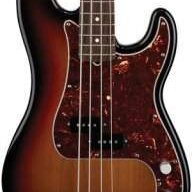
Hmmm....60th anniversary Cinderella P bass? I have at least 3 nieces that would be over the moon if I showed up with that.
I hope for the best with this.
There is another possibility entirely however. There is nothing wrong with your logic, making big changes before bringing in a new CEO who may reverse them is silly. However the correctness of your logic just proves that either they did not plan from the beginning to bring in a new CEO as I discuss above and previously or else that they knew from the beginning who or at least what type of person they would bring on as CEO and have reason to expect that the changes they have already made are consistent with the new CEO's plans. It is not impossible that they have been talking to the new man for some time and that he began calling the shots well before the announcement of his hiring.
There are a lot of possibilities but I'm usually following Occam's razor. My bet is that a couple of factors are in play. First is that there likely is no single authority at Fender - the company is too big. So you have different SVPs making decisions that may or may not have had significant CEO input. Given the rather precarious position of Fender, I have not doubt that the old CEO had his paper on the street and may not have been fully engaged. I've seen plenty of decisions made then reversed when new blood comes in. Sometimes that is because the decisions were stupid. Sometimes that is because the decisions don't fit with a new strategy. And sometimes it is because the new guy doesn't want the old guy's ideas hanging around but rather wants to pee in the corner and mark his new territory. Usually it is a little of all three...

if it was a road worn disney princess p bass I would snag it.

You really want a road worn princess? I prefer mine pristine.if it was a road worn disney princess p bass I would snag it.

You really want a road worn princess? I prefer mine pristine.
what a quip! didnt think of it like that. Of course the road worn wouldn't really be worn out but just relic'ed to look and feel like it.
kinda like Charlize Theron in the movie monster.
BassHappy
Supporting Member
You are assuming they are following a straightforward, logical process to rebuild Fender and specifically you assume that they knew all along they were bringing in new blood. Problem solving is rarely a linear process except in the case of trivial problems. Serious problems will often produce false starts, massive change of plans, and reversals of recent decisions before they yield to attempts to solve them. Plus a change in corporate governance, hiring a new CEO for example, often involves power struggles among the board of directors. Those in power at the beginning go in the way they think best but then one or two of them either become worried about new changes they did not agree to in the beginning or were only weakly committed to the new plan and are persuaded to switch sides by those in the minority and suddenly we are going in an entirely new direction. It is fairly common for companies that seem to have all the resources they need to overcome almost any difficulty to suddenly fail and go out of business because of problems they should have been able to solve. Problem solving is that difficult. What you see at Fender is not logical and it is not efficient but that is the way problems often get solved in the real world. Companies are run by real people who can make mistakes and who can lose the confidence of employees, colleagues, and investors before the things they are doing have enough time to demonstrate that they are the correct choices after all.
There is another possibility entirely however. There is nothing wrong with your logic, making big changes before bringing in a new CEO who may reverse them is silly. However the correctness of your logic just proves that either they did not plan from the beginning to bring in a new CEO as I discuss above and previously or else that they knew from the beginning who or at least what type of person they would bring on as CEO and have reason to expect that the changes they have already made are consistent with the new CEO's plans. It is not impossible that they have been talking to the new man for some time and that he began calling the shots well before the announcement of his hiring.
Hey Khutch
Yeah, good points all. You know, it could be that some of the top brass went ahead and made some decisions that other higher ups considered unwise or inappropriate - and that is what actually sparked the changing of the guard to begin with....
I suppose we have to wait a couple of years and read the book...
It just seemed like every other day for the past few months there was another thread about - "Look what Fender did now....."


