Fortress might just as well be made out of steel.
Fortress of Steel, I see what you did there...

TalkBass has been independent since 1998. Add your voice.
Create a free account to reply to discussions, view embedded media, and browse with fewer display ads.
Join free Log in
Want zero display ads or expanded classifieds tools? Compare plans.
Fortress might just as well be made out of steel.


I dunno about putting beeswax on the neck tbh. That's a surface polish that restores wood vibrance, I don't know that it provides any real maintenance properties.Wenge is a little bit pourous, but if you condition it correctly with beeswax, it should never move on you.
I dunno about putting beeswax on the neck tbh. That's a surface polish that restores wood vibrance, I don't know that it provides any real maintenance properties.
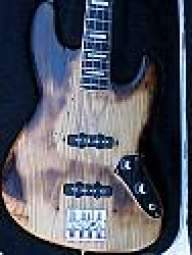
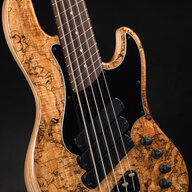

I've never own a bass with wenge neck but I did play it when i was getting a new bass like a year ago. It was a warwick corvette 5 string and I really enjoyed how it wrapped around my hand and the overall texture of the wood. But the luthier who sets my bass up didnt recommend wenge necks. He said that they will turn in some weird shapes rather than taking a little bow shaped curves like maple necks if they arent treated right. So here goes my questions.
How are wenge necks in general?
Is it true that wenge necks will turn in odd ways instead of a bow like curve? If yes, how do i avoid it?
What are the treatments for the wenge necks that my luthier talked about?

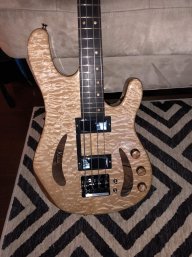

I don't think so. Look at all the for parts Warwick basses on eBay. Every one that has a bowed neck or twisted neck is a maple neck from what I see. I personally think the neck design is more important when it comes to this kind of thing. For example my 6 string thumb bass that's my current main player and the Conklin gt7 I had are as stable as it gets. But they have a lot of lumbar in the necks. I've had other basses that I had to tweak the neck monthly including maple necks.I've never own a bass with wenge neck but I did play it when i was getting a new bass like a year ago. It was a warwick corvette 5 string and I really enjoyed how it wrapped around my hand and the overall texture of the wood. But the luthier who sets my bass up didnt recommend wenge necks. He said that they will turn in some weird shapes rather than taking a little bow shaped curves like maple necks if they arent treated right. So here goes my questions.
How are wenge necks in general?
Is it true that wenge necks will turn in odd ways instead of a bow like curve? If yes, how do i avoid it?
What are the treatments for the wenge necks that my luthier talked about?
Feed-N-Wax Wood Polish & Conditioner | Howard Products THIS! I used to use "Lemon Oil" on my fret boards and several mahogany tables. I was put on to Feed-N-Wax on another luthier site. After trying a small bottle from a luthier supply, I found the large economy size at Lowes for about what I'd paid for the small bottle. It makes the fret boards shine. The tables are so much darker and lustrous, yet don't need the attention as often as before.I dunno about putting beeswax on the neck tbh. That's a surface polish that restores wood vibrance, I don't know that it provides any real maintenance properties.



I only have experience with Warwick wenge necks, and the neck on my Fortress might just as well be made out of steel. I don't think I've ever adjusted the neck on that bass since I bought it over a decade ago. I own lots of basses, and I have to adjust all my necks when the seasons change.

I always look at the grain of the neck of any bass or guitar I'm interested in purchasing. The last 3 or 4 i was interested in I had to reject because I identified swirly/poor/fast growth grain that I wasn't going to take a chance on. One of them was an American Fender.

I didn't even see what i did thereFortress of Steel, I see what you did there...
. Good call!
I've always wondered how you say "wenge" properly. I always said "wensh". Then I saw a Warwick guy on Youtube calling it "wenjy".
I finally looked it up. Wikipedia says it's pronounced "wing-gay".


