IMO, the crappy rhythm guitarists are the scrubbers. The scrubber's rhythmic style is one that mimics the scrubbing of a pot in the sink to clean it, strum-me-strum-strum-strum-strum-de-strum-every-string-strum, strum-ity strum strum. It's like a background wash of the chord. They know the changes, all the alterations and hit every string they can in that scrubbing style. Good rhythm guitarists play a rhythmic figure to augment the tune. Bad ones just scrub along with it.How about if we flip things a little with these questions:
What makes a crappy/bad rhythm guitarist? Is there anything they can do that would really musically frustrate a bass player when playing together?

Enjoy the benefits of a premium membership!
Upgrade Account
-
TalkBass has been independent since 1998. Add your voice.
Create a free account to reply to discussions, view embedded media, and browse with fewer display ads.
Join free Log in
Want zero display ads or expanded classifieds tools? Compare plans.
You are using an out of date browser. It may not display this or other websites correctly.
You should upgrade or use an alternative browser.
You should upgrade or use an alternative browser.
What does a rhythm guitarist do?
- Thread starter PostPunk22
- Start date
More options
Who Replied?
I hate most labelling like "rythm" and "lead" guitarist ... because it makes you think that the lead never play chords and the rythm only play chords ...
To me most of the time when you have someone labelled rythm guitarist he fills the sounds a lot with his chords and it doesn't leave space to play intrecate part because you kinda feel constrain to play the same rythm has him ...
I prefer when their is a piano or if both guitars works together to make a cohesive harmony in which you add a 3rd layer so all 3 ( maybe 4 if your drummer is melodic ) somekind of game of each one providing support but also lead in some places.
To me most of the time when you have someone labelled rythm guitarist he fills the sounds a lot with his chords and it doesn't leave space to play intrecate part because you kinda feel constrain to play the same rythm has him ...
I prefer when their is a piano or if both guitars works together to make a cohesive harmony in which you add a 3rd layer so all 3 ( maybe 4 if your drummer is melodic ) somekind of game of each one providing support but also lead in some places.
Hehe .. well there are two aspects of this. One is how to play rythm guitar. Interesting subject and lots of good input in this thread.
The other subject is, what is a rythm guitarist. Well that is a guitarist that never plays lead. There are three situations where the term rythm guitarist comes into play.
1. Guitard (or just guitarist, doesn't have to be a guitard, but often is) want all the limelight, but for one reason or another the band need a second guitarplayer to fill up its sound. So they put out an add. Rythm guitarist wanted. (Come be a part of it all, but don't you dare play a solo). - I could tho imagine a band, that doesn't like guitar solo search for a rythm guitar. Just like a band might want a bass player that doesn't slap.
2. Unexperienced guitar player just looking for someone to play with and thus offers himself as a rythm guitar either because is unable to play lead or just not confortable with it. Maybe he just think that it will increase his chances of finding a band to play with, if he promises not to play lead.
3. Apprently there is a bread of guitar player that consider themselves to be lead guitarist and thus do not play any sort for chord work. (Tho if it is BB King, then I approve)
Guitar is just guitar, you play it and what it appropriate. I've always loved the power trio setting and there are some great players out there upholding that tradition of being the only guitar player in miles and just nailing it. The list is long. My favorite is Andy Summers from The Police, but you could go on and on starting fron Buddy Holly, over Jimi Hendrix to Clapton in Cream, on to Led Zeppelin and so on .. Including jazz/funk stuff like The John Scofield Trio and stuff like Wayne Kranz and Oz Noy.
The other subject is, what is a rythm guitarist. Well that is a guitarist that never plays lead. There are three situations where the term rythm guitarist comes into play.
1. Guitard (or just guitarist, doesn't have to be a guitard, but often is) want all the limelight, but for one reason or another the band need a second guitarplayer to fill up its sound. So they put out an add. Rythm guitarist wanted. (Come be a part of it all, but don't you dare play a solo). - I could tho imagine a band, that doesn't like guitar solo search for a rythm guitar. Just like a band might want a bass player that doesn't slap.
2. Unexperienced guitar player just looking for someone to play with and thus offers himself as a rythm guitar either because is unable to play lead or just not confortable with it. Maybe he just think that it will increase his chances of finding a band to play with, if he promises not to play lead.
3. Apprently there is a bread of guitar player that consider themselves to be lead guitarist and thus do not play any sort for chord work. (Tho if it is BB King, then I approve)
Guitar is just guitar, you play it and what it appropriate. I've always loved the power trio setting and there are some great players out there upholding that tradition of being the only guitar player in miles and just nailing it. The list is long. My favorite is Andy Summers from The Police, but you could go on and on starting fron Buddy Holly, over Jimi Hendrix to Clapton in Cream, on to Led Zeppelin and so on .. Including jazz/funk stuff like The John Scofield Trio and stuff like Wayne Kranz and Oz Noy.
IMO, the crappy rhythm guitarists are the scrubbers. The scrubber's rhythmic style is one that mimics the scrubbing of a pot in the sink to clean it, strum-me-strum-strum-strum-strum-de-strum-every-string-strum, strum-ity strum strum. It's like a background wash of the chord. They know the changes, all the alterations and hit every string they can in that scrubbing style. Good rhythm guitarists play a rhythmic figure to augment the tune. Bad ones just scrub along with it.
+1 In my last band, our rhythm guitarist was kind of like this. It just creates a muddy mess.

I've always seen it as the bass helps sonically bridge the drums and rhythm guitar, and the rhythm guitar helps bridge the lead with the bass.


In the 90's thrash band I was in after the band kicked out the second lead player in a duel lead guitar format we could not find anyone to replace the guy because rhythm was so important to the sound and none of the available players were master of both and what we were looking for. We ended up filling the spot with a guy I knew from the neighborhood. He was not much in the way of flash or ability but he played solid rhythm.
That is him years later the guy in the back with no hair.
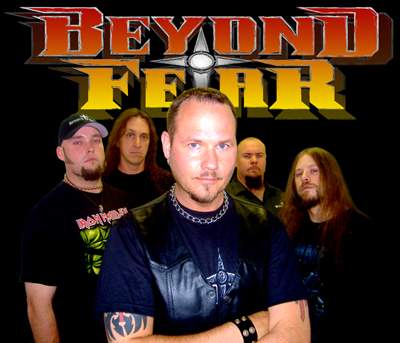
That is him years later the guy in the back with no hair.
This guy has got a pretty good grasp of what John Lennon did as a rhythm guitarist:
Lennon is much underappreciated as a guitar player. I could do without the 'attitude' advice here, but he's got the fingering down, and the right hand action shows promise.
Jimmy Nolen, who served long in James Brown's Famous Flames, was a master of funky rhythm playing, and it seems to me Nile Rodgers took his cue from Jimmy. To do that stuff, your plectrum hand has to be pivoting easily up'n'down in tight 16th's all the time, but you're only actually hitting the strings on the beats/syncopes you want - it's a feel thing once you have the technique.
Lennon is much underappreciated as a guitar player. I could do without the 'attitude' advice here, but he's got the fingering down, and the right hand action shows promise.
Jimmy Nolen, who served long in James Brown's Famous Flames, was a master of funky rhythm playing, and it seems to me Nile Rodgers took his cue from Jimmy. To do that stuff, your plectrum hand has to be pivoting easily up'n'down in tight 16th's all the time, but you're only actually hitting the strings on the beats/syncopes you want - it's a feel thing once you have the technique.
Last edited:
Have a listen to John Lennon, Malcolm Young, Nile Rogers and Wilko Johnson, there's your answer.
I played with a superb rhythm guitarist, he gave the sound another dimension, enlivened the beat like a percussion player and never ever played too loud, too fast or too much, driving the song along.
Rhythm guitar is not easy to do well and there are not enough good players out there, look how many tutorials there are for rhythm guitar on You Tube and compare with the gazillions on playing flashy lead guitar.
I played with a superb rhythm guitarist, he gave the sound another dimension, enlivened the beat like a percussion player and never ever played too loud, too fast or too much, driving the song along.
Rhythm guitar is not easy to do well and there are not enough good players out there, look how many tutorials there are for rhythm guitar on You Tube and compare with the gazillions on playing flashy lead guitar.
No rhythm guitarist, no rock and roll... song sounds empty... before amplifiers, they strummed banjos... banjo's were made loud so that people could hear 'em... because they wanted to... who were Johnny Cash, Elvis or the Everly Brothers without a Tennessee flat-top box... listen to a band play a blues shuffle without a guitarist playing rhythm... listen to Taxman... Brown Eyed Girl... She's A Woman... Born On The Bayou... Listen to Freddie Green in the Count Basie Band... Chuck Berry played RG and LG... Keith Richards is also a LG/RG genius... in the beginning there was no lead guitar... guitar was guitar... you played the rhythm so people could dance... guitar solos were only 20 seconds long... there were no lame, long winded, politically correct bass solos... the bass provided the roots and moved the dancers feet... and some other parts, too... it is my honest belief that the idea of a RG and a LG is like driving a car with a hat on... we ain't thinking clearly... the Beatles did it, so the rest of us follow along... don't think for yourself... "Hello... I'm the LEAD guitar player...! Love me... me me me, it's all about me...!" two guitarists should be two guitarists... they should both play melodies and harmonies... back each other up like those duets in a Mel Bay book... that's why you're wondering what a RG does... we've forgotten to think for ourselves... fire you LG player and your RG player and replace them with real guitarists... there's chords and there's melody... many guitarists can play both - at the same time... LG and RG are for kid's bands... for learners... it's just too lame for older or pro bands... when someone tells you that they are the Rhythm Guitarist, then someone is snoozing... drop the labels and play guitar as it should be played... take turns and back each other up...
[QUOTE=" Apparently there is a breed of guitar player that consider themselves to be lead guitarist and thus do not play any sort for chord work. (Tho if it is BB King, then I approve)
[/QUOTE]
Well said. I was fortunate to meet BB King while playing with John Lee Hooker on a double bill in Montreal back in '73. I seen BB King jamming in a dressing room with a Montreal guitarist between shows. BB King knew his chords... sounded like Jump Blues stuff... (Did he know that his show precluded him from chording...? So he took every opportunity to strum...?)
[/QUOTE]
Well said. I was fortunate to meet BB King while playing with John Lee Hooker on a double bill in Montreal back in '73. I seen BB King jamming in a dressing room with a Montreal guitarist between shows. BB King knew his chords... sounded like Jump Blues stuff... (Did he know that his show precluded him from chording...? So he took every opportunity to strum...?)

All of the above, but a good rhythm guitarist can also play some lead. It comes in handy when there are guitar duets in the song, à la the Allman Brothers.
A good rhythm guitarist is like us bass players, highly underrated. One can just ca chunk ca chunk along all night or put something interesting into their playing.
Just one example: In B.B. King's later years he had Leon Warren, a Jazz player as rhythm player, and to my mind it was the best sounding band B.B. ever had. Leons jazzy chords and approach added a unique counterpoint to the Blues band setting, and he would throw in a jazzy solo behind Mr. King once in a while. Take a listen.
.
Just one example: In B.B. King's later years he had Leon Warren, a Jazz player as rhythm player, and to my mind it was the best sounding band B.B. ever had. Leons jazzy chords and approach added a unique counterpoint to the Blues band setting, and he would throw in a jazzy solo behind Mr. King once in a while. Take a listen.
.
Last edited:

Same thing everyone else does. Fills in their space in the song. Good music has just the right combination of instruments doing the right thing to make the song sound full without sounding too full.
It's a balancing act and can be anywhere from really bad to good enough to induce levitation. To me it's a matter of playing with a group of people and figuring out where my space is and how to keep it as full as possible without crowding anyone else, and them doing the same thing.
It's a balancing act and can be anywhere from really bad to good enough to induce levitation. To me it's a matter of playing with a group of people and figuring out where my space is and how to keep it as full as possible without crowding anyone else, and them doing the same thing.

Usually the rythym guitarist is the main song writer in my favorite bands. Some play lead too, but usually stick to laying down "The Riff".
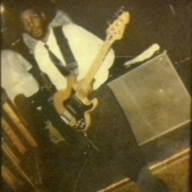
A good rhythm guitarist is like us bass players, highly underrated. One can just ca chunk ca chunk along all night or put something interesting into their playing.
Just one example: In B.B. King's later years he had Leon Warren, a Jazz player as rhythm player, and to my mind it was the best sounding band B.B. ever had. Leons jazzy chords and approach added a unique counterpoint to the Blues band setting, and he would throw in a jazzy solo behind Mr. King once in a while. Take a listen.
.
+1 to one of B-Bs better sounding bands, also Leon Warren is a verygood example of what a rhythm guitarists does in this song. Niles Rodgers of Chic comes to mind for players of R&B- very powerful and more up front but not over bearing.
Hello everyone, usually when I have Bass related problem I can come here and do a quick search and find a ton of answers and detailed info here. So I figured I will ask this question here, knowing that most of you have a LOT more musical skill and experience then me and many of you have been/are in a band or have some kind of band experience.
I have been playing bass (not good lol), just for fun by myself for a few years now, I have never been in a band or band type of setting. I had a friend who is interested in learning guitar basically ask me these couple questions about rhythm guiatar: what does a rhythm guitarist actually do, what is their role in a band, and what is their relationship to the bass and drums. I started to answer these questions, but I had kind of a hard time explaining everything properly. Of course I googled it, check wikipeida, etc. for help.
I kind of get the main gist of what the rhythm guitar players role is:
To provide rhythm and harmony in a band's rhythm section. Someone I know said it is basically like a bass but it plays chords instead of single notes.
Then I heard it actually works against the bass and drum an accents the upbeats.
So I am still a little confused still and have a couple more questions:
1. So basically when a band creates a song there is one rhythm or maybe a couple rhythms (one for verse, one for chorus, one for intro, etc.) that drives the song a long. That rhythm most of the time is created by the drums and bass. Is the rhythm guitar basically and extension of this and plays this rhythm (rhythmic pattern/riff) with the drums and bass? (only difference is that the rhythm guitar is usually a lot more harmonic/chordal then bass because it plays more then one note at a time)
2. If the question I just asked above is correct or pretty much the role of the rhythm guitarist, that kind of makes some sense to me. But I read in a few spots that the rhythm guitarist accents the upbeats a lot more and somewhat plays against the bass/drums/rhythm. This is the part that confuses me, because wouldn't this basically destroy the main rhythm set up by the bass/drums, make things really muddy, and too busy? Because if the rhythm guitar is playing one rhythm and the bass/drums playing another plus the vocal/lead melodies going on... wouldn't this make your ears not know what to listen too and make it sound really bad and busy? or am I missing something and not understanding things properly?
Sorry for the novice questions, I am just trying to understand things a bit better.
Thanks a lot
Check out Keith Merrow, he's an amazing rhythm guitarist and he does play chords but mostly single note picking and he's amazing at it
Doner Designs
Steve Doner
- Jun 2, 2012
- 5,784
- 6,819
- Disclosures
- Doner Designs is an alias for Steve Doner


