• TalkBass has been independent since 1998. Add your voice.
    Create a free account to reply to discussions, view embedded media, and browse with fewer display ads.
    Join freeLog in
    Want zero display ads or expanded classifieds tools? Compare plans.

What does an authentic Jazz bass really sound like? Small rant warning.

Check out this page:

What is the "Jazz Bass Mid Scoop"?

A Jazz Bass sounds like it's mid scoop (both pickups on). You can't just recreate that with an EQ setting, because that mid scoop moves around depending on where you are playing on the neck and what note you're playing. You either like or don't like the sound.
FINALLY an objective explanation of mid scoop. Now I would like definitions of : bark, grunt, warm, round,
organic, punch, zing and all the other words tossed around to try to describe tone.
 
I added a J-Retro to my Fender AmStd J a few months ago. Honestly, probably going to change it back. I’m not saying the preamp isn’t flexible - it’s actually pretty great - but I like the stock tone just fine and find it flexible enough.
 
  • Like
Reactions: GreyBeard
The Question is still valid. Leo said if you read the books about the history of the Fender company “ The Jazz bass is my greatest invention” . Direct quote.

After all these years yes people are going to modify them to what they want. That is totally cool with me, you just can’t call it a Jazz bass anymore.

A Jazz Bass platform sure, but not what Leo brought fourth at all. At G&L even then Mr Fender modified the Jazz with the improvements he wanted yes, but only to the point of improving on his original concept.

Not changing it to sound and look like something else.
If the new idea brings a new sound and works very well then recognize it as a new concept/idea and celebrate the achievement.
Car manufacturers have been doing this for years. The Ford Comet had a new body put directly on its frame. It was not called a Comet.2, it was called a Mustang. New look, same good bones/platform.

Couple nuances that need to be addressed with this response:
1) The car that was the “predecessor” to the Mustang was the Ford Falcon.
2) The Mercury Comet was the fancier more upscale version of the Ford Falcon.
3) The Mustang was not a body dropped on a frame. The Falcon, Comet, and Mustang were the same platform - which is to say they were all smaller unibody cars that didn’t have frames. There are frame rails, but the unibody design is what tied them together. A lot of the same parts including motors are cross compatible between Falcon and Mustangs.

I realize this is off topic from the original post, but as Falcon driver, I couldn’t resist.

Back on topic, I like my jazz bass.
IMG_2442.jpeg
 
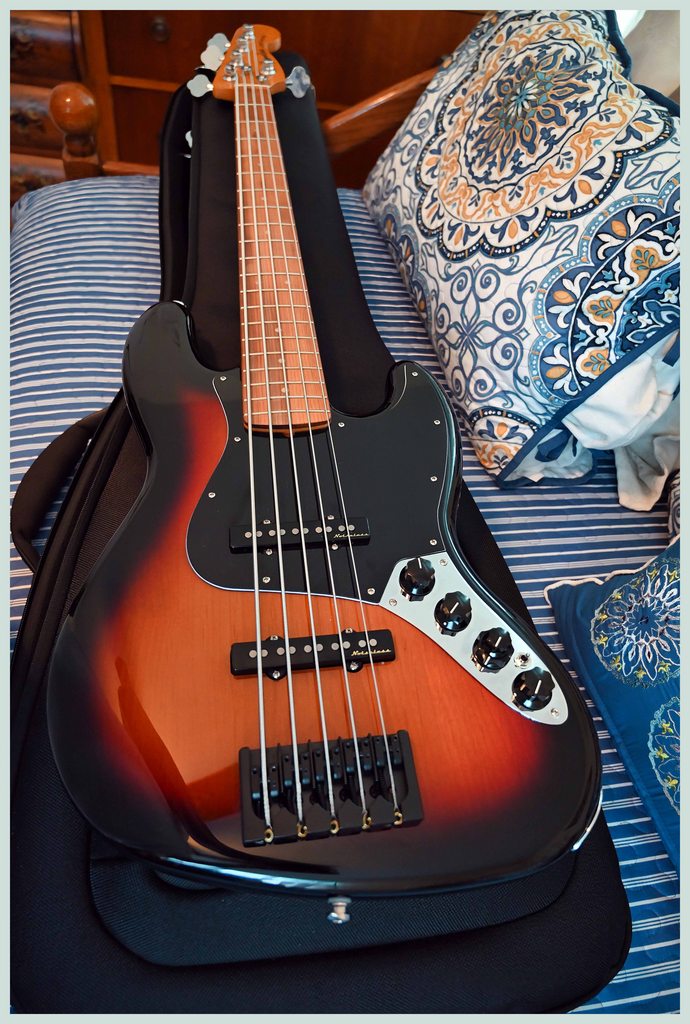
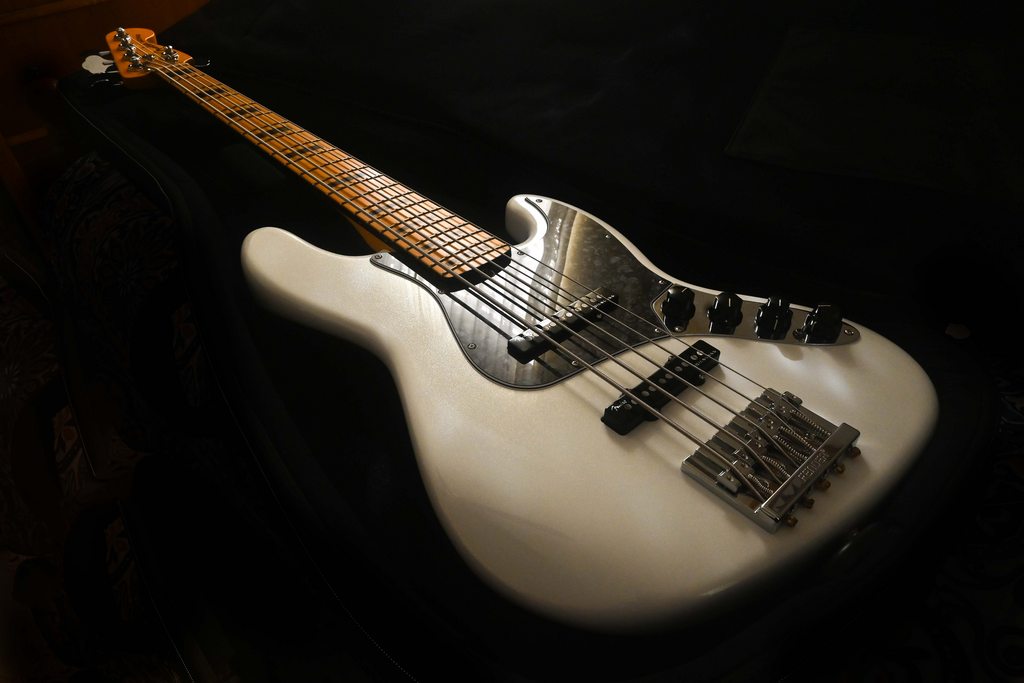
As to what is that "Jazz Bass tone?". Timothy B. Schmidt (Eagles) used a stock Jbass on most of the Eagles records and CD's and I consider his tone classic Jbass. Markus Miller, on the other hand, modified his to give him his signature slap tone. Geddy Lee (Rush) runs his through processors to give it that solid bottom end with some distortion (hair) on the top end. And, it all depends on whether you have both pups on full or have them rolled to the neck or bridge. Last but not least, it depends on the vintage of the Jbass. The early ones have the bridge pups closer to the neck and the 70's to present models moved the bridge pup closer to the bridge. Also the early models had a stacked volume/ tone for each pup. Like I wrote earlier, it depends.

My 5 string Jazz Basses
24pW98sh.jpg

8hU1f7rh.jpg
 
  • Like
Reactions: 21Pastorius12
WOW that's one fantastic track you say that was a college project WOW !! bass sounds absolutely fantastic, thanks for such a lengthy reply also I really enjoyed reading this.
I am guessing that the 62 Jazz bass had concentric stack knobs? I love those and I don't know why I do, I could never afford to buy an original 62 today though I would love one.
I could definitely hear a Rick-tone in there too which would be the pickup you mention?
By the way do I hear taurus pedals in that track ??
For the audio engineering class (the second of two I took at OSU) the students had to do a recording project. Most (pretty much all of them) went out to clubs or bars to record a band playing, but my friend Steve and I had written the basics of "Time Machine" in the Fall of 1974, the two main guitar parts, and over the years he wrote the lyrics and I wrote additional guitar parts and the main bass line and, eventually, the synth parts on a friend's Electrcomp 500 that I borrowed for a while, so I decided to make the song my project.

We had a professional 16-track recording studio at our disposal for free :hyper:, so my friends and I and a few other students spent two days at the studio. First day was setup and tracking, the second day was a bit more recording (one synth part that I wrote but was too fast for me to play cleanly at tempo, and the piano which was a last second addition to the song [thanks, Isaac!]), then mixdown/mastering. Given more time (we didn't really have a time machine around :smug:) there are some minor things I would have done a bit differently regarding the mix, but I can't complain, we did a pretty good job for the short time we had available to us.

Yes, the AV '62 Jazz Bass had concentric controls; I removed the detented washers so the tone controls worked more smoothly. An old friend of mine probably still has her original stack-knob Jazz Bass (a white one IIRC, I haven't seen or played it since the mid '70s) that she got as a young teenager in the '60s.

There is a very interesting mix of Jazz and Rick tone to that Jazz Bass that I put the hi-gain in. Tremendous sound, actually, IMO. For the recording, the bass was run through my (at the time) amp, a '70s Furman green-face PQ-3 > Crown D150A > custom built (by my brother) cabinet with an Altec 421A driver, mic'ed with an AKG 414. My friend who has the bass (Isaac) also has that speaker cabinet these days.

The "Taurus" pedals is the Electrcomp 500; I played those and most of the other synth parts.

I got a A in that class. :D
 
I’m not sure if this was mentioned since I did read every post.

The Fender Stratocaster is one of the most popular guitars ever played at this point in time.

Now think about this.

Many of them sound perfectly fine just stock and many of them sound just as good modified.
On that note, now think of how many versions of strats have been produced from other companies that are successful.

Excellent post by my fellow Lull stable mate @Geri O
 
  • Like
Reactions: Geri O
I do not know how to answer this question.
Is a jazz bass really just a really good platform to modify?
If so why?
Why does it seem the Jazz bass can not stand in its own anymore?
Change the pickups so you get more of a deep growl. To me just purchase a P Bass.
Just use your neck pickup and it will be the same as a P Bass. Not even close in the real world.
You know what I am going to say; just buy a P bass.
Now it’s active preamps and 3.1415926 band EQ’s.
Can’t say get a P Bass for that.

So again what does a traditional Jazz bass sound like?
What is wrong with a passive Bass.
Why does it seem that Jazz Basses are not any good any more unless they are modified to sound like something else?
I have my power basses. I do not need a Jazz to sound like my Warwick.

I do not need a modified Jazz to sound like my trucks diesel engine, Bark like my Heeler or sound like the Flute in the TCB Band.

I apologize! End of Rant. Can some one help me with this?

Thanks in advance
Clayton. Now the Unofficial Mayor of Bearville.
Sorry; can't help ya. I've never owned a Jazz Bass - Fender or otherwise - 'cause I don't like them. Has nothing to do with the pickups; it's the offset body shape of the things that bugs the bejeezus out of me. Currently, I own 5 basses with dual single coil pickups; 2 basses with dual humbuckers that can both be split into single coils; and a Kramer "Duke" with a Schaller "Twin J" pickup, that can be switched to run the bridge half - like the bridge pickup on a Jazz Bass. So, I'm perfectly fine with the dual SC pickup thing. I don't even mind the "can't turn 'em both up all the way or you lose volume" thing. All of my dual-SC, non-JB's seem to do that, too... I just crank one pickup to about 9 1/2 (usually - but not always - the neck pickup), and crank the other one up to taste. Which has always worked for me...
As for "everybody" modifying/changing their Jazz Bass? I don't think they get modified/changed any more often than any other bass. It's just that there are an awful lot of people who simply can't leave well enough alone - coupled with an awful lot of Jazz Basses for them to satisfy their tinkering urges with. Personally? Other than changing strings, or fixing stuff that actually needs fixing? None of my 24 basses have been modified - at all. I do have one bass that's the designated "let's try this, and see what happens" sacrificial lamb; and, one that was a wreck when I bought it - and intended solely as a "project" bass. All the others? Just as they came from the factory...:whistle:
 
Last edited:
  • Like
Reactions: Bruce Pete
For the audio engineering class (the second of two I took at OSU) the students had to do a recording project. Most (pretty much all of them) went out to clubs or bars to record a band playing, but my friend Steve and I had written the basics of "Time Machine" in the Fall of 1974, the two main guitar parts, and over the years he wrote the lyrics and I wrote additional guitar parts and the main bass line and, eventually, the synth parts on a friend's Electrcomp 500 that I borrowed for a while, so I decided to make the song my project.

We had a professional 16-track recording studio at our disposal for free :hyper:, so my friends and I and a few other students spent two days at the studio. First day was setup and tracking, the second day was a bit more recording (one synth part that I wrote but was too fast for me to play cleanly at tempo, and the piano which was a last second addition to the song [thanks, Isaac!]), then mixdown/mastering. Given more time (we didn't really have a time machine around :smug:) there are some minor things I would have done a bit differently regarding the mix, but I can't complain, we did a pretty good job for the short time we had available to us.

Yes, the AV '62 Jazz Bass had concentric controls; I removed the detented washers so the tone controls worked more smoothly. An old friend of mine probably still has her original stack-knob Jazz Bass (a white one IIRC, I haven't seen or played it since the mid '70s) that she got as a young teenager in the '60s.

There is a very interesting mix of Jazz and Rick tone to that Jazz Bass that I put the hi-gain in. Tremendous sound, actually, IMO. For the recording, the bass was run through my (at the time) amp, a '70s Furman green-face PQ-3 > Crown D150A > custom built (by my brother) cabinet with an Altec 421A driver, mic'ed with an AKG 414. My friend who has the bass (Isaac) also has that speaker cabinet these days.

The "Taurus" pedals is the Electrcomp 500; I played those and most of the other synth parts.

I got a A in that class. :D

I am not surprised you got an A..... its one hell of an accomplishment the work and effort that went into every aspect of it!!!! There was lots of heavy machinery that went into it it seems, haha.

Those Electrocomp 500's are beautiful looking things, I bet they are heavy though. Maybe its a good idea to go and visit your friend to see if she still has her stack-control jazz bass too! I am truly genuinely impressed even blown away by the work you put into this track and I really appreciate you sharing this with me.

I think that the reason Jaco replaced his stack-controls on his 62 with the controls from a precision bass was because of the "cogwheel" like movement and he preferred the smoothness as you say to the controls.
 
  • Like
Reactions: Jeff Scott
The little brown truck dropped this off to me just a while ago. It sucks. Can’t wait to rip out those worn out pickups and slap a badass bridge on this baby…

View attachment 5184562
That’s one of the best looking tort guards I’ve ever laid eyes on.

But in keeping with how Jazz basses suck until you mod them, you should definitely consider replacing it with something like a jack daniels logo guard or maybe go Jaco and just throw it out.
 
  • Like
Reactions: Alexander
I am not surprised you got an A..... its one hell of an accomplishment the work and effort that went into every aspect of it!!!! There was lots of heavy machinery that went into it it seems, haha.
Thanks, it was a lot of fun to do. :)

Maybe its a good idea to go and visit your friend to see if she still has her stack-control jazz bass too!
I can ask Marilyn if she would donate it to a good cause (tax write-off and all). I better get my 501(c)(3) going! :D

I am truly genuinely impressed even blown away by the work you put into this track and I really appreciate you sharing this with me.
:cool:

Those Electrocomp 500's are beautiful looking things, I bet they are heavy though.
Not very heavy at all, as I recall. It's pretty compact in real life.

I think that the reason Jaco replaced his stack-controls on his 62 with the controls from a precision bass was because of the "cogwheel" like movement and he preferred the smoothness as you say to the controls.
IIRC, there are different kinds of pickup interactions going on with the two different control layouts. I think most people actually prefer the 3-knob harness for that reason. What's interesting to me is that CLF originally used a 3-knob harness design for the prototype Jazz Bass, then went to the concentric pots for production in the beginning.
 
  • Like
Reactions: 21Pastorius12