
Enjoy the benefits of a premium membership!
Upgrade Account
-
TalkBass has been independent since 1998. Add your voice.
Create a free account to reply to discussions, view embedded media, and browse with fewer display ads.
Join free Log in
Want zero display ads or expanded classifieds tools? Compare plans.
You are using an out of date browser. It may not display this or other websites correctly.
You should upgrade or use an alternative browser.
You should upgrade or use an alternative browser.
What's better 1234 or 124 style?
- Thread starter icebolt99
- Start date
More options
Who Replied?I am in the middle of that book now. I started with 124 just like the book says, but as I started watching bass players on UTube, I noticed almost everyone was using 1234. So I went back to the start of the book and went through all of the exercises using 1234 to retrain my fingers.
The 124 method was definitely more comfortable, but I figured 1234 would help get me to the frets I needed more quickly. I am now working on Scales in the 2nd part of that book, and it is recommending to use 1234 to play some of them.
Try them both and decide what you like better.
The 124 method was definitely more comfortable, but I figured 1234 would help get me to the frets I needed more quickly. I am now working on Scales in the 2nd part of that book, and it is recommending to use 1234 to play some of them.
Try them both and decide what you like better.

Roy Vogt
Supporting Member
- Sep 20, 2000
- 4,433
- 537
- Disclosures
- Endorsing Artist: Kiesel Basses, Ampeg Amplification, Hotone Ampero II effects
Both work-I use 124 with some slap lines and R-5 patterns and 1234 with scalar. Carol Kaye uses the 124 with pivots so I learned that from her. 1234 works great for Bebop and Classical lines. Keep an open mind-they both work!



I am working through the Hal Leonard book as well, and have found that it's easier to vary the style according what I am playing; there's no reason that you can't use both.
Definitely this. Neither is inherently better. I use whatever feels most comfortable for any particular sequence of notes. I will say, 124 is probably better for beginners, until you develop some finger strength, then I would branch out and start using 1234 as much as possible, where appropriate.
I have small hands and wear my bass low. I would surely have carpal tunnel by now if i didn't use 124. Pus, it allows for a lot cleaner muting, the middle finger is always in the perfect spot to mute the E or A string when it's not being played, AND it's easier to play octaves. Most funk guys use 124 fingering probably because of this.
I use 124 in the first six positions, and 1234 above that because I have short fingers. Neither one is better overall, they each have purposes. You have to look at your size, where you wear your bass, your style of music, your speed goals, and everything else to determine which to use.
It depends where you are on the neck, and the scale of the instrument. In the low positions, 124 is much less strain on your hand. This is the way upright players are trained. Once you are higher than the 5th fret, 1234 becomes much less of a stretch. So to repeat what others have said - both. Above the 12th fret, 123 can be more comfortable, due to how close the frets become.

Use both, but develop 124 first, then develop 1234 from it.
The best way to use them is mix the use, 124 in the lower reaches (5th/7th fret down) and 1234 above it. You can split it across the fretboard by using 124 on lower end when playing the E and A strings, then 1234 when using the D and G strings. Also fret width and finger size are a consideration.
It also pay to develop in the lower reaches or the bass pairing the fingers up where the wider frets allow it.
12 = fore and middle finger, 23 = middle and ring finger, 34 =ring and little finger.
On the 4th string play F-G-A-B-C#-D# using the pairings listed below.
On the 3rd string play A#-C-D-E-F#-G#
The F is played 12, the G is played 23, the A is played 34, the B is played 12, the C# is played 23, and the D# is played 34.
Repeat the process for the 3rd string notes.
Another exercise to develop is playing three chromatic notes.
I like to start students of at the 7th fret E on the the 3rd string.
Play E-F-F# by pairing up 12 to play the E, 23 to play the F, 34 to play the F#, 23 to play the F and 12 to play the E.
Thos can be practiced across any three semitones, but start higher up till the hand is comfortable with the span and spread, then move it down gradual.
Let the hand and fingers get comfortable with each new position, the demands change across strings as well as the span.
So if you play the E-F-F# notes at the 7th fret, then practice all strings in that position.
These fingerings will help improve the fretting by relieving strain on the finger joints and wrist.
As i said once this skill is developed, then developing a 1234 is easier because the finger tone is greater developed to handle the task by having time to develop.... not by coping with excess stress or strain. The idea of 'no pain no gain' does not apply to your hands and you are more likely to injure yourself than improve.
Any questions this post may have raised, post then and i will try and answer if i can.
The best way to use them is mix the use, 124 in the lower reaches (5th/7th fret down) and 1234 above it. You can split it across the fretboard by using 124 on lower end when playing the E and A strings, then 1234 when using the D and G strings. Also fret width and finger size are a consideration.
It also pay to develop in the lower reaches or the bass pairing the fingers up where the wider frets allow it.
12 = fore and middle finger, 23 = middle and ring finger, 34 =ring and little finger.
On the 4th string play F-G-A-B-C#-D# using the pairings listed below.
On the 3rd string play A#-C-D-E-F#-G#
The F is played 12, the G is played 23, the A is played 34, the B is played 12, the C# is played 23, and the D# is played 34.
Repeat the process for the 3rd string notes.
Another exercise to develop is playing three chromatic notes.
I like to start students of at the 7th fret E on the the 3rd string.
Play E-F-F# by pairing up 12 to play the E, 23 to play the F, 34 to play the F#, 23 to play the F and 12 to play the E.
Thos can be practiced across any three semitones, but start higher up till the hand is comfortable with the span and spread, then move it down gradual.
Let the hand and fingers get comfortable with each new position, the demands change across strings as well as the span.
So if you play the E-F-F# notes at the 7th fret, then practice all strings in that position.
These fingerings will help improve the fretting by relieving strain on the finger joints and wrist.
As i said once this skill is developed, then developing a 1234 is easier because the finger tone is greater developed to handle the task by having time to develop.... not by coping with excess stress or strain. The idea of 'no pain no gain' does not apply to your hands and you are more likely to injure yourself than improve.
Any questions this post may have raised, post then and i will try and answer if i can.
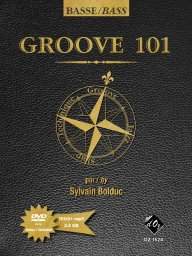
Groove Master
Commercial User
- Apr 22, 2011
- 1,808
- 1,291
- Disclosures
- Author of Groove 101, Slap 101 and Technique 101
I would advise to practice 1-2-3-4.
The 1-2-4 is ok to relax the hand when playing octaves and first positions lines but it covers less range. Plus you DON'T NEED to practice 1-2-4 actually, it just comes natural.
The 1-2-4 is ok to relax the hand when playing octaves and first positions lines but it covers less range. Plus you DON'T NEED to practice 1-2-4 actually, it just comes natural.
you DON'T NEED to practice 1-2-4 actually, it just comes natural.
Actually you do need to practice it, then players will find out how natural it comes to them, those that get it will need less practice than those who do not.
I have yet to come across any new student who understands how it works from the off.
Since it was based on ideas of Josef Simandl who wrote a whole book on how to use it, devised exercises and introduced a whole new pedagogy for bass, then it does indeed needs practice.....even if just to get the basics right....Yes some will cope with the demands better than others bit the only way to find out is to practice.
It depends where you are on the neck, and the scale of the instrument. In the low positions, 124 is much less strain on your hand. This is the way upright players are trained. Once you are higher than the 5th fret, 1234 becomes much less of a stretch. So to repeat what others have said - both. Above the 12th fret, 123 can be more comfortable, due to how close the frets become.
Did you ever play a DB ? that thing is huge, way bigger scale than a EB, the need for that fingering is quite obvious. For bass player I don,t see why you won't play with four fingers ... like a lot of guitar player who only play with index/middle/ring ... kinda wierd to me and limiting to me.
Groove Master
Commercial User
- Apr 22, 2011
- 1,808
- 1,291
- Disclosures
- Author of Groove 101, Slap 101 and Technique 101
Actually you do need to practice it, then players will find out how natural it comes to them, those that get it will need less practice than those who do not.
I have yet to come across any new student who understands how it works from the off.
Since it was based on ideas of Josef Simandl who wrote a whole book on how to use it, devised exercises and introduced a whole new pedagogy for bass, then it does indeed needs practice.....even if just to get the basics right....Yes some will cope with the demands better than others bit the only way to find out is to practice.
My point is that if you practice 1-2-3-4 then you will be able to use 1-2-4 when you feel it is appropriate. The contrary is not so easy if you only practice 1-2-4 and then want to use 1-2-3-4.


I believe that they are discussing one finger per fret vs. the bringing the pinky in to reach the third fret, thereby increasing playing comfort. In 124, the index-middle-pinky do the fretting, but scalular runs require shifting.

I'm sorry, what's a 124 and a 1234?
 17!
17! (the fingers of the left hand used to play bass)
Oh well then I'm STRONGLY in favor of 1234.
Practice it in chromatics on the G string.
g-g#-a-a#; g#-a-a#-b; a-a#-b-c; and so on.
If you don't use one of your fingers it will never get strong.
Practice it in chromatics on the G string.
g-g#-a-a#; g#-a-a#-b; a-a#-b-c; and so on.
If you don't use one of your fingers it will never get strong.


