

Enjoy the benefits of a premium membership!
Upgrade Account
-
TalkBass has been independent since 1998. Add your voice.
Create a free account to reply to discussions, view embedded media, and browse with fewer display ads.
Join free Log in
Want zero display ads or expanded classifieds tools? Compare plans.
You are using an out of date browser. It may not display this or other websites correctly.
You should upgrade or use an alternative browser.
You should upgrade or use an alternative browser.
What's going to replace the Precision?
- Thread starter Just Wrong
- Start date
More options
Who Replied?The only thing Fender I own is a Precision PU. It is the outstanding feature of the bass. A self-humbucking pair of coils that can be adjusted individually for each string.
IMO there will always be a place for basses with a split PU, whether active/passive, reversed, series/parallel, PJ etc. It need not be a Fender.
IMO there will always be a place for basses with a split PU, whether active/passive, reversed, series/parallel, PJ etc. It need not be a Fender.


I meant a key set and/or sequencer. Not specifically that one. But there are plenty bass guitar patches that sound good enough for some listeners.I like my Minilogue, but it won't be replacing my P bass anytime soon!
You can have my P when you pry it from my cold, dead hands. Or you can just ask and I’d probably let ya borrow it.

Uhh…feels like a troll. I’ll take the bait. Whether we like it or not, the P bass occupies a certain space in a lot of genres that cannot easily be replaced. As someone who does not actually own one, I see the fact that what a lot of recording artist and engineers and producers want is the instantly recognizable tone of the classic P bass.


Ain’t nothing wrong with P basses or Hawaiian shirts
What's wrong with Hawaiian shirts?
Attachments

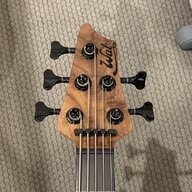

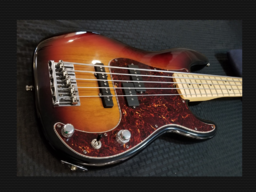
What's going to replace the Precision?
I did hear a while back that Leo's hard at work designing a P replacement with 2 single coils, with a focus on bassists who play jazz. Haven't heard much on it lately.
R.I.P and with RESPECT, Leo.
Last edited:

The P Bass Will Always Remain! And, if for some reason it doesn’t, there will be more For me to have for myself!!

Oops. I missed the sarcasm. It doesn't always translate in print so well.I felt like replying to a guy sarcastically saying a P bass was a 70-odd year fad and saying that pockets were equally a fad would be pretty obvious sarcasm at its face.
The P bass, even if it WERE on its way out, and it probably isn't with how much I see them, would still have had what plenty would call a good run. Now let's evolve past wearing pants. I figure that'll take a week or two, tops


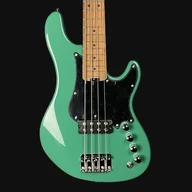
What will replace precision? Accuracy!
But srsly, it’s like asking “what will replace burnt umber in painters’ palettes?” It’s a particular flavor that isn’t going away soon.
Innovation produces both dead ends and lessons makers pick up on.
For instance, aluminum and graphite epoxy necks were explored as a way to bypass the inconsistencies of wood, but came with their own issues (weight, toxicity in manufacturing). But from those experiments we now have more common techniques like graphite stabilizer rods.
Today we have a wide spectrum of design choices - active electronics, laminated necks & bodies, bolt-on, neck-thru, exotic woods, new pickup designs, different pickup positions / angles / combinations, magnet materials, multicoils, improved bridge designs, fanned fret multiscales… not to mention all the work done with amps.
With all that, I would love to see a comparative study done on the actual tonal spectra of bass recordings pre and post mastering? I wonder how much of the effort we put into tone chasing ends up being a similar “thump” in the mix?
But srsly, it’s like asking “what will replace burnt umber in painters’ palettes?” It’s a particular flavor that isn’t going away soon.
Innovation produces both dead ends and lessons makers pick up on.
For instance, aluminum and graphite epoxy necks were explored as a way to bypass the inconsistencies of wood, but came with their own issues (weight, toxicity in manufacturing). But from those experiments we now have more common techniques like graphite stabilizer rods.
Today we have a wide spectrum of design choices - active electronics, laminated necks & bodies, bolt-on, neck-thru, exotic woods, new pickup designs, different pickup positions / angles / combinations, magnet materials, multicoils, improved bridge designs, fanned fret multiscales… not to mention all the work done with amps.
With all that, I would love to see a comparative study done on the actual tonal spectra of bass recordings pre and post mastering? I wonder how much of the effort we put into tone chasing ends up being a similar “thump” in the mix?

On the news today, they were reporting that a law just passed;AI will replace the P bass.
You can now file a lawsuit in Tennessee, if an A.I. entity copies your intellectual property (voice) on a recording. The only problem that I see is; tracking down whom or what actually stole your voice and used it.
Last edited:




One of the very few benefits of getting older is that you hear about inevitable future problems and think "thank God I won't be here for that sht."On the news today, they were reporting that a law just passed;
You can now file a lawsuit in Tennessee, if an A.I. entity copies your intellectual property (voice) on a recording. The only problem that I see is; tracking down whom or what actually stole your voice and used it.

I "liked" this but I don't like it. Inevitable it is for sure. Sad indeed.As long as there is electric 4 string bass, there will be the Precision. What will fade (and perhaps already HAS a lot) is the traditional "band" of guitar, bass, drums.


