

Enjoy the benefits of a premium membership!
Upgrade Account
-
TalkBass has been independent since 1998. Add your voice.
Create a free account to reply to discussions, view embedded media, and browse with fewer display ads.
Join free Log in
Want zero display ads or expanded classifieds tools? Compare plans.
You are using an out of date browser. It may not display this or other websites correctly.
You should upgrade or use an alternative browser.
You should upgrade or use an alternative browser.
What's On Your Workbench?
- Thread starter HaMMerHeD
- Start date
More options
Who Replied?

Manton Customs
UK Luthier
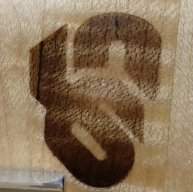
Started assembly on my current guitar project:


- Jun 30, 2010
- 49,589
- 221,969
- Disclosures
- musician/artist/owner - Gildaxe
That lower body design would facilitate a headless neck/tuners.
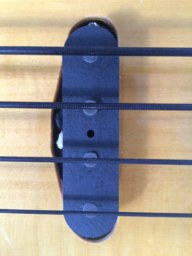
Wow. Cool design. Looks intergalactic.
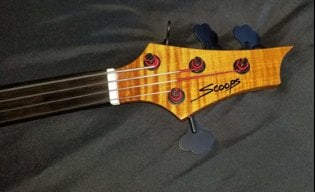
That lower body design would facilitate a headless neck/tuners.
Very true, but that is where I am housing the electronics so that there are no knobs visible from the front. I have blend/vol/tone controls onboard, but didn't find any kind of pleasing arrangement for them to be front mounted, so I decided to completely hid them. I might have drawn up a headless version at some point, but one really big problem with that is that you can then not hang or set the instrument on a normal stand. Then again, I'm working on a design for a guitar hanger that works for headless guitars as well. Just need to get the prototyping moving...

+
=
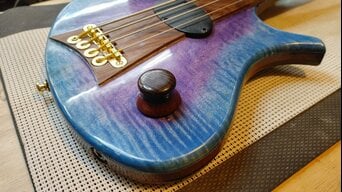
I think 4 graphite rods will keep this birdseye neck pretty sturdy.


- Apr 18, 2008
- 16,007
- 1
- 31,705
- Disclosures
- I'm highly opinionated and extremely self-assured
I doubt you’ll even need a truss rod.
I doubt a truss rod would be able to move a neck that stiff even if you put one in!
There will be a DA truss in there (it's under the tape, filling the gap for the moment). I'm honestly hoping that the neck attains a structural stiffness similar to a carbon fiber neck and the truss only acts as an insurance policy.
And it's not unprecedented: Spector basses use 4 graphite rods in their 4 string necks.
(grah-FEET)
And it's not unprecedented: Spector basses use 4 graphite rods in their 4 string necks.
(grah-FEET)
- Apr 18, 2008
- 16,007
- 1
- 31,705
- Disclosures
- I'm highly opinionated and extremely self-assured
I swear, Tru-Oil on cherry is one of my all-time favorites! This is just three coats in, with no buffing or wet-sanding.
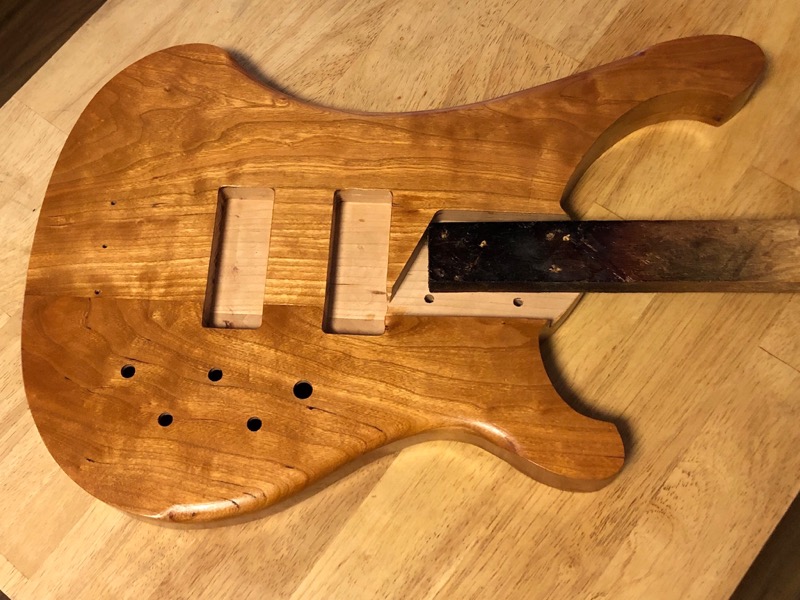
Cherry is under rated. One of my all time favorites. So good looking under a finish. I am happy to see people building with it.

Cherry is under rated. One of my all time favorites. So good looking under a finish. I am happy to see people building with it.
Any thoughts as to its use as a fingerboard material in fretted instruments?
- Apr 18, 2008
- 16,007
- 1
- 31,705
- Disclosures
- I'm highly opinionated and extremely self-assured
Any thoughts as to its use as a fingerboard material in fretted instruments?
To me, the primary characteristics to look for in a fingerboard wood are:
- Janka hardness,
- closed grain, and
- appearance
I've not had any issues with cherry in any use in guitar/bass. Not sure if I've done a cherry fretboard, but I have done multiple necks and some bodies, for sure.Any thoughts as to its use as a fingerboard material in fretted instruments?


