• TalkBass has been independent since 1998. Add your voice.
    Create a free account to reply to discussions, view embedded media, and browse with fewer display ads.
    Join freeLog in
    Want zero display ads or expanded classifieds tools? Compare plans.

Where exactly is the " sweet spot" pickup placement

Here's a good page that explains the nodes and antinodes, and how pickup placement affects tone.

http://www.till.com/articles/PickupResponse/index.html

I didn't write this, but it's a great article anyway. It is written for guitar, but the same principles apply.

I've been experimenting with different "sweet spot" placements at varying positions between the "neck" and "bridge" locations. Most of the ones that sound "sweet" to me are close to the original Music Man pickup location. Then again, "sweet" is subjective.
 
Here's a good page that explains the nodes and antinodes, and how pickup placement affects tone.

http://www.till.com/articles/PickupResponse/index.html

I didn't write this, but it's a great article anyway. It is written for guitar, but the same principles apply.

I've been experimenting with different "sweet spot" placements at varying positions between the "neck" and "bridge" locations. Most of the ones that sound "sweet" to me are close to the original Music Man pickup location. Then again, "sweet" is subjective.

Interesting article. You'll note, though, that he's only calculating response with open strings. (And it is calculated, not measured.) He says that this stuff scales, but he didn't work out what that might mean for all the fretted notes. I don't blame him; that would have made the paper 20 times as long.
 
Right here. The pickup location on this bass is perfect! It gets me a divine blend of a jazz bass and a P bass tone. Makes a great rock bass tone.
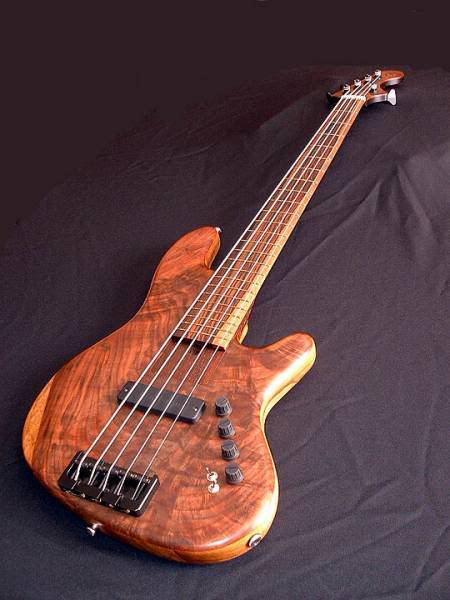
ElrickNJS-1.jpg

What bass is this?
 
Notice I'm not one of the guys talking about string length and harmonics etc. My experience is that there are p.up placement spots that make the best of all the fluidity of the physics involved in playing over the whole instrument. These are what I call the sweet spots. It's voodoo if you only theorize about it. It's experience and common sense when you actually go and play with it and find what works for your ears. Also notice I'm not saying my sweet spot is the same as yours. We all have different tastes but saying a sweet spot doesn't exist is pretty much saying pickup placement doesn't matter.

True, but also notice the OP iindicates a possible belief in the sweet spot as a particular location rather than an opinion of what a physical location for prefered tone is by asking..

"Is there an actual measurement for the sweet spot?

What are the tonal characteristics of the sweet spot?"

hence my reply.
 
This is a funny thread. The OP asked a fairly objective question and receives lots of philosophical answers.

IMO, when we discuss the "sweet spot" in terms of pickup placement on bass guitar, we are talking about the pickup placement used on Musicman Stringray basses. This placement would, assuming a dual coil pickup, place the back coil slightly farther from the bridge than a 60's position J, making the front coil much further back than the front pickup on any typical J. The resulting tone is certainly affected by the preamp in the case of a Stingray, but might reasonably be described as midrange focused as compared to a typical P or J tone.

The comments about the best pickup placement being that which satisfies the owner of the bass are right on, of course. However, in this particular context I do believe that the term "sweet spot" has a more narrow definition.
 
  • Like
Reactions: IReallyLoveFlea
Maybe when people refer to the 'sweet spot' they're subconsiously referring to the standard P-bass position because that's what most people are used to hearing? Like a happy accident I'm sure it was just placed there because it was in the middle between the bridge and neck but just happened to offer a halfway house in terms of the tonal possibilities of placing a single pickup somewhere in the available body space.

I like the sound of my P-Bass probably because of the type of pickup and where it's placed. I also like my EB-3 for the same reason. If I had to make an absolute decision on where to put a single pickup I would say around midway between the bridge and neck, but that of course is just a matter of personal taste. I play rock so I like that sound but if I played jazz I'd probably want it nearer the bridge.
 
Maybe Graphtec Ghost piezo saddle-mounted pickups, or the Lightwave bridge pickups are technically the most useful spot on the strings, as they always sense the fulcrum point at the end of the string, regardless of whether the string is open or fretted/shortened.

Then again, it is entirely subjective, and I think for a lot of the Bass players out there, the sweet spot is decided by them and their EQ :)
 
True, but also notice the OP iindicates a possible belief in the sweet spot as a particular location rather than an opinion of what a physical location for prefered tone is by asking..

"Is there an actual measurement for the sweet spot?

What are the tonal characteristics of the sweet spot?"

hence my reply.

Right.
An absolute, mathematically measurable single "sweet spot" does not exist....I agree with that. I think the best you can do with all the math is maybe try to explain what your ears already told you. Starting with the math seems like asking for disappointment.

I still like the term sweet spot though. I had a Westone Rail for several months before it was stolen after a gig. I found that when you were zeroing in on a pickup placement (I figured out fast you had to play all over the instrument doing this) you'd go 1/4" or less and all of a sudden the sound would get super fat and round, or go from muddy to huge but nicely defined or from dull to present and crisp. It still kinda blows my mind how much difference so little a move could make. I had three I used, the huge neck position sound, a roughly Pre sound and the Pre a little closer the bridge for more bite. All those spots were sweet to my ears. I really miss that cheap, ugly, uncomfortable little bass.
 
Here's a good page that explains the nodes and antinodes, and how pickup placement affects tone.

http://www.till.com/articles/PickupResponse/index.html

I didn't write this, but it's a great article anyway. It is written for guitar, but the same principles apply.

I've been experimenting with different "sweet spot" placements at varying positions between the "neck" and "bridge" locations. Most of the ones that sound "sweet" to me are close to the original Music Man pickup location. Then again, "sweet" is subjective.


Coincidently, I'm working on a paper for a class right now on the physics of pickups, and was reading till.com and found this java applet:

http://www.till.com/articles/PickupResponseDemo/index.html


It demonstrates the frequency response of a pickup due to its placement and width! Very neat to play around with!
 
I've waited and waited for someone to comment his excellent java applet and diagram, and I find it peculiar that no one's dared to comment it yet. There is - if one should take this playful applet and chart diagram seriously - a sweet spot. Or no really, but clearly an opposite, a no-no spot. It shows clearly in this applet. Even for bass. Even regardless of scale, bass and so on. Or regardless of fret.

No matter where you fret, or scale, there's always a serious DIP - i e node - right after the 5 K mark. So if you use one pickup you shouldn't place it there. You should place it on the hill or hump that starts again just after it instead. Maybe THAT's the sweet spot everybody is looking for? The number of nodes and harmonics and nodes and antinodes there are so small that it will be tracked by the pickups WIDE aperture anyway. So while there's no such sweet spot per se, there's definitely a "no-no spot" if that's a word. It seems there's always a STEEP dip right after the 5 K mark (around 6 K?), but which pickups tracks that high frequencies? Actives? Neodyniums?

Also, the guy asking for sweet spots for piezos (graphtech ghost) or lightwave systems, all I can say that LIghtwave systems lacks the lowest bass notes anyway, and needs help by additional piezo or magnetic pickups, since the tracking unit, or "light" sensors are in the far back just after the string leaves the bridge. The lightwave may be good in frequeny response but lacks that MM punch seriously. Or any other bass frequencies for that matter.

So while there are - not really - any sweet spot or "OPTIMAL ORIENTATION" as it should be called, there are instead some places that you're better off to avoid. Which this applet clearly shows.
 
holy nectrothread.

i'll add my 2 points and be on my way.

i see a lot of "stingrays will sound like dirt without a preamp". my passive OLP sounded huge. i had people call me to borrow it monthly because it tracked so well. no preamp to be found.

the other bit of silliness i have observed here is people saying 2 pickups an inch apart will not have a huge tonal difference. my OLP had 2 singles in one enclosure with a volume control for each. a blend pot would have been optimal but it was a cheap instrument. they were literally touching and the difference between the 2 was night and day. pole pieces a half inch apart sounded like a different instrument. the side closer to the neck was mean but still full of body. the bridge side was thin and very old school funk. i never used it.

to me that sweet spot is a big loud single coil at the neck half of an MM placement. it is almost the same as a 55-02, but not quite. much like microphone placement, fractions of inches make huge differences.
 
Is there an actual measurement for the sweet spot?

What are the tonal characteristics of the sweet spot?

The sweet spot is not a myth. It is the location some given prototype bass puts its pickup(s). The measurement depends on the prototype. For a lab standard P bass it is pretty much half way between the bridge and the 20th fret. For a different prototype the location will be different.

The tonal characteristics of the sweet spot are that if you put the same pickup the prototype uses in the same spot the prototype put them your bass will sound like the prototype did. More or less....

Ken
 
I do think that that applet shows where it is. Because that hill or bump after that 6K dip, where the harmonics turns up louder in alla cases seems to be at just that place and distance from the bridge. I e the Music Man Stingray "sweet spot" distance. However, that MM pickup, is wide aperture and, thus, takes up a broader harmonic node range than displayed in that applet. When combining a second or third pickup you're opening up a can of worms, but I can see situations when that "sweet spot" of a Music Man pickups really isn't suitable at all for some playing styles or styles of music.

That said, I don't think you can place any arbitrary pickup in the sweet spot and be sure that the resulting sound is what you're after, or the holy grail of tone. First the MM pickup uses large pole pieces, and has an altogether wider casing. Also I think single coil pickups that have narrower aperture are a TINY BIT more sensitive to where it is placed that humbucker or large doublecoils. And this, with the pre-amp can make sense too.

What I find peculiar is EMG's MM replacement pickups. On their FAQ and general info, they say they make bass pickups with RAILS built in only which isn't detectable visibly at all due/thank to their design. They cover a number of strings widths by doing it tha way. Now, further reading reveals that EMG raves about the "special" plucky and punchy sound some pickups with pole pieces can have, and pole pieces can be a crucial point of any pickups characteristics. And so, they build just a few selected models with visible pole pieces to make a difference. Yet, they're doing their MM replacement pups ONLY with rails, whereas on the original pickups they have pole pieces that contributes quite a great deal to the special - idiosyncratic - characteristic sound of those pickups.

They tried to do - I think it was DELANO pickups - a large hybrid pup which combines the best of a regular bridge J pickup and the best of a MM man pickup. Because you can't put a MM pickup and a J pickup in their original sweet spots on the same bass. They will be too close to each other so they went for building and combining them in one enclosure. People have reported everything from "a stroke of genius" to "totally futile" when trying them out. I e really "black or white" reviews and everything in between. I think you'll not be able to please them all with such pickups.
 
Oh yes. I do think that there is a sweet spot (sort of) , or a spot to avoid at least, for a

a) certain sound
b) certain pickup.

But absolutely no "one-sweet-spot-fits-all" pickups.
 
the other bit of silliness i have observed here is people saying 2 pickups an inch apart will not have a huge tonal difference. my OLP had 2 singles in one enclosure with a volume control for each. a blend pot would have been optimal but it was a cheap instrument. they were literally touching and the difference between the 2 was night and day. pole pieces a half inch apart sounded like a different instrument. the side closer to the neck was mean but still full of body. inches make huge differences.
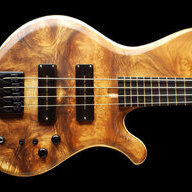
Yes, this is true, which is why everyone should at least once in their life have tried a WESTONE bass with the sliding pickup in. The one who posted a few posts ago said himself that a notch up or down the rail of the pickup DOES really make a huge difference. Huge! Not small! Otherwise Westone wouldn't make any of these basses. I think Teuffel/Tesla guitars (no bass) are the only ones with these features today. But it's a avant garde boutique design, and priced accordingly.

Westone+R+1.jpg


This bass - for sure - has its pickup placed on the sweet spot, which is anywhere on the rail... :-)
 
On the other hand, if one looks closely to that applet, and frequency nodes diagram that results from it, it seems quite impossible to make thar node/dip after 5K mark be of any loudness at all, in any cases? Is it impossible to make it heard at all, around 6 K?
 

Latest posts