Hahahaha!!! - yeah, good luck with that...
It all depends who's paying for the session. If you get called in as a hired gun, you do whatever they want. If it's your session and the engineer isn't cutting it, he's out.

TalkBass has been independent since 1998. Add your voice.
Create a free account to reply to discussions, view embedded media, and browse with fewer display ads.
Join free Log in
Want zero display ads or expanded classifieds tools? Compare plans.
Hahahaha!!! - yeah, good luck with that...


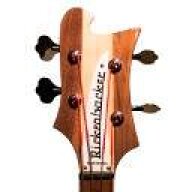
Yet, once McCartney was given his Rickenbacker he favored it for recording perhaps 75% of the songs he did with the Beatles.I don’t understand how you come to the conclusion I only think there is one type of good tone. When it comes to recording, some basses simply work more easily in the studio than others. Both the Stingray and Precision are known as bass that can be recorded with minimal tweaking or none at all. As some who owned a Rickenbacker for seven plus years, and who loved its tone, I know from personal experience, it is not a easy bass to record.
It all depends who's paying for the session. If you get called in as a hired gun, you do whatever they want. If it's your session and the engineer isn't cutting it, he's out.

I think it depends on the bass, player and recording gear. A pro studio should be able to get the best out of any bass unless it's a true POS. I've recorded using many different basses none of which was a P Bass. I used an Ibanez SR505 for years. Then a Tobias Deluxe 5. I've used several different jazz basses, some active and some passive. I've used a Lakland JO5 and a 55-01. They all sounded good and I had no complaints from the engineers. Just did a band demo at a school that used an outdated DAW using the Lakland. I'll also say...the P may be the best 'rock/country' recorded tone. R&B, jazz and funk.....all sorts of basses were used to great results.

Yet, once McCartney was given his Rickenbacker he favored it for recording perhaps 75% of the songs he did with the Beatles.
I would guess the P is easier. The passive signal is less processed, which makes for an easier palette to further modify. Plus, audible and full bass is all about the mids, and that’s the strong point of the P.
But I have to say, I have difficulty telling the difference between Chic tracks with the P and those with the Stingray. Not quite sure what that means, but...

I'm going only by my experience, but a P-Bass seems to be the #1 "Go-To" bass.
Any recording I've ever done, I've been asked to bring a P-Bass. IME the person in charge of the desk has always been able to get a good tone in very little time.
I don't own a StingRay, but I own an '01 Sterling. I've used it on a local recording project, and IMO it did a great job.
I've noticed that the majority of Engineers prefer a passive bass.
This being said, I haven't ran across a single Engineer who didn't like the sound of my Spector NS4CRFM with it's EMG P/J setup, - provided I used it on a song that required a more aggressive tone.
A common thread between McCartney’s Ric, and Bernard’s P/Stingray - all were recorded with flats. I think that may have a lot to do with it.
I can’t do it myself, I need the roundwound highs. But sometimes I wonder if that classic flats-with-a-pick thing is the best path. Lots of mids, doesn’t get in the way, strong attack, not too much sustain.

Great observations.
The only time I can think of that an engineer or producer would prefer a well-balanced 'Ray is if they are going for "that" slap tone.
And we can all thank Louis Johnson for that.
Not to mention GM was probably relieved when Paul started using the Ric instead of the Hofner.Paul McCartney ain’t Joe Blow hustling gigs trying to pay the rent. George Martin gave him what he needed. The same would be true for other stars with Rickenbackers.
A common thread between McCartney’s Ric, and Bernard’s P/Stingray - all were recorded with flats. I think that may have a lot to do with it.
I can’t do it myself, I need the roundwound highs. But sometimes I wonder if that classic flats-with-a-pick thing is the best path. Lots of mids, doesn’t get in the way, strong attack, not too much sustain.

"Let's dance, honey!"Early Chic was a P but the biggest hits came on a Stingray, however most people dance to both without giving a damn about which bass was used so they both win.

Your 2nd option could get pretty expensive - hope your pockets(and your bandmates) are pretty deep, if you ever manage to get in that situation...
No offense, but have you ever actually been in that situation?

Well, I have recorded, but no engineer ever suggested I use a different instrument (I was using a double-humbucker Yamaha in those days), so in that sense what would happen if they did is kind of theoretical. But it should be kind of obvious that whoever's paying for the session calls the tune, and that there's a problem with a recording engineer who thinks you should get another instrument because he doesn't know how to record or mix yours properly.
This may to some extent be a semantic dispute; I think when the OP said "easier to record", and when people say P-basses "fit easier into the mix", what they really mean is somewhat different: that for certain styles of music (unstated but assumed to be fairly conventional, commercial styles of popular music), when the goal is to produce a fairly generic hit-record kind of sound, a P-bass is the standard choice because it fits well into that kind of mix. I wouldn't argue with that. But one could point to other styles where a P-bass would not be the best choice, so as a general statement, it's not really true.



