• TalkBass has been independent since 1998. Add your voice.
    Create a free account to reply to discussions, view embedded media, and browse with fewer display ads.
    Join freeLog in
    Want zero display ads or expanded classifieds tools? Compare plans.

Which variables have the biggest impact on tone?

Top three influences on tone

  • Fretboard/neck material

    Votes: 16 5.4%
  • Body wood/material

    Votes: 14 4.7%
  • Pickup type (single coil, humbucker, etc...)(magnet)

    Votes: 154 52.2%
  • Pickup location

    Votes: 127 43.1%
  • String type/material

    Votes: 149 50.5%
  • Player technique (slap, fingers, pick, mute)(location of pluck attack)

    Votes: 206 69.8%
  • Electronics (pots, caps, onboard preamps)

    Votes: 25 8.5%
  • Hardware (tuners, bridge, etc...)

    Votes: 1 0.3%
  • Fretted vs fretless

    Votes: 31 10.5%
  • Neck joint construction (bolt on, set, through)

    Votes: 3 1.0%
  • Carrots

    Votes: 12 4.1%

  • Total voters
    295

jmattbassplaya

Supporting Member
Jan 13, 2008
11,837
9,833
Tone is a weird thing.

I watched a video on YouTube recently that compared 19 different P basses back to back. Although each one sounded like a P bass you could also hear how each one had a unique spin on the typical P bass voice. Some basses even had the same body, neck, and pickup magnet type. Although I was able to hear reoccurring themes between these similar basses, eventually one or even a few would be an outlier and sound totally different despite have the same construction materials.

This got me thinking - and I’ll leave it to you all to decide :)

What three things do you think have the biggest impact on the tone of a bass (not counting amp, effects, or anything else downstream)?
 
It's easier to just pick the ones that have the least effect, and that would be the wood type. Even the "tonewood" guys can't tell the difference, even though they insist they can. Not meaning to risk restarting the Tonewood debate, but the cold hard truth is, they can't tell and nobody can.

But that's it as far what doesn't have a detectable effect; all the rest you've listed with the possible exception of the bridge and tuners do have significant tonal effect. It's hard to say what has the largest though, but it's going to be in the area of the pickup type, location, wiring, and number of pickups would be my guess.

L
 
I feel like ranking this is more fun than voting.

I didn't choose fretless vs fretted because they're almost different instruments at this point. Fretless do have a significantly different tone than fretted. It's very significant but it also feels a bit like cheating to include them.

For the other options I'd go

1. Pickup Position
2. Pickup Type
3+4 Player Technique and String Type
5. Electronics

These are the big one.

I feel like string type and technique can go either 3 or 4. Player technique can be obviously massive, but so can strings. While nickle vs. stainless might be subtle inside an actual mix flatwound strings really don't sound at all like roundwound.

I've only ever played bolt on so I can't comment on the neck joint and the difference that might make. But I've never heard a bass in a recording and thought "Oh that's 100% a bolt on!" or "That's 100% a neckthrough!"

Hardware has an important impact, but that's more for tuning stability and things such as that, not necessarily about tone. I'm kind of a bodywood skeptic. When you get into people who say things like "Oh listen to that guitar you can hear the attack of that maple fretboard!" I feel like we're getting into placebo and the power of suggestion rather than clear sonic differences. At that point I feel like a lot of people start getting into territory like those bogus wine experts who pretend like they can tell the exact region and year of a wine in a blind taste test when in reality they Invalid Link Removed and white wine dyed red.
 
Technique, strings, pickup location. Preamp will also have an effect as passive and active can sound different. Pickup type to a point as in a humbuckers will sound different than single coils. That's why, IMHO, things like wood type/fretboard material just has too many other big factors to overpower in order to make a difference. YMMV.
 
  • Like
Reactions: Dabndug
IME: it's the pickup. e.g., all the split-coils i have sound different from one another: because they are! after that: what i do with each instrument (style/technique) has further bearing on the sound that comes out of the amp (which itself has a most significant impact on the "tone").

i'd agree that all of the variables have some impact, +/- for any specific ax. but all my axes sound like an electric bass instrument, so there's that. ;)

i don't consider the unplugged sound as a good way to judge tone on an EB --- gotta plug it in and play it to see/hear what it's like in your own hands...just the nature of an electric bass. :D

my vote (maybe a different order for different axes/situations):
1. pickups
2. amp
3. hands/playing


disclosure: i don't chase tones and i don't care much about the issue: if it sounds like i'm playing an EB = i win! :laugh:
 
I guess you mean this video:


My answer regarding these P basses is that I don't know. It's even possible that a different part dominates in each of these basses: the neck with one of them, the body with another, etc. All types of bass combined, I would say pickup type and placement first and foremost, string type/material, then player technique.

But since you offer these choices in your poll, I'm pretty sure they'll be the most answered, because it's obvious to most of us. In a mix I can tell the difference between a P-bass with flats, a J-bass with nickel rounds and a Stingray with stainless rounds (or any other combination of these), but that's about it.
 
Well... speaking as a retired engineer - who worked in (and ran) testing labs for a long time - I'd have to say that pretty much everything has an impact on your tone. As it does on pretty much anything you want to test. Which was why we spent an awful lot of our time trying to eliminate as many variables as was humanly possible... But, as for which things have the "biggest" impact on tone? IMO, the top 3 - in descending order, are:
- The pickups, along with their controls - especially if it's an active instrument;
- The strings; type, gauge, material, etc.; and
- Scale length. Which brings physics into play; awfully hard to get around physics, unfortunately...
After that? The body type; the bridge (and bridge saddles); the nut; the frets (if you have them, and want to get really picky) and, of course - body, neck, and fret/fingerboard wood. Which is a place I don't really want to go; so, please; feel free to wander around in the Tone Wood Forest to your heart's delight....:whistle:
 
I guess you mean this video:


My answer regarding these P basses is that I don't know. It's even possible that a different part dominates in each of these basses: the neck with one of them, the body with another, etc. All types of bass combined, I would say pickup type and placement first and foremost, string type/material, then player technique.

But since you offer these choices in your poll, I'm pretty sure they'll be the most answered, because it's obvious to most of us. In a mix I can tell the difference between a P-bass with flats, a J-bass with nickel rounds and a Stingray with stainless rounds (or any other combination of these), but that's about it.


That’s the one! All sound like P basses - just different flavors of it :)

My biggest takeaway was that certain materials do seem to have their own unique characteristics - ash seems the brightest, then alder, and finally basswood, but then there were a couple basswood basses that seemed almost as bright as the ash. I was also expecting a difference between alnico and ceramic pups but those differences didn’t seem to manifest any significant changes from bass to bass, IMO.

I guess my big takeaway was that I will often think of things in general terms but in doing so I can sometimes be wrong. In terms of bass, I think I sometimes put too much emphasis on certain things and not enough on others. For me, I think what plays the biggest impact on tone (not considering fretted vs fretless) is the players picking style, the string type, and the location of the pup.
 
  • Like
Reactions: Vinny_G
I think you should have allowed more than three choices, almost all of those choices have at least some impact on tone, many a huge impact in fact about the only thing I wouldn't have picked would have been hardware and even that probably has some effect.
 
It's easier to just pick the ones that have the least effect, and that would be the wood type. Even the "tonewood" guys can't tell the difference, even though they insist they can. Not meaning to risk restarting the Tonewood debate, but the cold hard truth is, they can't tell and nobody can.

But that's it as far what doesn't have a detectable effect; all the rest you've listed with the possible exception of the bridge and tuners do have significant tonal effect. It's hard to say what has the largest though, but it's going to be in the area of the pickup type, location, wiring, and number of pickups would be my guess.

L

Politely and respectfully. The cold hard truth is that no one can know what another person can hear. All you the individual can know is that you can or can’t hear a distinction. Next to that let’s just respect each other. We play and buy what we want based on many points of attraction.

That’s why we are here talking bass, :) sharing this thing we like.
 
Last edited:
  • Like
Reactions: MYLOWFREQ
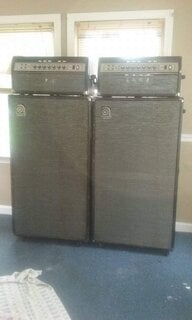
Yes, where are the amp and/or cab choices? I'm no expert, but I would definitely put that (or those) variable(s) in the top 3 in relation to the sounds I try to get. The only one of my projects to survive Covid has been using a multi room rehearsal rental place with at least 3 different amps and 3 different cabs that I have seen in 9 possible combinations. It is remarkable how different thse rigs sound. I have been lazy and using what is already there but am learning that I can only make 3 of the possible 9 combinations work to get the sounds I need. Technique, strings, and pickups/electronics/position all have a significant effect on my tone as well.

I've never seen a convincing argument for wood choice or specific hardware having significant impact on tone (unless the hardware didn't already do the job). I'm open to being proved wrong though. That said, more dramatic construction differences such as hollow vs. solid, or 35 scale vs. 28.5 scale would likely be more evident (if all else stayed the same).

I would also throw in that I would view fretboard wood choice as much more important than body wood choice on a solid body bass. Caveat: You could eq the sonic differences away pretty easily with the right amp. It might be harder to compensate if the 'feel' difference changed your playing style significantly.

Tone: Always a lot to think (OCD) about :)