
Enjoy the benefits of a premium membership!
Upgrade Account
-
TalkBass has been independent since 1998. Add your voice.
Create a free account to reply to discussions, view embedded media, and browse with fewer display ads.
Join free Log in
Want zero display ads or expanded classifieds tools? Compare plans.
You are using an out of date browser. It may not display this or other websites correctly.
You should upgrade or use an alternative browser.
You should upgrade or use an alternative browser.
Why are lined Fretless even a thing?
- Thread starter citizenchris099
- Start date
More options
Who Replied?
Thanks for the thorough response. That is very informative.
I assume your bass is a solid body. What you see is similar to what I can see using my solid body fretless: the sight line almost exactly on the side of the neck. If I take my (10 cm thick) acoustic bass, the front is shifted forward, and what I can see is somehow behind the neck.
Yes, all solid bodies, but no direct view of the fingerboard.


...
...
and is his posture is so terrible here?
...
Forget about that - his intonation is not so good. It's actually terrible in places and I can't listen to it for more than a few seconds. This is what I mean by tolerance of what 'in tune' sounds like. For someone to whom that sounds acceptably in tune I can understand being blown away by the great chops and speed, clarity of articulation, phrasing, tone, etc. But against the background of poor intonation it all means squat.
Last edited:
I am in the no lines preference, but I can see the front of my fingerboard. The neck is always angled up and slightly back for me.Thanks for the thorough response. That is very informative.
I assume your bass is a solid body. What you see is similar to what I can see using my solid body fretless: the sight line almost exactly on the side of the neck. If I take my (10 cm thick) acoustic bass, the front is shifted forward, and what I can see is somehow behind the neck.
I don't think i have the best ear and I agree with your assessment.Forget about that - his intonation is not so good. It's actually terrible in places and I can't listen to it for more than a few seconds. This is what I mean by tolerance of what 'in tune' sounds like. For someone to whom that sounds acceptably in tune I can understand being blown away by the great chops and speed, clarity of articulation, phrasing, tone, etc. But against the background of poor intonation it all means squat.

Groove Master
Commercial User
- Apr 22, 2011
- 1,808
- 1,291
- Disclosures
- Author of Groove 101, Slap 101 and Technique 101
Because some care about their intonation...
Did you listen to the Bona video above? Perhaps the magic markers start working later on?

Various playing positions from which my fretlines are visible. No, I'm not thinking posture in these pics. Yes, I do focus on hand posture when I play. That plus the visual aids (lines and dots) makes for better playing, for me. Again, these pics are about fretline visibility, not my hand position or posture.
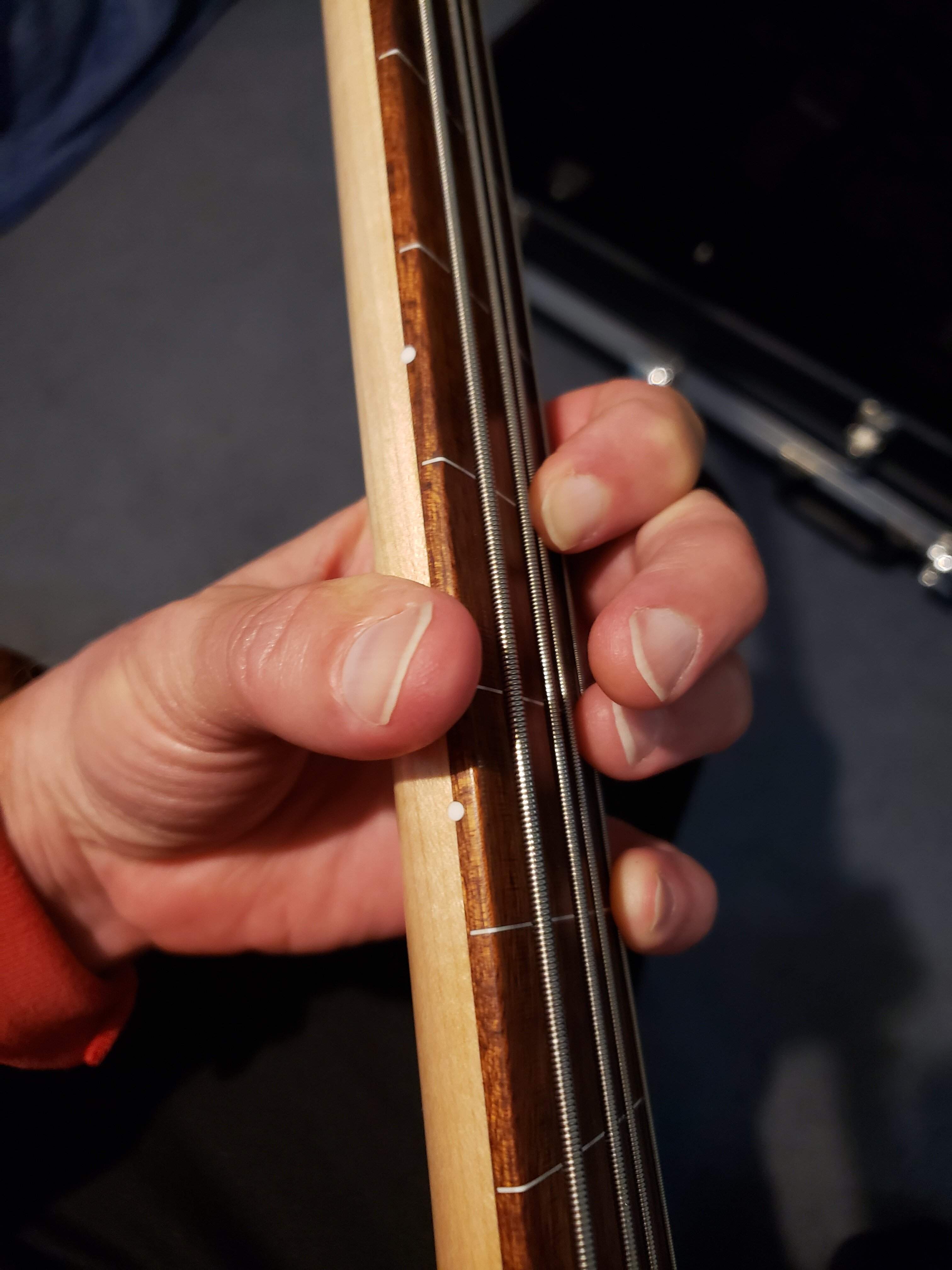
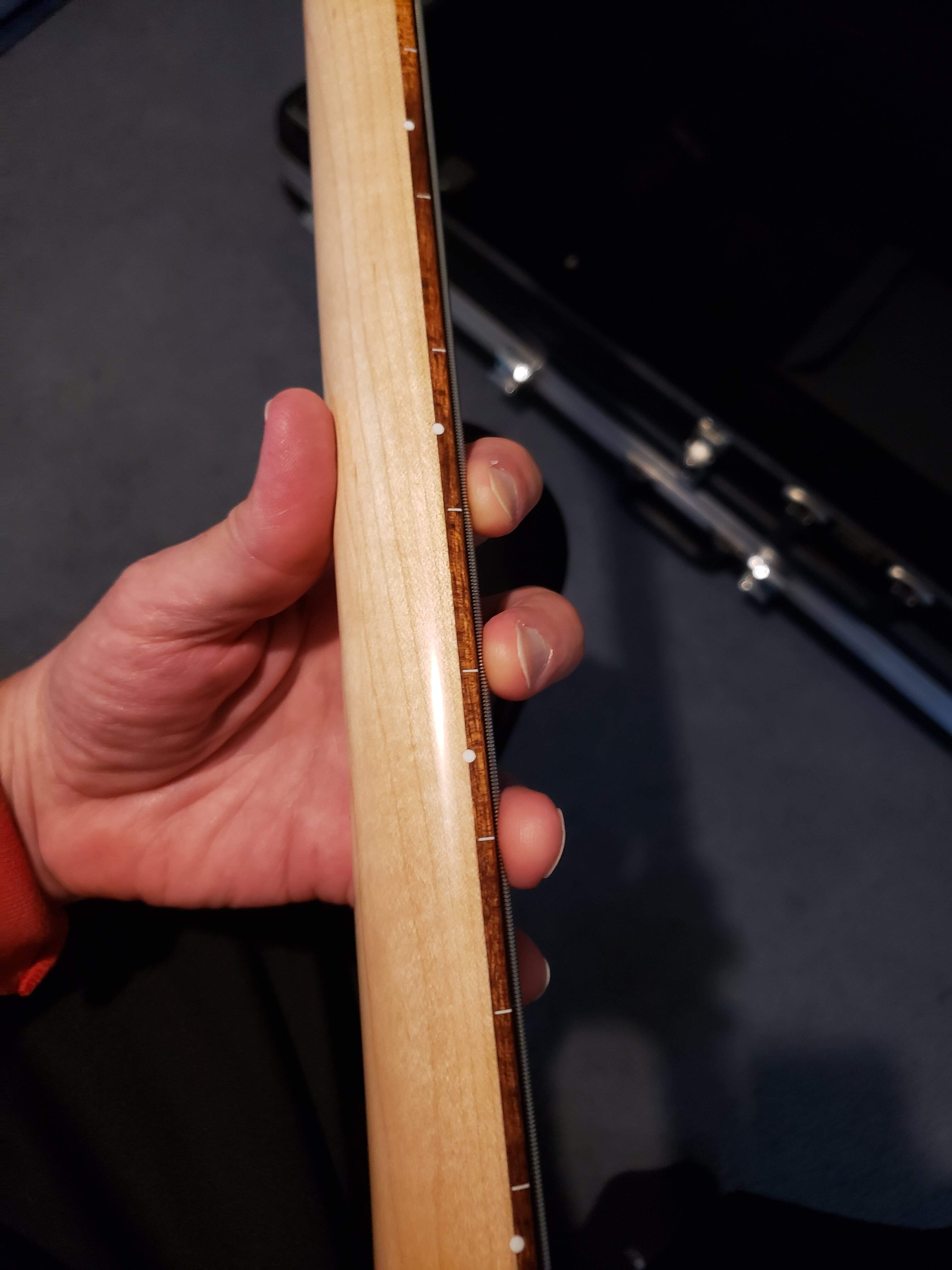
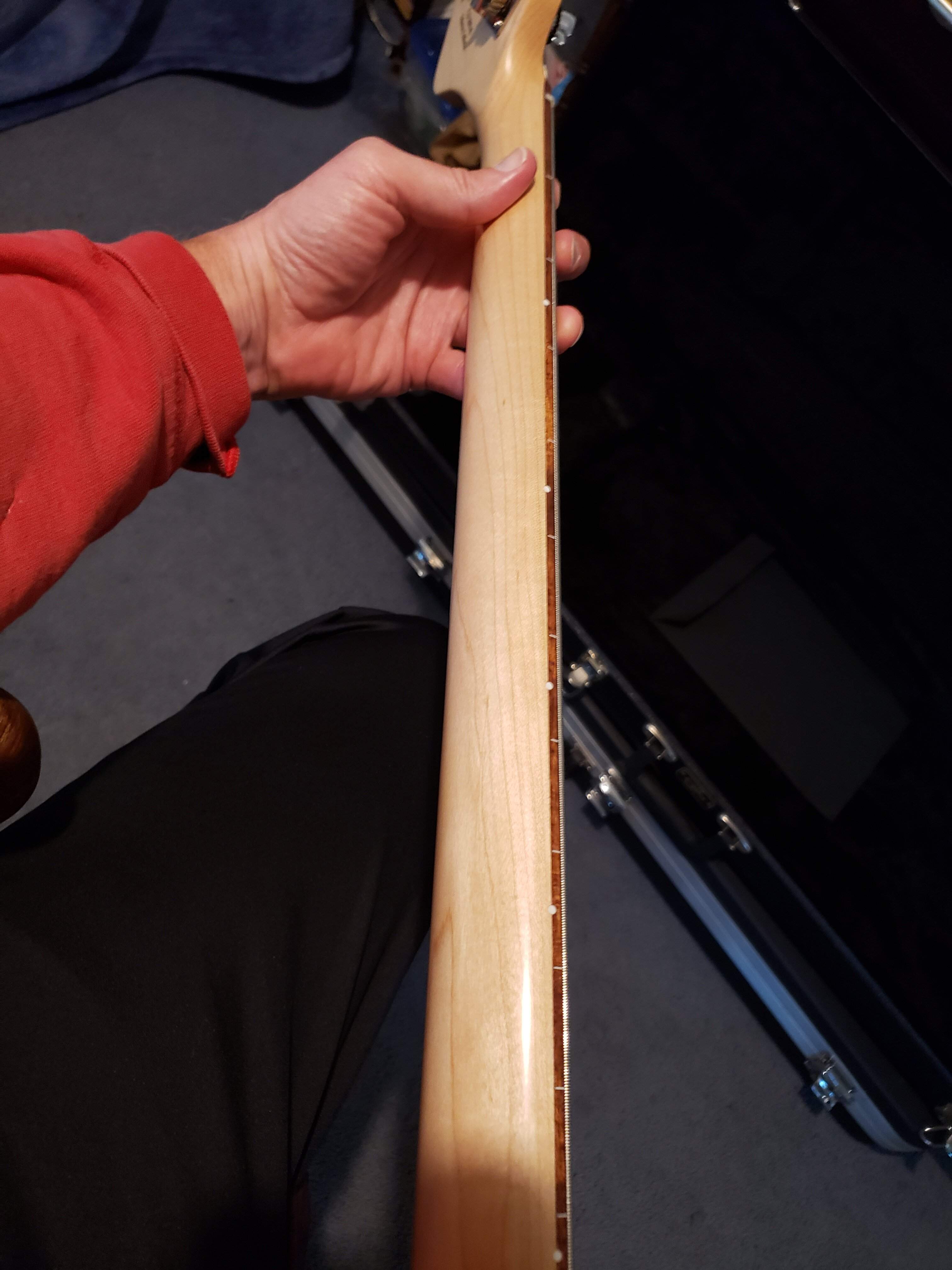
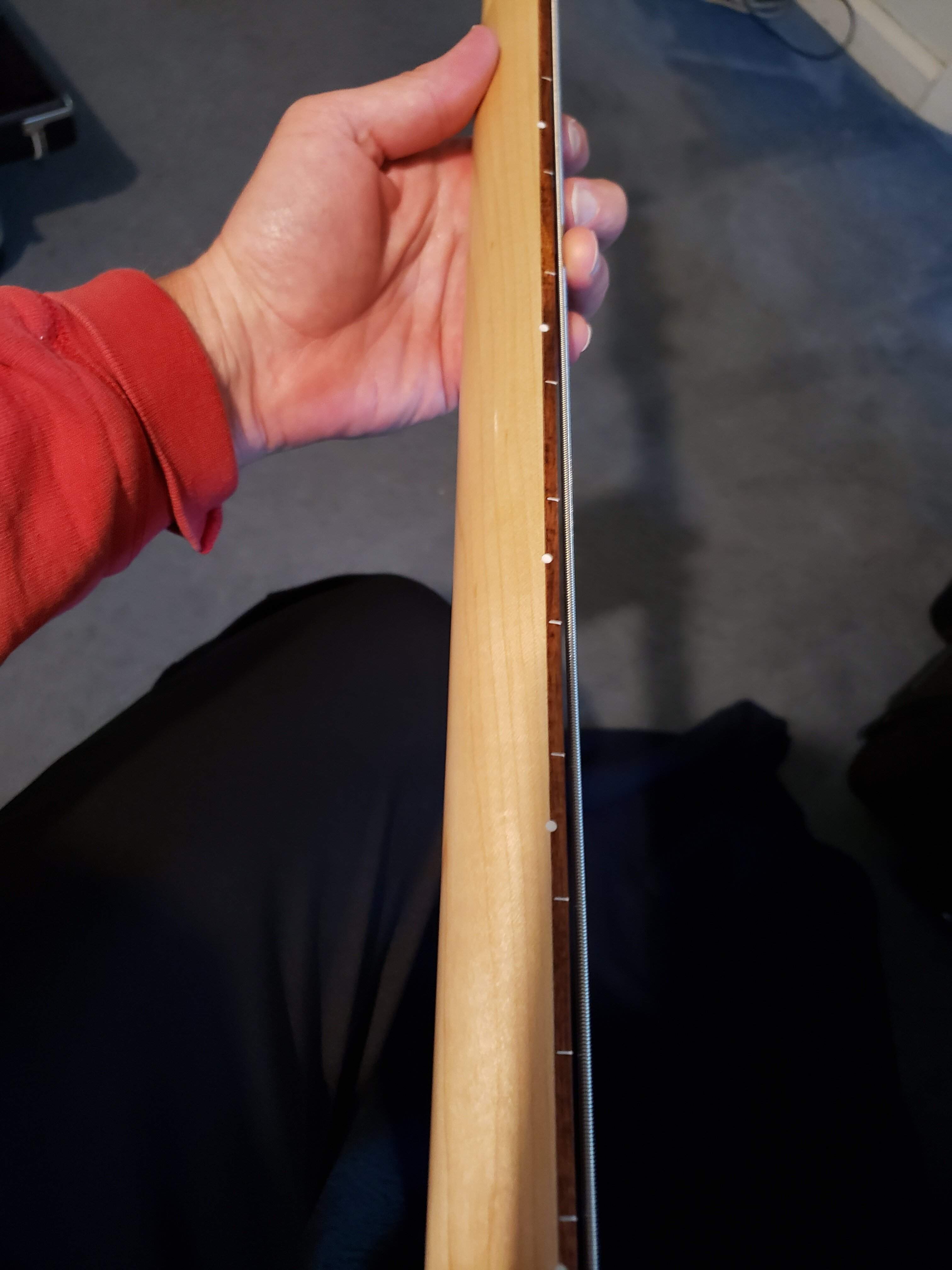
Forget about that - his intonation is not so good. It's actually terrible in places and I can't listen to it for more than a few seconds. This is what I mean by tolerance of what 'in tune' sounds like. For someone to whom that sounds acceptably in tune I can understand being blown away by the great chops and speed, clarity of articulation, phrasing, tone, etc. But against the background of poor intonation it all means squat.
Metheny, Stern, Zawinul, Benson, Brecker, Evans, James disagree.

I see lined fretless as training wheels. Even in school bands the upright players start with some sort of tape markers, but once you've been playing fretless for a while, you don't really need them.
bona, jaco, willis disagree
Metheny, Stern, Zawinul, Benson, Brecker, Evans, James disagree.
I don't really care what those guys think. I can see the attraction where the main objective of the music seems to be to cram as many notes as possible into every measure - he certainly delivers on that one. On a personal values level, playing in tune trumps playing lots of notes, every time. But like the other video posted by @ugly_bassplayer above says - I got a thing, You got a thing, We all got a thing.
regarding metheny, stern, zawinul, benson, brecker, etc.
-nuff said.
I don't really care what those guys think.
-nuff said.
anyone who thinks lines are a crutch after hearing jaco, willis or bono probably needs to re-evaluate things...
again, take a look at jaco, willis, bona. Any issues you see with their posture?
Is Richard Bona cheating and is his posture is so terrible here?
I wonder where you read in this thread the words "crutch", "cheating", and that there would be issues about anyone's posture... As for myself, I have described my posture and asked others information about their own posture.
We cannot ask Jaco whether he saw well or not the lines on his fingerboard. If Gary Willis would be to TB, we could ask him directly. But until then, here is what Gary writes about intonation on fretless in his book (101 Bass Tips):
- Tip 21 "Fretless reading" Gary writes "if you don't feel you've developed that perfect intonation muscle memory we all strive for (I know I'm not there yet) (NB: Gary W speaking here!), then a quick glance at the neck won't harm" (yes he does advocate a quick glance, and I guess noone would advocate not to do this),
- Tip 40 "Fretless practice" Gary advocates practicing with a drone to work on intonation,
- Tip 41 "Fretless pivot" Gary writes "If you don't happen to hit that spot with deadly accuracy all the time (believe me, it'll happen) (NB: Gary W speaking here!), then you'll need to coax the note in the right pitch without sliding. This is where the "roll" comes in", and then explains how to do it,
- Tip 72 "Muscle memory", Gary states: "Learning to play in tune on fretless is accomplished in two steps: hand-eye coordination and then eventually muscle memory",
- Tip 87 "Ear training exercise" Gary writes "I've always maintained that your ear is your most valuable asset".
All these recommendations by Gary W clearly indicate that for him all the playing on bass (and in particular the intonation on fretless) has to be driven by the ear and muscle memory, and that vision has an auxiliary (but useful) role.
Last edited:

I see lined fretless as training wheels. Even in school bands the upright players start with some sort of tape markers, but once you've been playing fretless for a while, you don't really need them.
And why is that? I can tell you it is NOT about directly locating the notes. It is the first step towards developing hand posture. Which is why they will generally only use one or perhaps two markers in the early days and then another one later on as they start to learn thumb position. The temptation with permanent markers is to use them just to locate notes without ever developing the hand properly.
My daughter's previous 'cello teacher from a year or so back (Royal Philharmonic, English Baroque, BBC Radio, Moscow Classical Ballet, Berlin State Ballet) actually uses (with his beginners) tactile markers only on the back of the neck for locating the thumb and purely for the purpose of developing the hand. Good intonation just follows.
Last edited:
Groove Master
Commercial User
- Apr 22, 2011
- 1,808
- 1,291
- Disclosures
- Author of Groove 101, Slap 101 and Technique 101
No I haven't. I'll listen to it. But even the best players can have moments where they are out-of-tune but I heard him before on fretless he is usually spot-on to my ears ;-)Did you listen to the Bona video above? Perhaps the magic markers start working later on?
Thanks for the interesting post.Various playing positions from which my fretlines are visible. No, I'm not thinking posture in these pics. Yes, I do focus on hand posture when I play. That plus the visual aids (lines and dots) makes for better playing, for me. Again, these pics are about fretline visibility, not my hand position or posture. View attachment 4452175 View attachment 4452176 View attachment 4452177 View attachment 4452179
Except for the 1st picture which shows a hand posture (with the bass tilted down and the thumb coming above the top of the neck) that I never use (can one play a low F and G with this?), all pictures show that what is seen is not the front of the neck but the upper side. Then side dots are as informative as lines (provided they are located where the notes are, not in between!). Whether one is preferable to the other boils down to whether one prefers many visual cues (for each note), or fewers (on 3, 5, 7, 9, 12, etc.); this a personal choice and both options seems equally valid to me in general (for myself, I prefer the latter).


