
The physics doesn't agree with you as the wavelengths are far too long for it to make any difference.when the cab is tilted back you get less low end

Enjoy the benefits of a premium membership!
Upgrade Account
-
TalkBass has been independent since 1998. Add your voice.
Create a free account to reply to discussions, view embedded media, and browse with fewer display ads.
Join free Log in
Want zero display ads or expanded classifieds tools? Compare plans.
You are using an out of date browser. It may not display this or other websites correctly.
You should upgrade or use an alternative browser.
You should upgrade or use an alternative browser.
Why aren't there more kickback/wedge bass amps?
- Thread starter tb-player
- Start date
More options
Who Replied?

The physics doesn't agree with you as the wavelengths are far too long for it to make any difference.
It's nothing to do with the wavelength.

So, being in proximity to another mass creates this effect? And separating or spacing the cabinet away from any mass diminishes the effect?In general, floor coupling happens when the cab is on the floor, and it will increase the bass response.
This makes me wonder if an accurate sound assessment of any cabinet can only be made with the cabinet physically isolated from any other masses that could/would influence it?
Then please explain how it's not.It's nothing to do with the wavelength.
Jazzdogg
Less barking, more wagging!
Because bass gear already constitues a niche market, and there is insufficient demand to make niche products in a niche maket profitable.

I broke all the rules, for a while I had a marbass 4x10 and I had a "stuff" crate that I ganked from my local super market. When it wasn't carrying my cables it was my cabinet stand. I took so many suggestions from multiple nudnicks saying that it should be on the groujd so you can feel it. That cab took a dump so I went with a seismic 2x12 and with that I used a LEGIT guitar amp stand that was just tall enough that my amp track fit under.

More likely the mids and high end are louder but it ends up sounding the same.The physics doesn't agree with you as the wavelengths are far too long for it to make any difference.

If it's just a question of hearing yourself, you could add something like the Phil Jones Earbox, or a small monitor on a stand.

I used an Ampeg BA-210 for 6 years It has a wedge shape, and you can add an extension cab for 500watts. They are pretty sturdy. I wedged it for small shows, brought both cabs to larger ones.


A 40Hz wavelength is 8 metres / 28ft so angling the driver but keeping it at basically the same height does not change it's effective acoustic coupling to the floor.In general, floor coupling happens when the cab is on the floor, and it will increase the bass response.
To some extent, because the MF and HF are far more directional, especially as the wavelength gets smaller and is a larger proportion of driver diameter, when they are pointed in a direction closer to your ears rather than the back of your legs, they appear louder, skewing the apparent spectral balance.More likely the mids and high end are louder
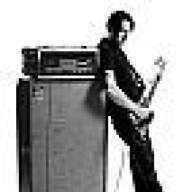


I have this old Braucke hand trolley:
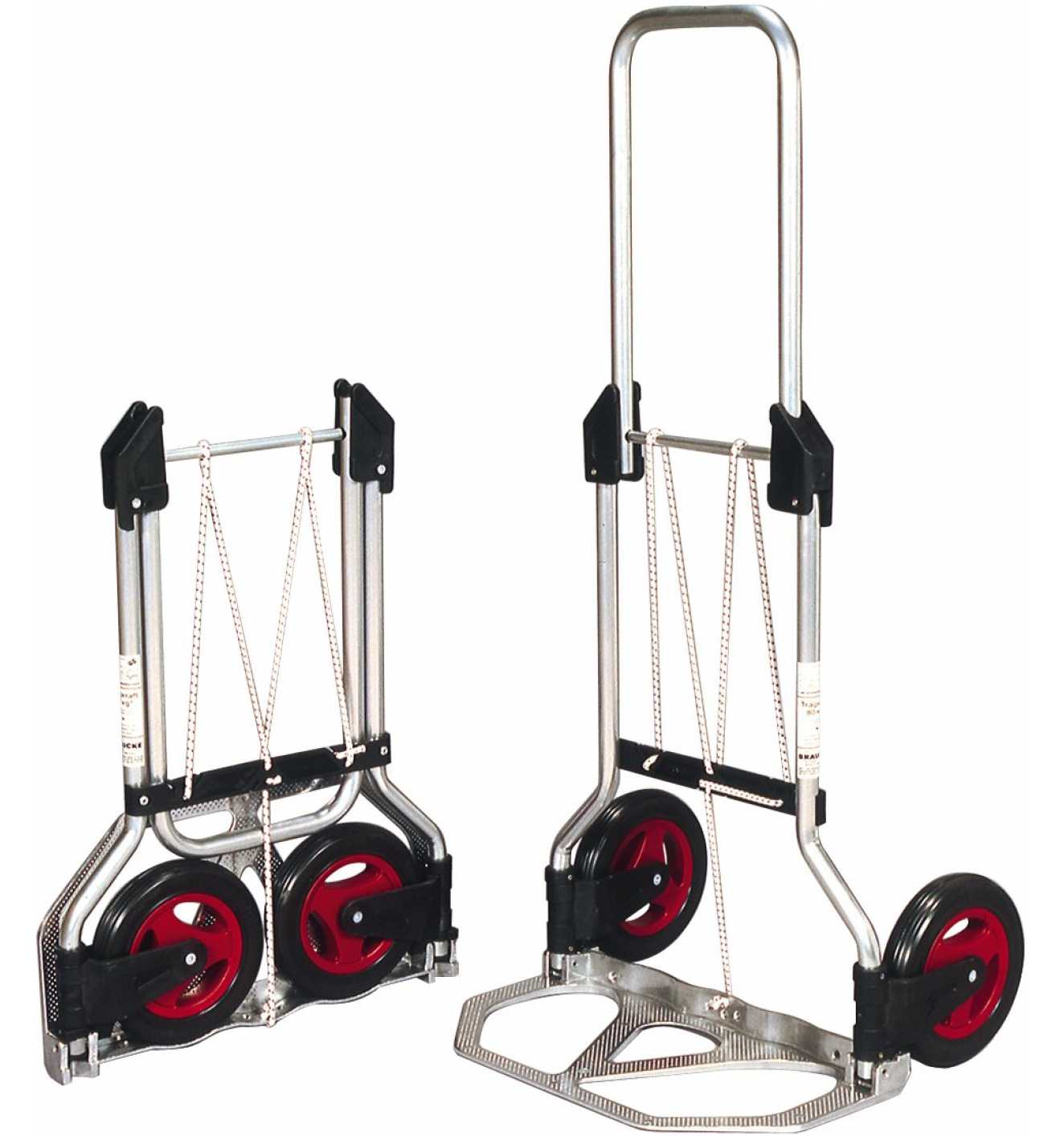
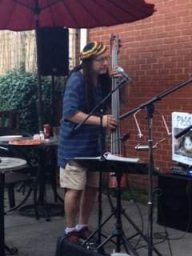
… which I've modified so that I can also use it as a kickback stand. Here it is in action a week or so ago, as used by our guitarist (I was sitting on that gig anyway and so I didn't need it):
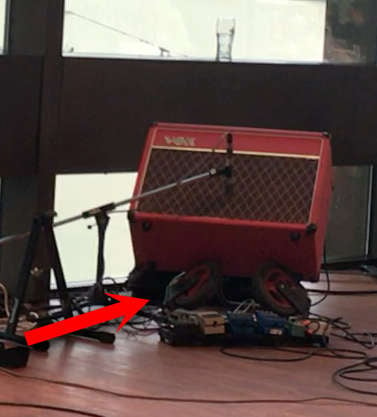
Usually I use it with my SWR Workingman's 12. Also for the actual transport, of course.
I also have the Hughes & Kettner Quantum QC415 combo:
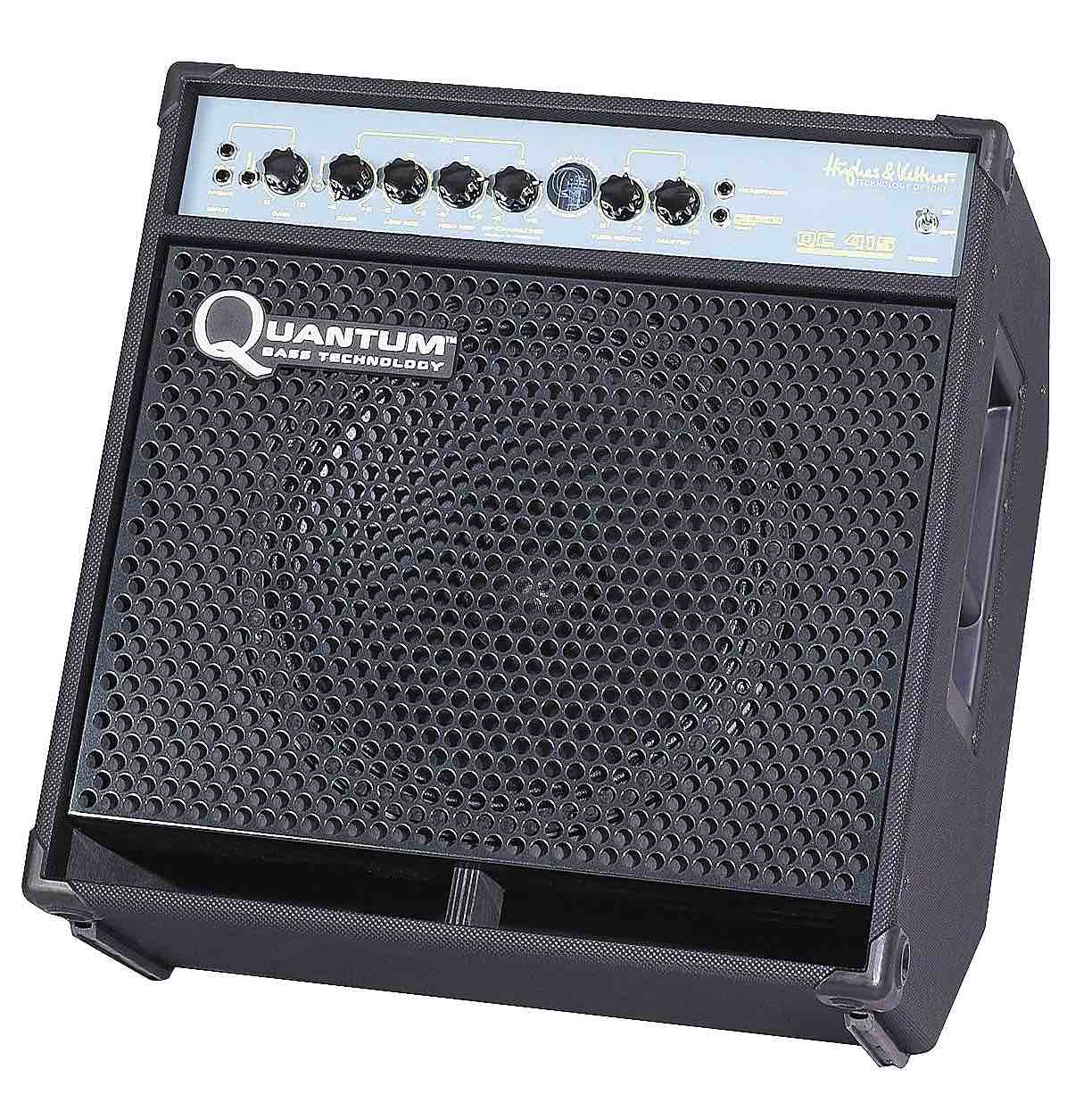
I got it used for only CHF 300 five years ago. It's loud enough for any stage I've played so far, and pretty light.
(edit: uploaded correct QC415 image)
… which I've modified so that I can also use it as a kickback stand. Here it is in action a week or so ago, as used by our guitarist (I was sitting on that gig anyway and so I didn't need it):
Usually I use it with my SWR Workingman's 12. Also for the actual transport, of course.
I also have the Hughes & Kettner Quantum QC415 combo:
I got it used for only CHF 300 five years ago. It's loud enough for any stage I've played so far, and pretty light.
(edit: uploaded correct QC415 image)
Last edited:
As said above, the much more directional mids and highs are aiming at your ears rather than your shins, so probably the same low end, nore mids/highs. This also, I suspect, means that if your amp is delivering the majority of volume out to the auditorium then the highs are hitting the ceiling rather than the stalls. So might one infer that the kickback would be best combined with a quiet stage and the PA doing the heavy lifting?IME, when the cab is tilted back you get less low end, and vice versa. I cannot back this claim as this is only my personal experience. I'm not saying that this is a good, or a bad thing.
I have a full-size Keyboard stand for my DX7s synth. But I haven't taken that our of the closet in so long, I forgot I had a stand for it. So I bought an amp stand....DOH! The Keyboard stand is longer than my amps stand, so I'm better off using my amps stand anyhow, but your small keyboard stand there looks like a great choice!A re-purposed single-X cheapo keyboard stand will get it off the floor and offer variable tilt. Here's an old photo of my (pre-expiration) CMD121P, laying on it's side in one of those. Additionally, the pilot light doesn't face the audience and the controls are easily accessible by my right hand. This was at a regular and ostensibly IEM gig, but (often unexpected) guests were frequent, and some of them were not IEM friendly, so I was often pulling one out so I could hear the house and sidefills. The bass amp was pretty necessary.
View attachment 5495145


