• TalkBass has been independent since 1998. Add your voice.
    Create a free account to reply to discussions, view embedded media, and browse with fewer display ads.
    Join freeLog in
    Want zero display ads or expanded classifieds tools? Compare plans.

Why aren't upper horns longer, to eliminate dive?

I was in GC futzing with basses. For most, I had to use a grippy and/or wide strap keep the neck up. But one in particular hung beautifully, with the neck staying up even with a 2" wide slippery nylon strap.

Its upper horn was a bit longer, putting the strap button between the 10th and 11th frets.

I've seen posts here on TB where people have achieved that same strap button position by adding custom plates or long screws and tubes to their basses.

Why aren't most basses made like this?
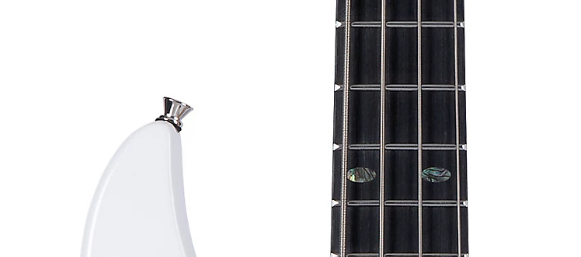
1759066052016.png
 
I was in GC futzing with basses. For most, I had to use a grippy and/or wide strap keep the neck up. But one in particular hung beautifully, with the neck staying up even with a 2" wide slippery nylon strap.

Its upper horn was a bit longer, putting the strap button between the 10th and 11th frets.

I've seen posts here on TB where people have achieved that same strap button position by adding custom plates or long screws and tubes to their basses.

Why aren't most basses made like this?

View attachment 7331866
Whether a bass neck dives or not is dependent on a lot of different factors -body weight, neck weight, and electronics and hardware used. The body in particular will vary a good deal in weight with the type of wood used, which in turn will affect the balance. However, the shape of most basses is standardized, so a P-bass, for instance, which is available in a myriad of different configurations from a variety of vendors, will have versions that balance better than others. It would be cost prohibitive to alter the body in order to fine-tune the balance for each model.

Some basses do balance inherently better or worse than others, but as long as they sell well enough in their current shape, it’s not really enough of a problem to warrant much attention. And since basses are heavier than guitars most bass players use wide straps anyway.
 
I'd agree with you. I went down this rabbit hole a few years back. I even tried bushings to extend the button out. They work - but are an eye-sore. I settled on stacking the buttons to extend it just a bit more. It works so well that I've done many of mine, whether they have neck dive or not. Plus once you have a strap on you can't see it or tell what I've done. I use a longer screw though.
 

Attachments

  • IMG_5294.JPG
    IMG_5294.JPG
    1.2 MB · Views: 23
they could be

 
Contrarian take:

Strap pin positions have much less to do with neck dive and much more to do with where the nut and bridge are relative to your hands and body.

Longer horn and/or bridge closer to lower bout strap pin -- shifts body towards the picking hand.
Lower bout strap pin above bridge -- rotates body, shifting bridge lower, nut higher, shifts body towards the picking hand.

It happens that having the strap pins around the 12th fret and within an inch of the bridge makes reach for a full-scale bass reasonably comfortable. Coincidentally it's a convenient balance point for basses with large headstocks.

If you want to prevent neck dive, it's a solved problem! use 2+2 headstocks rather than in-line. Or even better use a headless system.
 
Does anybody know if Leo actually took the concept of neck dive into consideration when he laid out the shape of the first P?
Or did he just sketch out a shape and say, "yeah..that looks good".
I know he was famous for using feedback from musicians in other areas of design.
Inquiring minds want to
I think he did, because the Telecaster didn’t really have an upper horn at all. He and his musician advisors probably noticed very quickly through experiments that if he didn’t have a long upper bout it would be a real pain. The result was the radical for its time, classic P shape… which he shrunk and developed the Strat from.

Then There’s the “boner” bass they tried in the 80s (?). Attempt to further eliminate dive. Totally lost the nice proportions of the P and sales reflected how homely it was.

That’s how I imagine it knowing that he experimented with all aspects designs for months or years before finalizing design.
 
I'd agree with you. I went down this rabbit hole a few years back. I even tried bushings to extend the button out. They work - but are an eye-sore. I settled on stacking the buttons to extend it just a bit more. It works so well that I've done many of mine, whether they have neck dive or not. Plus once you have a strap on you can't see it or tell what I've done. I use a longer screw though.
I love this idea! Doesn’t require permanent modifications and doesn’t look goofy either!
 
I think it’s because Leo didn’t make it that way. And adding a 1/2” or 1” to the upper horn doesn’t really affect looks IMHO. I do really like what MusicMan and other manufacturers have done to both reduce weight and improve balance via lightweight hardware. Taking an ounce or two off the headstock makes an enormous difference in neck dive.
 
  • Like
Reactions: Smallmouth_Bass