
Enjoy the benefits of a premium membership!
Upgrade Account
-
TalkBass has been independent since 1998. Add your voice.
Create a free account to reply to discussions, view embedded media, and browse with fewer display ads.
Join free Log in
Want zero display ads or expanded classifieds tools? Compare plans.
You are using an out of date browser. It may not display this or other websites correctly.
You should upgrade or use an alternative browser.
You should upgrade or use an alternative browser.
Why aren't upper horns longer, to eliminate dive?
- Thread starter Never2Late
- Start date
More options
Who Replied?


Leo Fender’s craft was industrial design, but his products are still fine tools to create music right now. Better instruments can be had, but they are only incrementally better, adjustments rather than new creations. Yes, he was a genius.Fender was a radio repairman that got into building amplifiers and then the electronics for guitars. The first Fender guitar, the Esquire, was more of a mechanical engineering exercise (it's where he implemented the bolt-on neck and started planning mass-production processes), and subsequent instruments were largely designed through input from others because Fender was not trained in luthiery and did not play guitar. Didn't even like guitar music much, he was mostly into big band swing.
People who think of Leo Fender as a man of brilliant insight whose guitars are the pinnacle of guitar design have to appreciate that Fender guitars are the way they are as much to reduce cost of manufacture and repair as anything else. Guitarists were not begging for chunky block neck heels, and I doubt the fact that necks were wholly interchangeable mattered to them at all. The ergonomics were better than for acoustic guitars and that was good enough.
So when they started planning the Precision, they used the same headstock design because that was part of the product identity. Having a bass you could wear on a strap was a first -- nobody was going to complain about neck dive because it was a significant ergonomic improvement over having to carry a bull fiddle around and nobody had used a Precision Bass for long enough to contemplate further improvements.


Similar story with my dream bass. A Pedulla Pentabuzz. Honeymoon phase was a year long. Then spent 6 months justifying that it was great and perfect and that I was the problem. Then spent another 6 ish months convincing myself that I’ll get over. Then sold it for a major loss despite it being in excellent condition.@Element Zero
I've owned both. I had a Warwick Corvette Standard 4 (a 1997 one with the wenge neck, brass just-a-nut 1) that was one of the best basses I ever owned. Got it from a TBer at a great price, Warwick was my dream bass (I drooled over Warwick ads in Bass Player magazine in high school), and I finally had one in my hands! Everyone who played it couldn't put it down. But the rub was, I never quite got along with it. It balanced too horizontally for me and first position was a miles-away reach. I was so conflicted that this bass was something special, everyone loved it, but why didn't I? I forced myself to "make it work" and try to love that bass for about 10-11 years until I sold it to a then-budding jazz musician whom the bass fit like a glove. It's like with relationships. Sometimes two great people are not great together.
I also briefly had a Spector ReBop 5 that, despite being one of the best 5-strings I ever played, I couldn't jive with its ergonomics. Horizontal balance, first position too far away... Sold that one.
That's why I too am vocal on here that Spector ergonomics are not for everyone, so try before you buy.
(My ergonomic happy place is my Ibanez Soundgear SR4600. Most comfortable bass ever! Best bass I've ever owned and probably ever will own).
Try before you buy for sure.
Though, it worked out for 6 years with the Fodera I had. Sold because the wide neck became to wide and required too much effort to play and it just wouldn’t do what I wanted it to do sound wise. But overall it was incredibly comfortable

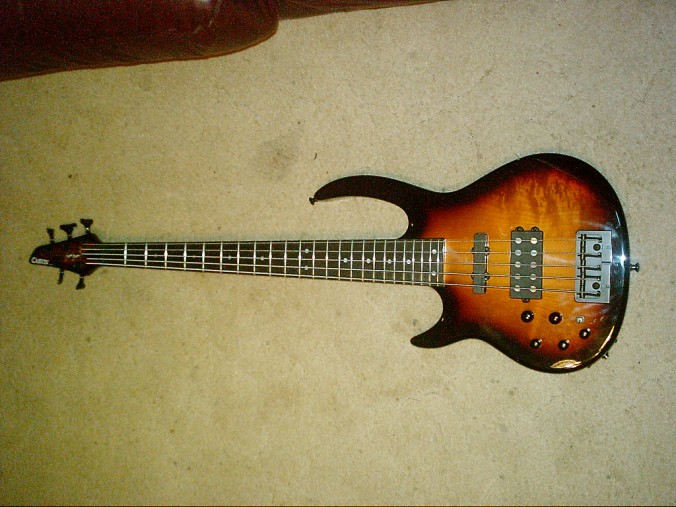
Because The Fender Precision and Jazz Basses have an upper horn that could be a little longer. Almost everything since then is completely derivative.I was in GC futzing with basses. For most, I had to use a grippy and/or wide strap keep the neck up. But one in particular hung beautifully, with the neck staying up even with a 2" wide slippery nylon strap.
Its upper horn was a bit longer, putting the strap button between the 10th and 11th frets.
I've seen posts here on TB where people have achieved that same strap button position by adding custom plates or long screws and tubes to their basses.
Why aren't most basses made like this?
View attachment 7331866
No one playin that bass is likely to play up on the dusty part of the fretboard anyway lol. I imagine.Terrible upper fret access!

Not sure I’d like to take a tumble playing one of those in my birthday suit. Things could get nastyWhatchoo talkin' about, Willis?


Counterweighted! The Warwick Fortress design (my favorite ‘wick) is horn length benefits in action!Warwick is a great case study here. Thumb Bass headstocks dive for the floor. Dolphins don’t.View attachment 7331984

Personally, I think it's ridiculous that builders will not consult real designers or at least an engineering grad student to figure C of G and balance.
It really isn't necessary to "consult an Engineering Grad student" to figure out how (or even why) a bass balances or Neck dives like it does (or doesn't).
Really. I'd bet fat money that even most "civilians" could piece together the mystery.

(no offense).

T$

I coveted a Flashback big time!Counterweighted! The Warwick Fortress design (my favorite ‘wick) is horn length benefits in action!

On my Fenders, the strap button lies between the 11th and 12th frets.

On my NS Radius, it's a longer horn and the button lies between the 12th and 13th frets! Because the fingerboard has 24 frets instead of 20 the cutaway is deeper to allow access to the upper frets. The body meets the neck at the 20th fret, instead of the 16th fret like a Fender. It balances better than my Fenders, ergonomics has always been a thing with Ned’s designs.

On my NS Radius, it's a longer horn and the button lies between the 12th and 13th frets! Because the fingerboard has 24 frets instead of 20 the cutaway is deeper to allow access to the upper frets. The body meets the neck at the 20th fret, instead of the 16th fret like a Fender. It balances better than my Fenders, ergonomics has always been a thing with Ned’s designs.

Why aren't upper horns longer, to eliminate dive?
Good question. I think that many "modern day" designed basses have taken this into account.
Fender Basses are pretty well balanced with the upper button being where it is. Light weight tuners can take off around 5 or more oz. from the headstock which really helps balance the body to the neck.
Gotoh Res O Lite tuners.
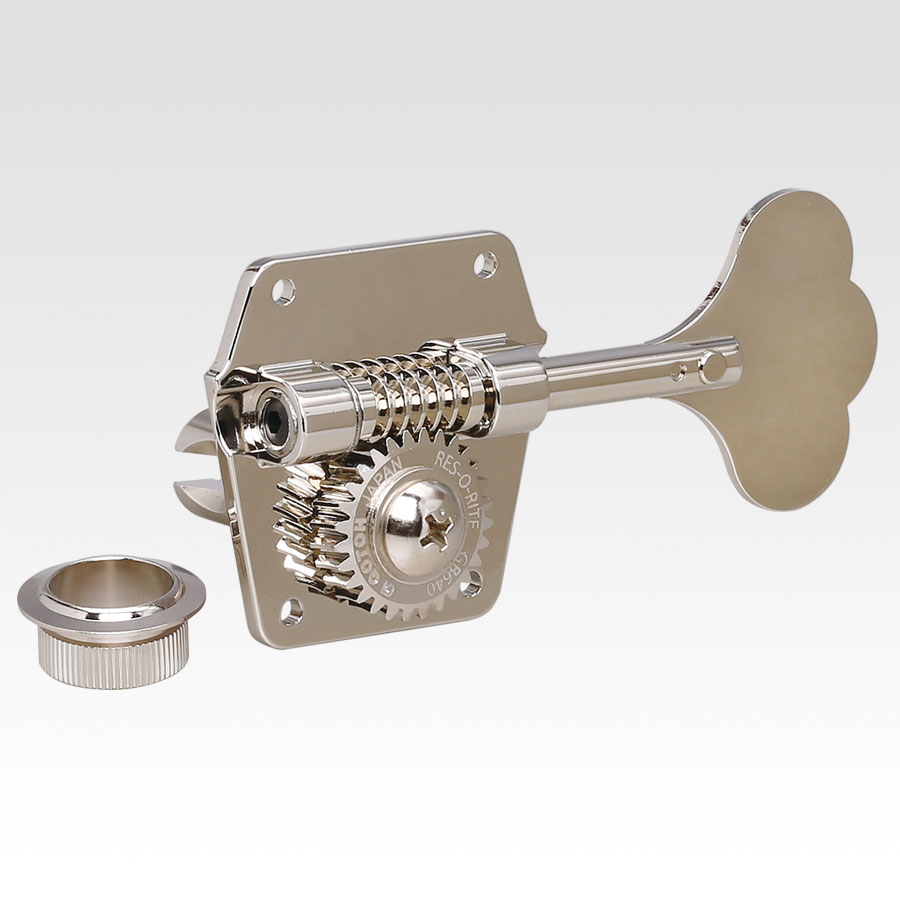

Are you guys using satin guitar straps on a silk shirt or something? I really can’t recall a single time this has happened, and I play a variety of basses on gigs. Sometimes I like the bass angled upwards, sometimes more horizontal. I just move the sucker and there it stays.I don't get the "neck dive isn't real" concept, as if gravity somehow excludes basses and guitars from the laws of physics? Ever ride on a teeter-totter as a kid? That should illustrate the notion of balance quite effectively. Want to experience neck dive? Try an SG bass, a Hofner violin, or almost any T-Bird as a starter. There's lots of ways to overcome neck dive, which I define as having to hold the neck up in playing position because the center of gravity is weighted towards the neck. None of those work-arounds negate the fact that the bass is not balanced, which is a design flaw, There are lots of basses with this design flaw, and it's perfectly valid to play them anyway for looks, tone, palyability, etc., but let's all agree to the obvious: Neck Dive Exists. It's a Design Flaw.


@InhumanResource
Try searching YouTube or TB for “fixing neck-dive”, you’ll get an eyeful. All kinds of methods, including funky strap pin locations, looping the strap through your belt, extended strap pin hangers, etc. In the case of something really light like a Hofner, a grippy leather strap is good enough, but a T-Bird, with that huge headstock? Not so much. It’s the first thing I check when I pick up a bass. If it dives…..bzzzzt. Next. I’m a Ric player, which is otherwise considered “ergonomically challenged”, but they are well balanced, no dive. Go to GC, sit down. Pick up a bass and balance it on your knee, or hang it around your shoulder on a strap standing. Let go of the neck. If it drops below normal playing position, it’s a neck diver, which means you’ll be holding it up the whole time for no good reason, wasted energy and arm tension. Most Jazz basses dive at least a little, but if that’s the tone and look you want… you live with it. Same with lots of other brands, but a well designed bass doesn’t do that.
Try searching YouTube or TB for “fixing neck-dive”, you’ll get an eyeful. All kinds of methods, including funky strap pin locations, looping the strap through your belt, extended strap pin hangers, etc. In the case of something really light like a Hofner, a grippy leather strap is good enough, but a T-Bird, with that huge headstock? Not so much. It’s the first thing I check when I pick up a bass. If it dives…..bzzzzt. Next. I’m a Ric player, which is otherwise considered “ergonomically challenged”, but they are well balanced, no dive. Go to GC, sit down. Pick up a bass and balance it on your knee, or hang it around your shoulder on a strap standing. Let go of the neck. If it drops below normal playing position, it’s a neck diver, which means you’ll be holding it up the whole time for no good reason, wasted energy and arm tension. Most Jazz basses dive at least a little, but if that’s the tone and look you want… you live with it. Same with lots of other brands, but a well designed bass doesn’t do that.

solution....neckless bass, there you guys go, thank me later...
Ok, I did not bother testing while seated because I’m pretty sure any object will tip one way or the other while perched atop my leg. I also never play without a strap and rarely while seated.@InhumanResource
Try searching YouTube or TB for “fixing neck-dive”, you’ll get an eyeful. All kinds of methods, including funky strap pin locations, looping the strap through your belt, extended strap pin hangers, etc. In the case of something really light like a Hofner, a grippy leather strap is good enough, but a T-Bird, with that huge headstock? Not so much. It’s the first thing I check when I pick up a bass. If it dives…..bzzzzt. Next. I’m a Ric player, which is otherwise considered “ergonomically challenged”, but they are well balanced, no dive. Go to GC, sit down. Pick up a bass and balance it on your knee, or hang it around your shoulder on a strap standing. Let go of the neck. If it drops below normal playing position, it’s a neck diver, which means you’ll be holding it up the whole time for no good reason, wasted energy and arm tension. Most Jazz basses dive at least a little, but if that’s the tone and look you want… you live with it. Same with lots of other brands, but a well designed bass doesn’t do that.
I just tried this with three basses and two straps. Two jazzes and one stingray. They all behaved the exact same way, when positioned anywhere between roughly 50 degrees upwards (totally scientific estimate) and 0 degrees parallel with the floor, they all stayed exactly at the orientation I moved them to. Didn’t have to hold up anything with my left hand. In fact, I kept my hands off the basses except for initially positioning them.
So either my collection defies physics or y’all are doing something different.
Last edited:

- Apr 18, 2008
- 16,019
- 1
- 31,734
- Disclosures
- I'm highly opinionated and extremely self-assured
Checking neck dive while seated can be misleading, because balance while seated depends heavily on where the waist is. A Jazz bass has a lower waist that is much closer to the bridge end of the body than a Rick.

Where can I find something like this?Terrible upper fret access!


