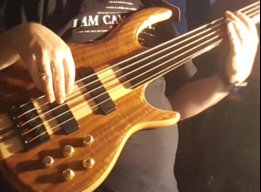
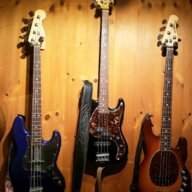
I have an Ibanez bass that has a basswood body. It was made in 1985.
I've been playing it almost that long. It has toured the country in a case too big for it, it has been dropped and knocked over, it has been painted on and had said paint removed, it's had hardware changed... and it may be the most solid feeling bass I own.
The paint is in worse shape than the body, almost no dents in the wood, just the paint. I don't know what they treated it with, but don't let 80s Ibanez basswood keep you from a good bass.
I've been playing it almost that long. It has toured the country in a case too big for it, it has been dropped and knocked over, it has been painted on and had said paint removed, it's had hardware changed... and it may be the most solid feeling bass I own.
The paint is in worse shape than the body, almost no dents in the wood, just the paint. I don't know what they treated it with, but don't let 80s Ibanez basswood keep you from a good bass.
It's such a soft, easy to dent wood!
With Ash, maple, poplar, mahogany and other good sounding, though often heavier (but not always) woods with which to build bass bodies.
That's my point, why not build basses and guitars with harder woods so I can worry less about them. Things happen onstage, I've had a couple take a hard fall.
With CNC machines most woods are easily shaped, so why not produce a bass that can take a little punishment once it leaves the factory?







 )
)