Who's session legends?
Yours or mine?
And who is John Mayer and Robin Thicke?
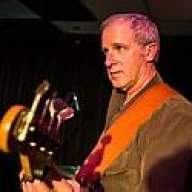
Here's one of them... when he stops contorting his face, I'll tell you which one he is.

TalkBass has been independent since 1998. Add your voice.
Create a free account to reply to discussions, view embedded media, and browse with fewer display ads.
Join free Log in
Want zero display ads or expanded classifieds tools? Compare plans.
Who's session legends?
Yours or mine?
And who is John Mayer and Robin Thicke?

Which means lowest common denominator.
Exactly. The easiest way out with no added work. The last part of the definition of "lowest common denominator" in Collins is "it has been deliberately made too simple so that nobody will disagree".No it means, "Let's use the best bass we can, that is the most effective. . . and is quick to set up".
And I got told to put my Warwick Thumb away and play their Precision.I'd love a whole other topic for Prince on bass!
Yeah, the Warwick was interesting. That was Sonny T's influence... he played several different Warwicks and Prince picked up on that. He had quite a few! But when Prince used the One Eye Bass live it sat in a very different sonic space, more mids than bass.
He kept that bass around too! It was leaning up against a wall in the studio the day he died.
Okay, back to the topic at hand...

 )
)
I find it interesting that Prince couldn’t talk Gouche out of using his 5 & 6 string signature model MTD basses. Also the last bassist he was working with was Mono Neon and his 5 string Bass Mods. I think Prince respected those players so much that he just let them bring their sound to his own .I'd love a whole other topic for Prince on bass!
Yeah, the Warwick was interesting. That was Sonny T's influence... he played several different Warwicks and Prince picked up on that. He had quite a few! But when Prince used the One Eye Bass live it sat in a very different sonic space, more mids than bass.
He kept that bass around too! It was leaning up against a wall in the studio the day he died.
Okay, back to the topic at hand...


I know who they are.View attachment 3266037
Here's one of them... when he stops contorting his face, I'll tell you which one he is.
The P is a known quantity and folks in the studio can be set in their ways.
I find it interesting that Prince couldn’t talk Gouche out of using his 5 & 6 string signature model MTD basses.
Because you play it well. Have you ever tried another thing ?

So you are a PB Man and know what a bass is.Yes, I've owned and played Lakland, G&L, Reverend, Rob Allen, Carvin, Wilkins, and others - active, passive, 4 and 5 string. Don't own any of them anymore.
Studio engineers work of sound frequencies...not tones, they want a clean bass signal to record.
Any bass recorded flat is a basic frequency, lets assume all tone pots add nothing to the frequency for ease of example, so create a clean signal.
So we plug the bass into an amp and dial in our sound, then we add the effects and play.
In a studio situation the mic used will affect the tone as will the cabs used to monitor it with as will the engineers ears, its all speculative.
In a studio you record the bass flat, as if no amp was used because you will engineer that sound later.
You may have a top end four grand amp and cab to create your sound, but in a studio they have hundreds of thousands of pounds/dollars worth of equipment to create your sound...they can do things with your signal that your equipment cannot even come close to.
If you want an effect, the effect will be added to the clean signal, as it would have been in your set up.
Think on it this way, it is the signal your bass produces that is worked with...not the bass model.
So in a studio it is the signal that is needed, not any tone attached to it.
Once the clean signal is recorded it can be treated in the same way as if it came from a bass, and as such can be modified using tone controls on the desk, or patching in any number of EQ devices or patches.
The same applies with effect, whatever effect you want can be added to the signal to create your sound, or the effect you want to hear.
Because the engineer is dealing in frequencies they will fit your sound to a frequency and add it to the mix, you bass sound has to fit in to all other recorded frequencies.
So to low, or too much bass and it may get lost within the bass drum and any keys left hand, and of course visa versa for those instruments.
The same applies for all frequencies that all instruments produce, any overlapping ones may clash and affect the instruments that create them.
In the end, for a bass sound, a clean bass plucked using a pick gives the easiest signal to work with and easier still if DI'd into the board and take the amp out of the equation.
For sure recording a live room situation is still a great option, but many things from mic placement to actual recording medium will impact on the sound you capture, and of course it needs multiple takes if there are issues, even technical ones not related to the band or musicians.
I have been in numerous live room situations where the final track used was not the best take....it was the one with the least issues that was usable.
In a tracking situation because ever signal is clean, it can be edited and mixed to exactly what was needed...no compromise needed...and made to sound however the producer wants.
I have worked in studios in the UK for over 45 years, sure the actual process is the same, but technology is the biggest influence i have seen, and at one point in the 1980's put many of us out of work. But it seems to be returning to musicians being used rather than producers cutting and pasting loops...even in my early days a tape cutter was a skill that took years to become good at....but like i said the technology is changing, not the process, which as such is to record what you hear.

But you’re not a famous sound engineer, so if you want to dictate to the talent you can pound sand. The butts came to the seats to hear them, not you.
Sound engineers _never_ trump talent.
_Never_.