• TalkBass has been independent since 1998. Add your voice.
    Create a free account to reply to discussions, view embedded media, and browse with fewer display ads.
    Join freeLog in
    Want zero display ads or expanded classifieds tools? Compare plans.

Why Do We Keep Coming Back to the P-Bass?

So here’s my question for you all:
What is it about the P-Bass that keeps it relevant decade after decade — even with so many high-tech options out there?

Be it accident or design.............it is the most common sound of an electric bass.

I've posted this before on TalkBass so forgive me for doing it again.

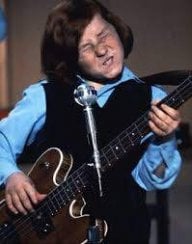
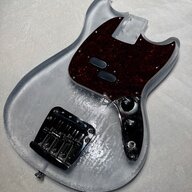
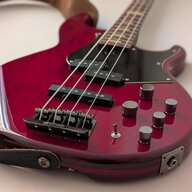
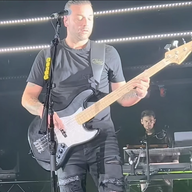
Here are the first 2 images that come to mind when the word "bass" is used. (Generally speaking.)

1761654856467.png
1761654909217.png
 
The fundamental question I have is, so what if we do? Just because new and different options exist, it does not diminish the quality of what the P bass brings. Leo did a lot of refinements to the design in the early years. At least some of those no doubt were player request. Nor does it mean the new creations are by definition better simply because they are newer or more complex. In some cases we use a P bass because of its common use in recordings to replicate that sound in cover bands. Sometimes it was the engineer or artist wants to hear. Unfortunately not every gig is an opportunity to be cutting edge.
 
The bridge PU, sort of for E/A at least, but the neck, no.

View attachment 7354997
Yeah, you're right, it's even less P-like than a Jazz as far as the neck pu placement goes. But you could play some of those classic tracks for many people and tell 'em that's a pbass and no one would blink an eye (actually, that also goes for many recordings of Jazz Basses back in the day, but that's for another thread....;))
 
Last edited:
The bridge PU, sort of for E/A at least, but the neck, no.

View attachment 7354997
Moving the Jazz bridge position pickup away from the bridge is the good way to go IMO.
The Sklar double P looks like a fantastic bass to copy. I like the reverse P layout.
Moving the middle P position toward the neck sounds great, like the original 1951 P Bass was.
The Jazz middle pickup position is great. I put a Thunderbird pickup in mine and liked it a lot.
I had a bass with a TBird pickup in the P position and it also sounded very good.
 
Last edited:
Hey everyone,

First-time poster here, long-time lurker. I’ve been playing for a while, tried a bunch of different basses over the years, active, passive, 5-string, short scale, modern boutique builds, but somehow, I always find myself coming back to a plain old Precision Bass.


There’s something about that simplicity. One pickup. One tone knob. But the sound? Massive. Sits in the mix like it was born there. No frills, just punch.


So here’s my question for you all:
What is it about the P-Bass that keeps it relevant decade after decade — even with so many high-tech options out there?


Thanks,
Paleet
It's generationally ingrained into our hearing and psyche. A common 20th century musical tone and you can blame BIG Bass maker, BIG Studio, BIG FM, and BIG Music Store for pushing it on us.

It's not your fault.
 
Because it is historically the most common reference point both aesthetically and tonally when someone says 'bass guitar', even though it is not always appropriate or desirable for certain genres.... subjectively. I love a good P-Bass for certain things and the one I own is one of my favorite basses, but for MOST things, I'm grabbing a passive Jazz (whose neck pickup masquerades as a P-Bass pretty well depending on tone/amp settings), or an active bass with lots of tonal flexibility (i.e. Lakland 4-94 or 44-02 Deluxe).
 
These are my Fender Basses:

Fender (2014) American Deluxe Precision 34" Passive/Active P/J bolt-on used MIA
Fender Sandblasted Limited Edition American Special Precision (2014) Red Passive 34" bolt-on used MIA
Fender early 80's Bullet Bass Deluxe 34" (someone else's refinish project) used Passive bolt-on (198?) MIA
Fender (2016) American Standard Jazz Bass Black with Maple FB bolt-on passive 34" used MIA
Fender Kingman V1 ABG Dreadnaught 34" (2010) set neck MIC used
Fender Victor Bailey signature 34" ABG DAO (2006) used MIK set
Fender JP 90 refinished Poplar Tobacco Burst Gloss (formerly black) 34" P/J (1990) Passive used bolt-on MIA

I like 'em, I play 'em, but I'm not obsessed with them. I have other basses I would say I play more often.
I like changing things up.
 
  • Like
Reactions: Prodigus Filius
I wanted to be a Jazz Bass guy because they sound so good to me. I bought a fancy 5-string active Jazz because I thought it could cover all territory, and it can. I used it live exclusively for a while. Sounded good to me.

Then I brought my Precision Bass again, and the first time I got compliments on my tone and playing from my bandmates.

Then I brought it back again next time and someone from the audience complimented my playing which never really happens.

Personally I think they both sound good, and I don't think I really play any differently between them. I appreciate the J and love its sound. But when I bring the P, everyone notices it and appreciates it in a positive way. So more often than not, that's what I am going to bring.
 
The P bass fills the low end frequencies more, providing a solid fuller sound. This can help a band (especially a smaller band) sound bigger.

The important thing is to make site rhr bass does not sound boomy by adjusting Eq and even a hp filter on the mixing board.