• TalkBass has been independent since 1998. Add your voice.
    Create a free account to reply to discussions, view embedded media, and browse with fewer display ads.
    Join freeLog in
    Want zero display ads or expanded classifieds tools? Compare plans.

why do we lock to the kick drum?

It's simple lock in with kick drum and make the ground shake :bassist::bassist::bassist::bassist::bassist::bassist:

I can do that regardless. Everyone should be able to :D

And if a player can not, the player should not be playing bass, or at least, if the player does have a sense of rhythm, and simply has not been educated, start with moderate tempo single strokes on a snare with a drummer who can keep consistent time, @ 80 bpm tempo, and the player practicing to look ahead on the tempo and think or say "1-e-and-uh" to start feeling the subdivisions so when the tip of the drumstick contacts the head, the finger is simultaneously releasing the string so the two tones, drum stroke and string pluck, meld into one. Speaking in pedagogy terms, that is the start of a bass player locking to a beat with a drummer: steady single strokes and plucks. But you gotta watch the drummer, because if you only listen, you will always be reacting to the sound instead of proacting towards the next beat, and therefore the player will always be behind the beat, instead of helping to drive it.
 
why do we lock to the kick drum?
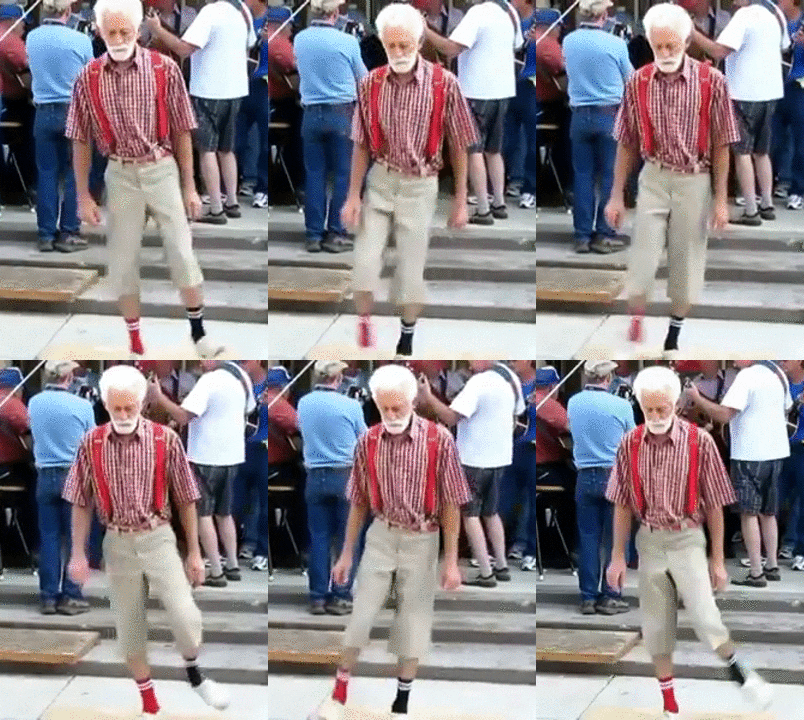
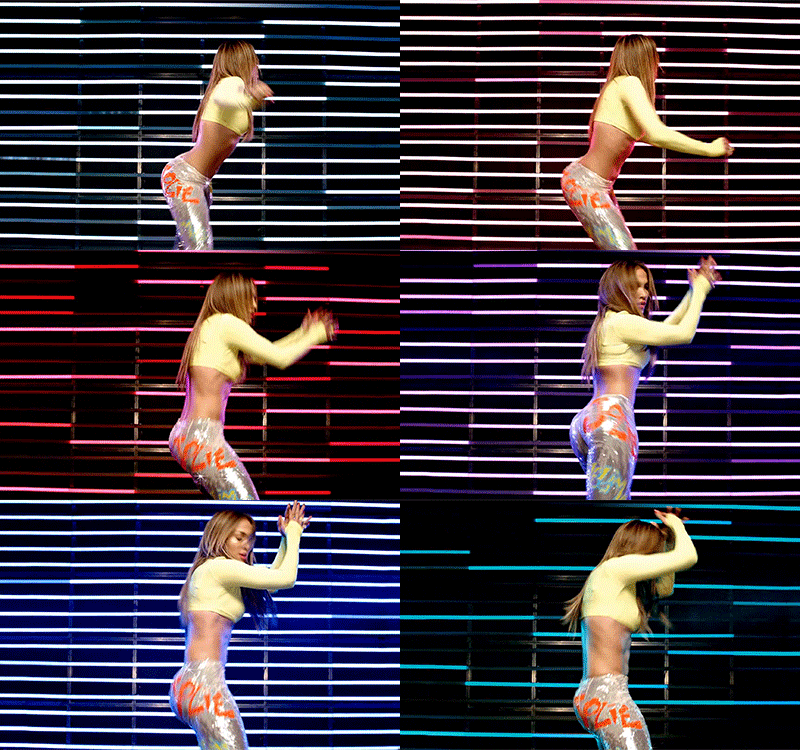
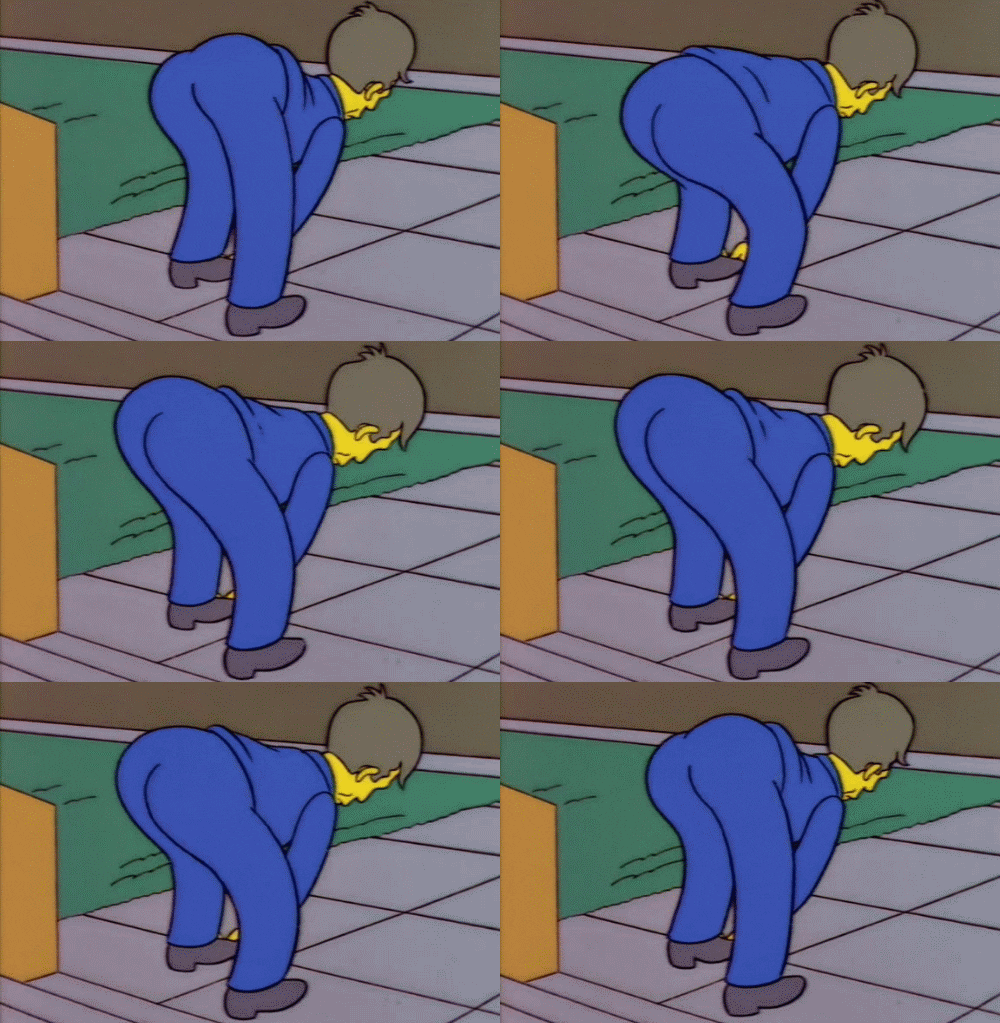
Because when we lock-in, this happens:
tenor.gif

tenor.gif

giphy.gif

source.gif

giphy.gif

giphy.gif

giphy.gif


The movement of the gluteus maximus!

That's why (or at least that's why I do)

:)

 
Last edited:
Listen to Motown and how Jamerson rides roughshod over the drums a lot of the time, then tell me you'll lose the dancers.
Jamerson had the talent and knew the rules well enough that he could play artistically, and dance-ably, something rule-breaking that would be cacophony in most other hands. That ability is held by a scant few people, though. “rides roughshod” is a phrase that would never have occurred to me WRT Jamerson. An example would be illustrative.
 
I’ll dissent. I pretty much don’t even pay attention to the kick drum. And further, I perfectly loathe this modern Beater Honda Civic Subwoofer concept of a live mix that is emphasizing the kick. Miles would have simply growled, “that don’t swing.”

Swing and Groove come off of the back beat. Anyone watched “Standing in the Shadows of Motown” lately? There is a scene early in that movie of Jamerson’s childhood South Carolina Gospel church. People are clapping. On the 2 and 4. And it swings like crazy.

The drums keep time. As a bass player, you have to have great time no matter what. Sure, the 1 and 3 have to be in the right place. Of course. Kind of like learning to print in kindergarten.

But, when you play, for example, a steady walking bass line; then your line will have way more swing by emphasizing the 2 and the 4. That’s where the groove lies. If you can’t hear it, keep listening. You’ll catch on.

I always tell drummers that I’m not even listening to the kick. I’m listening to what they are doing on the backbeat. Strong backbeat = great R&B drummer; and BTW, in 99% of those cases if the backbeat is strong, odds are their time is great.

Weak backbeat, and I’m looking for the next gig. No thanks to the Church of England’s clap on the 1 and 3. Not my thing.

I should add that other than walking, I’m not usually playing on the 2 and 4. BUT, I’m still listening to the 2 and 4. It’s a call and response thing. It’s called feel.
 
After I'd been playing bass for about 10 years, a good friend and great musician wanted to start a band with me, with his cousin on drums. He was a killer drummer. Our first get-together, we were jamming, and when we stopped, the drummer looked at me with the biggest smile and said "I've never had anyone do that before." I had no idea what he meant, so he clarified "The way you were playing along to my kick drum pattern. That was so awesome!" I was very confused, as I just assumed anyone would surely do the same. But he'd been playing almost as long as me, in a number of bands. I suddenly had a new outlook on the non-universality of the whole thing, and a lower opinion of the bass players he'd played with before. haha

It sounds so much tighter when the bass and drums are working together to build a foundation.
 
Hi,
I was wondering for the acoustical or physical reason the bass often plays the same rhythm as the kick drum. Is it because the kick, as well as the bass, sounds lowest? Or to support the impact of the kick, which is often hard to be heard clearly?
What are your thoughts?

You're overthinking it. Sure, it's because they sound lowest. (And fattest.) But it's more complicated than that.

But maybe even more important, we don't always lock with the kick. Never bought into that as some sort of rule, maybe a general guideline for beginners...
 
Jamerson had the talent and knew the rules well enough that he could play artistically, and dance-ably, something rule-breaking that would be cacophony in most other hands. That ability is held by a scant few people, though. “rides roughshod” is a phrase that would never have occurred to me WRT Jamerson. An example would be illustrative.
How about Love Child? What's Goin' On? I Was Made To Love Her? Standing In The Shadows Of Love? Ain't No Mountain (both versions)? Ain't Too Proud To Beg? Back In My Arms Again? Gladys Knight's version of Grapevine? Or Boogie Fever by The Sylvers or the Theme From SWAT? :D I can go on, too, but I think that's enough to prove my point.

And that ability is held by MANY people, even Gene Simmons, as long as they're not too scared to not play by the "rules."
 
I like a lot of the replies in this thread. I feel the important thing is to lock to the drummer, to the whole kit. The way to do this, in my opinion is not just to match downbeats, but more importantly the subdivisions of the beat, the nuance of the swing or the razor straightness of the drummer’s subdivisions. The way to do that is to key on the cymbals and feel his backbeat.

Once you are locked like that I try to drop the fattest funkiest ones I can.

If for a given song the kick and bass are supposed to align, then each musician comes up with complimentary parts that, when played together while rhythmically locked, automatically lead to the kick and bass playing together.

Leave some “breathe” in it, where bass might be slightly behind the beat and drums slightly ahead and now you have a real funky pocket. Or you both play right on top of the beat. Or however you approach it that works for the tune and your band.

The one thing I feel is a mistake is to try to explicitly follow the kick drum. That just makes you late to the downbeat.

Key off the subdivisions and backbeat and the amount of swing therein, drop your own fat “one” and it should all end up groovy.

Why would it make you late to the downbeat? You don't have to hear the downbeat to play it.
 
Well, not exactly, depending. Seriously, this happened to me once. I was the original bassist with the party band I play with now. In the late 90's we parted ways, amicably, for family obligations, work relocations, and other projects. In 2012, they contacted me, their long-time bass player had died, and "exercised the reserve clause." I was the only other bass player in the area that knew the core of the repertoire, and could learn the rest of it quickly. I learned, or relearned, or reviewed, the entire 3-hour set in two days. No rehearsal. I got to the gig, glad to see the front guys, introduced myself to the new drummer, asked which side he wanted me to set up on, and prepped for the gig, including a sound check. Like my post above, I watched his right hand for tempo and style, coordinated with his bass drum since he knew what each song needed, and simplified a couple of lines here and there to keep everything going. The gig went well, and I have been back on board ever since.

He looked surprised when I said I didn't listen to drummers. As his eyes got wide, I explained what I posted here: I watch them, especially the dominant hand, to learn how they set the tempo and style, and then match, and discuss points as they arise.

After about six months back with the band, he complimented me that I was the best bassist he had ever played with. He has a 40+ career gig playing everything from the east coast to the Midwest, teaches, and we have frequent discussions on the finer points of what kind of rhythms and styles make up a particular genre, as we play a very wide repertoire and do our best to sound authentic to the songs of each genre we play during a gig.

Cool that that works for you. I spend the majority of my gigs not looking at the drummer. Seems too much like work. I listen.
:D
 
  • Like
Reactions: wesonbass
I’ll dissent. I pretty much don’t even pay attention to the kick drum. And further, I perfectly loathe this modern Beater Honda Civic Subwoofer concept of a live mix that is emphasizing the kick. Miles would have simply growled, “that don’t swing.”

Swing and Groove come off of the back beat. Anyone watched “Standing in the Shadows of Motown” lately? There is a scene early in that movie of Jamerson’s childhood South Carolina Gospel church. People are clapping. On the 2 and 4. And it swings like crazy.

The drums keep time. As a bass player, you have to have great time no matter what. Sure, the 1 and 3 have to be in the right place. Of course. Kind of like learning to print in kindergarten.

But, when you play, for example, a steady walking bass line; then your line will have way more swing by emphasizing the 2 and the 4. That’s where the groove lies. If you can’t hear it, keep listening. You’ll catch on.

I always tell drummers that I’m not even listening to the kick. I’m listening to what they are doing on the backbeat. Strong backbeat = great R&B drummer; and BTW, in 99% of those cases if the backbeat is strong, odds are their time is great.

Weak backbeat, and I’m looking for the next gig. No thanks to the Church of England’s clap on the 1 and 3. Not my thing.

I should add that other than walking, I’m not usually playing on the 2 and 4. BUT, I’m still listening to the 2 and 4. It’s a call and response thing. It’s called feel.

I listen to everyone onstage with me including the drummer. I can be found playing on any increment of the beat that I see fit. Depends on the song and how we're playing it.