
Have you tried putting the new/dead stings on another bass? It might not be the strings themselves, but the setup of the J bass - thinking here about the break angles at the bridge and nut.

Enjoy the benefits of a premium membership!
Upgrade Account
-
TalkBass has been independent since 1998. Add your voice.
Create a free account to reply to discussions, view embedded media, and browse with fewer display ads.
Join free Log in
Want zero display ads or expanded classifieds tools? Compare plans.
You are using an out of date browser. It may not display this or other websites correctly.
You should upgrade or use an alternative browser.
You should upgrade or use an alternative browser.
Why does my Jazz Bass eat strings?
- Thread starter Jakedog
- Start date
More options
Who Replied?

Exactly. That is the same thing I mentioned about so many Fenders I have tried.
Oh, the Fenders... I have owned ten Fenders since 2003, and I currently own two - Fender Jazz CIJ, and Fender Roscoe Beck V, both resonant and lovely sounding unplugged & plugged.
The rest were:
- 5 USA models (Jazz and Precisions) - all except one were mediocre or bad. That one was Precision bass USA standard and it was a wonderful instrument that I wish I didn't sell it. The biggest disappointment was Jazz bass Deluxe US V that, in addition to sounding awful unplugged, had bad B string that had no authority. Complete opposite of Roscoe Beck V.
- 2 Mexico Jazz basses - a Deluxe which was a great sounding bass with very unstable neck, and one Marcus Miller signature which was dead sounding 2 days after installing the new strings
- 1 CIJ Jazz - although the same model as my current one (62US), a completely different sound and feel. I wouldn't go as far as saying that it was bad, but it was definitely more on the warm side.

A few ramblings...
*Don't stretch strings.
*Make sure bridge saddles are parallel to base plate.
*With strings tuned to pitch, slacken neck bolts to allow neck to fully-engage pocket. Re-tighten!
Could be the nature of the beast which is partially compensated by the addition of zingy-fresh strings. IIRC, Mark Goddard (ARS) used to change his strings between every studio take or something like that...it was the Ric.
Riis
*Don't stretch strings.
*Make sure bridge saddles are parallel to base plate.
*With strings tuned to pitch, slacken neck bolts to allow neck to fully-engage pocket. Re-tighten!
Could be the nature of the beast which is partially compensated by the addition of zingy-fresh strings. IIRC, Mark Goddard (ARS) used to change his strings between every studio take or something like that...it was the Ric.
Riis

I’m baffled. I’ve never had a bass do this before. But I’ve only been playing since 1987 so I’m still kinda new. Ha!
I’ve been using my L1000 for all my gigs since I got it at the first of the year. I also host a jam every Monday, and I’ve let plenty of other people play it there. I’m just changing the factory strings today. They’re not totally destroyed yet, but they’re getting there fast. So two months on a set of strings.
My American Elite Jazz eats a set of strings every time I take it to a gig. After 2-3 hours of play time, they’re like old rubber bands. Just totally and completely dead. I’ve tried different brands, different gauges, string through, and top loading, and nothing makes a difference. One gig and the strings are toast.
Is this an issue other people have encountered? Is there a remedy? Or is this bass just a string eater?
You say all this like it's a bad thing?....
For me at least, the faster the death of the new string "zing" the better. A well-worn in, dead set of rounds makes your Jazz bass sound like a Jazz bass "should", with nice, velvety lows and low mids. And they'll give you that tone for many years on a single set of strings.
Chasing that "zing", which really is only a fun tone on a Rickenbacker and only for a few songs, is an extremely expensive task. As you've discovered, it dissipates dramatically almost immediately and is frequently nearly gone even over the course of a single gig. Only independently wealthy famous artists can afford to keep this up, with new strings on the bass before literally every gig.
That's a large part of how Geddy Lee, Chris Squire and others get (got) their signature sounds, especially live. They have the disposable cash to always have brand new strings on their basses before the gigs.
For the rest of us, it only results in the Bass Player Rubber Room. Tears, frustration, tons of perfectly good strings coiled up in stacks all over the apartment and a significantly emptier wallet.
I tried this too for a while when I was gigging, back in my Rick 4001/3 days, and I too absolutely went broke trying to keep it up. The next day after the gig, the strings were off the bass boiling in a pot on the stove and put back on, which revived the "zing" a little bit. But only for them to die again a day or two later. All this lasted only a few months, when I discovered the "zing" was nearly gone after maybe 3 or 4 tunes in a single gig. Then immediately again after boiling. Resistance Was Futile. And I couldn't make the rent anymore besides, so I wisely decided to stop.
Even better, I also later discovered that the dead strings actually sounded much better, even on my Rickenbackers, since that "grind" was breaking my arms trying to keep it up. And the good "thump" and lows of the dead strings worked much better in the mix anyway.
So, there's nothing wrong with your bass or your strings. And in fact, they're both actually doing what you want them to do, which is kill that "zing" for you as quickly as possible
 . Keep those strings on it for at least a month and try again. You may find you love the tone that eventually develops....
L
Last edited:

+1Could be an issue with the break angle on the bridge…
IME, the break angle at the saddle has a direct impact on damage to the string core with resultant deadening of string response.
It really pays to develop the capability to do one’s own setups, with adjustments to the neck shims and saddle heights. If necessary, bridge swaps. Instrumental response and string life both improve with getting these factors in a sweet spot. Generally, the lowest break angel reasonably achieved at the bridge will help the instrument respond and strings last as well as possible.
Neck is probably too soft and compliant.
Put same strings on different bass and see.
Put same strings on different bass and see.

Could the jazz have stainless steel frets?
SS frets are much harder than standard fret wire.
If you are the kind of player that sometimes has to re-fert an instrument, that aggressive playing could transfer to string damage if you did have harder than usual frets on the jazz... Maybe???
It's certainly true that SS strings wear out standard frets early, so I imagine the same is true of the inverse.
Maybe polish your frets, or try stainless strings on that bass.
SS frets are much harder than standard fret wire.
If you are the kind of player that sometimes has to re-fert an instrument, that aggressive playing could transfer to string damage if you did have harder than usual frets on the jazz... Maybe???
It's certainly true that SS strings wear out standard frets early, so I imagine the same is true of the inverse.
Maybe polish your frets, or try stainless strings on that bass.
Last edited:

They feel, and sound, like rubber bands. When you were a kid did you ever stretch rubber bands across a car board box to put together a home-made instrument? That’s what all four strings feel and sound like after 2-3 hours of playing time on this bass. No sustain, no tone, no bounce or spring left at all. All four strings. Done.
I don’t need brand new string sound all the time. I’ll keep a set of strings as long as I can if they’re still useable and working for me. On my other bass, and on every one I’ve ever owned (well north of a hundred instruments) it’s always been a couple months on average. On the Jazz, I never get more than one gig out of a set. And the last set of the night is usually no fun.
I did the weird thing and read the whole thread before commenting. I'm not going to comment on preferences, that's silly. We do have different preferences however.
Have you looked at the spent strings inch by inch, under magnification if needed? You are looking for a place where the bass is cutting into them or marring them enough to kill them. Something like a bad fret, sharp nut or bridge?
Do this. I fix things for a living, and I'm sure there's something off that can be fixed. Doing a deep dive on the bass may be warranted. I'd bet the broken in sound is your real sound, and the sound you like is masking a problem on the bass.
Bruce Bennett (bennettmusiclabs.com - no affiliation) suggests chamfering the neck bolt holes inside the neck pocket. the idea is that when screws are tightened they sometimes create what appears (visually) to me as a small volcano (more obvious when over tightening screws in sheet metal). So the chamfering allows the little volcano to have room, and it gets the necks to rest fully on the back of the neck, and not on the four (standard 4 bolt right?) little mountains. That would definitely kill sustain that may be masked by the zing of the new strings till they break in.
I haven't tried any of his tips on his website, but he seems to know his stuff. Good read anyway.
I'd go full detective mode and inspect as much as you can. No detail is too small. Something is causing this, and it should be fixable.
Yep, perfectly normal. And especially on the Jazz bass, the "rubber band" thing will be the result, but only because the disappearance of the high frequency zing and shimmer is much more noticeable.They feel, and sound, like rubber bands. When you were a kid did you ever stretch rubber bands across a car board box to put together a home-made instrument? That’s what all four strings feel and sound like after 2-3 hours of playing time on this bass. No sustain, no tone, no bounce or spring left at all. All four strings. Done.
I don’t need brand new string sound all the time. I’ll keep a set of strings as long as I can if they’re still useable and working for me. On my other bass, and on every one I’ve ever owned (well north of a hundred instruments) it’s always been a couple months on average. On the Jazz, I never get more than one gig out of a set. And the last set of the night is usually no fun.
But now you have a nice, thick low/low mid dominated tone that you can work with with your electronics and your amp. Everything's fine and your bass and strings are doing the right thing.
The Jazz bass isn't going to be like your Wunkay. The G&L is a thermonuclear weapon, even with a dead set of rubber bands on it it's going to be much "punchier" and "thumpier" especially plucked over the pickup. I have a Tookay with a set of totally dead rounds on it and it gives the rubber band thing when unplugged too. But the low/low mid is much "thicker" than on the Jazz bass.
That's by design, as the Jazz bass is a more traditional tone. Meaning it's thinner and chocolate-eyer, so you have to adjust the electronics accordingly.
L

If I decided to build / design a feature on a bass that would kill strings, I don’t know what it would be.
First, there’s not a large variety of things that kill strings. The most common string-deadening cause is dirt / debris / skin in the outer winding. I think you can eliminate that one.
Outer windings of strings can can also become “loosened”, but I think that is more common during installation and not so much bass induced.
The next thing on the list of string-killers is physical damage. String twist upon installation or winding damage / deformation from bass hardware. Winding “dents” from frets can also affect strings, but that doesn’t necessarily kill brightness. Outer winding dents mess with intonation. This issue seems a little more common in pure nickel wound strings, nickel being a little softer that steel.
Physical damage to strings is about the only thing for which I think the bass could be blamed.
If you have any strings that came off the bass, inspect them carefully for any anomalies of the outer winding.
Here’s another possibility; the case. Does it put extreme pressure on the strings? Enough to deform windings where it presses the strings against the bridge saddles or nut? Is the case leaving something stuck to the strings that isn’t very noticeable?
You have some BSI (bass string investigation) work to do.
First, there’s not a large variety of things that kill strings. The most common string-deadening cause is dirt / debris / skin in the outer winding. I think you can eliminate that one.
Outer windings of strings can can also become “loosened”, but I think that is more common during installation and not so much bass induced.
The next thing on the list of string-killers is physical damage. String twist upon installation or winding damage / deformation from bass hardware. Winding “dents” from frets can also affect strings, but that doesn’t necessarily kill brightness. Outer winding dents mess with intonation. This issue seems a little more common in pure nickel wound strings, nickel being a little softer that steel.
Physical damage to strings is about the only thing for which I think the bass could be blamed.
If you have any strings that came off the bass, inspect them carefully for any anomalies of the outer winding.
Here’s another possibility; the case. Does it put extreme pressure on the strings? Enough to deform windings where it presses the strings against the bridge saddles or nut? Is the case leaving something stuck to the strings that isn’t very noticeable?
You have some BSI (bass string investigation) work to do.

I did the weird thing and read the whole thread before commenting. I'm not going to comment on preferences, that's silly. We do have different preferences however.
Do this. I fix things for a living, and I'm sure there's something off that can be fixed. Doing a deep dive on the bass may be warranted. I'd bet the broken in sound is your real sound, and the sound you like is masking a problem on the bass.
Bruce Bennett (bennettmusiclabs.com - no affiliation) suggests chamfering the neck bolt holes inside the neck pocket. the idea is that when screws are tightened they sometimes create what appears (visually) to me as a small volcano (more obvious when over tightening screws in sheet metal). So the chamfering allows the little volcano to have room, and it gets the necks to rest fully on the back of the neck, and not on the four (standard 4 bolt right?) little mountains. That would definitely kill sustain that may be masked by the zing of the new strings till they break in.
I haven't tried any of his tips on his website, but he seems to know his stuff. Good read anyway.
I'd go full detective mode and inspect as much as you can. No detail is too small. Something is causing this, and it should be fixable.
I agree. Baseline (bass-line?) the instrument. Are the neck screws secure? How is the fitment of the neck to the body? Are the tuning mechanisms secure both at their wee-baby mounting screws and also the ferrule? Is the fitment of string to nut acceptable (no binds, no flopping around in a trench)? Is the bridge secure? Are the saddle screws both in contact with the bridge housing or is one sort of floating? What is the condition of the saddle contact points? What is the condition of the frets and the fret side of the strings? Do you carry the bass around using the strings as a handle? Look at the thing like you are being paid well to figure it out, because if you don't, it will require someone who is to do it.
Look at the thing like you are being paid well to figure it out, because if you don't, it will require someone who is to do it.
this line could be used for any repair question on TB.....


I don't understand how firing the drummer will make the strings last longer ...Only one solution.

Haven't read all the posts but I've got the same issue and for me I think it comes down to the strings I use?? ( Dunlop Super Bright Nickles ) and how hard I play when we have a show. I've got an Elite PJ and American Performer PJ. Stings last me a long time playing at home and even band practice but I can put a fresh set on a day before a show and they are dead as a doornail after the show. I definitely play way harder with my right hand when playing out??? Put a new set on the Performer last week, played a show Saturday ( 2.5 - 3 hrs )and changed them again last night cause they were dead as hell. I don't play out a ton and love the way those strings play and sound when fresh so I just deal with it. Had the same issue with mutliple other basses as well so it's not just the Fenders. If I played out every weekend it would quickly become a problem.
Last edited:

Here’s an interesting experiment to try:
Cut a set of strings a little longer than usual - maybe three wrap’s worth - and string the Jazz top-loaded.
Play it until the strings are deader than dead. Then remove them and install them on the L1000. Are they still deader than dead, or do they just sound like broken-in strings?
This will tell you whether the bass is actually eating strings or if it’s just not getting along well with strings once they’re broken in.
Since strings lose their elasticity as they break in, the latter would support the rubbery neck theory whereas the former would suggest that either the nut or the bridge is somehow damaging the strings.
I like this idea. And considering that the neck may be a factor is worth noting.
If the strings performed decently on another bass after sounding dead on the Jazz, then the neck might be worth looking at. Replacing a neck isn't that difficult.

Maybe try installing a set of these "dead" strings on one of your other basses to confirm that they're actually dead and it's not something else going on with the Jazz that is just giving the effect of dead strings.
As I was reading the thread I was thinking this exact same thing (and a few others did as well). If they're not dead on another bass it definitely changes the direction you'd go to keep troubleshooting.

So much this. I do almost all of my practice/home playing unplugged. Late at night, in a pretty much silent house. Same with my electric guitar practice.I had a Stingray that was just like that - it sounded great with fresh strings, but once they lost the initial zing, it sounded dead. Once I paid attention on the unplugged sound I realized that it's no pickups or electronics - it's just a bad instrument and there's nothing I can do to help it.
After that I started paying a lot more attention to how the bass sounds unplugged, and that is now first criteria to determine whether it is a keeper or not.
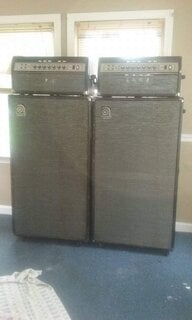
After a few hours, this thing is so dead.
A few ramblings...
*With strings tuned to pitch, slacken neck bolts to allow neck to fully-engage pocket. Re-tighten!
Riis
Interesting idea, never thought of that.


