
Enjoy the benefits of a premium membership!
Upgrade Account
-
TalkBass has been independent since 1998. Add your voice.
Create a free account to reply to discussions, view embedded media, and browse with fewer display ads.
Join free Log in
Want zero display ads or expanded classifieds tools? Compare plans.
You are using an out of date browser. It may not display this or other websites correctly.
You should upgrade or use an alternative browser.
You should upgrade or use an alternative browser.
Why does TalkBass love the P Bass so much?
- Thread starter GwennyT
- Start date
More options
Who Replied?
I wonder. If my PJ can't get the sounds you can get on your P, can your P get the sounds Marcus Miller can get on my PJ?What blows my mind is the TB attitude that a PJ can’t get a “true” P sound.
So many demos on YouTube of preamps and pickups. And all I usually hear is someone playing with a touch very different than my own.
What blows my mind is the TB attitude that a PJ can’t get a “true” P sound.
Theres a difference between "details" and "minutia" and a lot of folks dont make the distinction.....with a super powerful microscope, there will be discrepancies between a true P and a soloed P on a PJ. Will it make a world of hurt difference in the application? Not to me. Grass makes sound when it grows too but I cant hear that either. Its possible some players and producers really can hear distinctly to that level while the whole band is playing and the bass is part of the mix....they also probably dont sleep well from all the sound the growing grass is making
Last edited:


For those that did the Find The P-Bass Challenge on Page 4
Why does TalkBass love the P Bass so much?
Here is the Answer Key
I actually got it right! But honestly, they're all in the ballpark.

Because it's old and so are they. Or they like old sounding music. Or because it is the easy button for hired guns and cover players.

Because with flats it can sound like this:
(Not used an Ultra for the tune .. )
(Not used an Ultra for the tune .. )

Who’s the bigger dingus; the only-P guy, or the never-P guy?
Whoever is bothered by what other people chose/like to play.Who’s the bigger dingus; the only-P guy, or the never-P guy?

Because for me, now this is me mind you, its always the right tool for the job.
No matter what genre, it gets the job done.
It also doesn't hurt that its iconic look helps me look like I know what I'm doing.

...unless showing up for your next POISON audition...
But, seriously...the P Bass is the best social lubricant...
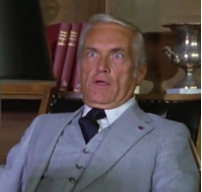
...unless showing up for your next POISON audition...
... just sayin'...


JeezyMcNuggles
Inactive
- Feb 23, 2018
- 14,723
- 20,970
- Disclosures
- I suck, but nobody really notices
Yeah they are. They give you three tone options, on a smaller lighter body, that work with everything, with less mid scoop. My God, we're all doomed.PJs are an abomination.
I have not read all thirteen pages of this thread; but from what I have read, a glaring omission, particularly the comments about P's being "on all those recordings," is that the P got such a head start on all the competition. Except for the Gibson EB, all the other basses made prior to 1957 when Rickenbacker introduced the 4000 were basically catalog store level basses: Kay, Danelectro, Multivox Marvel. Huge drop-off in quality there. The Rics and then the Magnatone Mark VI were the only arguable "quality" competition and, compared to the P, had low production runs (best available sources peg the Maggie as having been made for only one year: 1959).
So it was Fender versus Gibson, and Fender had a lot more of its future invested in the P bass and the Telecaster than Gibson did in any single one of its models. So Fender marketed its product much more aggressively (see Don Randall). They got their instruments into as many sales outlets nationwide as they could. And the P bass was cheap (compared to the Gibson), it was more accessible, and in the studios of that time it did all that was needed. So of course it was on "all those recordings."
One has to wonder whether, had Gibson's opening volley in the electric bass wars been something like an EB0-L or EB3-L equipped with a less raucous, boomy pickup, this thread would even exist.
So it was Fender versus Gibson, and Fender had a lot more of its future invested in the P bass and the Telecaster than Gibson did in any single one of its models. So Fender marketed its product much more aggressively (see Don Randall). They got their instruments into as many sales outlets nationwide as they could. And the P bass was cheap (compared to the Gibson), it was more accessible, and in the studios of that time it did all that was needed. So of course it was on "all those recordings."
One has to wonder whether, had Gibson's opening volley in the electric bass wars been something like an EB0-L or EB3-L equipped with a less raucous, boomy pickup, this thread would even exist.
^^^^^
I had recently heard that Les Paul had no interest in collaboration with Leo Fender. While the original P Bass was not so much a take-off on the Telecaster. But, the '54-'57 were morphing from the Stratocaster and the Jazz Bass the Jazzmaster...to include the P-90 pickups in the JB prototype. Gibson, on the other hand, was a guitar company with a depth of history, a non-Henry Ford style and much less interest in the Bass market or at least a much different take on it.
Thunderbird...iconic...EB types...used by many, many early Bass players...hollow body Basses and some later under Norland with very progressive pickups and configurations. Not to mention electronic packages on the Triumph and LP Studio Bass.
Fender Bass magic is the meat and potatoes at an affordable price and under the marketing of Ray Kroc. Gibson was more of a good Chinese buffet, that you sat down for and you got soup and an egg rolls.
I had recently heard that Les Paul had no interest in collaboration with Leo Fender. While the original P Bass was not so much a take-off on the Telecaster. But, the '54-'57 were morphing from the Stratocaster and the Jazz Bass the Jazzmaster...to include the P-90 pickups in the JB prototype. Gibson, on the other hand, was a guitar company with a depth of history, a non-Henry Ford style and much less interest in the Bass market or at least a much different take on it.
Thunderbird...iconic...EB types...used by many, many early Bass players...hollow body Basses and some later under Norland with very progressive pickups and configurations. Not to mention electronic packages on the Triumph and LP Studio Bass.
Fender Bass magic is the meat and potatoes at an affordable price and under the marketing of Ray Kroc. Gibson was more of a good Chinese buffet, that you sat down for and you got soup and an egg rolls.
I have not read all thirteen pages of this thread; but from what I have read, a glaring omission, particularly the comments about P's being "on all those recordings," is that the P got such a head start on all the competition.
There is probably an argument for it up until about 1980. Starting in the 80s, P-tone was just one of many flavors. Some genres (example: punk and alternative, studio Rock and studio hair metal) it was widely used while other genres (example: 80s/90s funk/gospel praise and worship music) the P bass was almost never seen. There was also the advent of the 5 String in the 80s: barring any custom basses, single split pickup Fender P-basses didnt get a 5 string variant until the late 00s so theres over two decades worth of recorded five string bass that was more than likely not a single split P.
Last edited:
One has to wonder whether, had Gibson's opening volley in the electric bass wars been something like an EB0-L or EB3-L equipped with a less raucous, boomy pickup, this thread would even exist.
A person really doesn't know (or FORGETS) why a P-bass is truly popular if they think it's due to it being first. All you have to do is look at the way the fundamental note of a Pbass note overlaps with the drums. It's almost a perfect overlay allowing the drums to have plenty of transients for those cymbals and high hat. IE, "fits in the mix perfectly", it has NOTHING to do with being first.
Last edited:
That really depends on the genres and the drums themselves and especially the finesse of the bass player and drummer (cymbals especially as some drummers play them tight and others its just a wash). All kicks sound different. For tight articulate kick drums with click (Kick = "B" and Bass = "-oom"), I get that better with a 2-pickup bass. YMMVA person really doesn't know why a P-bass is truly popular if they think it's due to it being first. All you have to do is look at the way the fundamental note of a Pbass note overlaps with the drums. It's almost a perfect overlay allowing the drums to have plenty of transients for those cymbals and high hat. IE, "fits in the mix perfectly", it has NOTHING to do with being first.


