You'd have to live in Sadskatoon.Brilliant, now I have something very compelling to put on the resume I'll be sending to them
Just sayin'.

TalkBass has been independent since 1998. Add your voice.
Create a free account to reply to discussions, view embedded media, and browse with fewer display ads.
Join free Log in
Want zero display ads or expanded classifieds tools? Compare plans.
You'd have to live in Sadskatoon.Brilliant, now I have something very compelling to put on the resume I'll be sending to them

I'm not the "wolf tone guy"... I was only editing DiabolusInMusic"s post to clarify that the Super P and J don't have a 37" B string and should suffer the same maladies as the Ibanez. I haven't had a problem with the tone or intonation that I've noticed.
I'm sure he'll be along to clarify shortly.
Bob
Mike Z - in the EB context, it is when a note is louder than those adjacent on the same string (if that makes sense).

Methinks your statement is a bit to broad. I've owned two Super J five strings and have never noticed wolf-tones on the B string on either instrument.
Can you explain what you mean by "wolftones" in this context? A "wolf tone" is a sympathetic resonance between the string and the body on an acoustic instrument (see Wolf tone - Wikipedia, the free encyclopedia ). The analog on electric basses is something like the G-string "dead spot" on many Fender basses.

A B string shorter than 37" will get wolftones, it is just a matter of physics. Super J/P's do indeed get wolftones. A 36" scale may be enough to remove wolftones, I have no experience with this scale length.
Wolftone seems to be the most commonly used term for it but there are other terms I have heard, it is not the same as a dead spot. Essentially, a wolftone is when the note doesn't ring true, you get all the unwanted overtones with it. Hit an average B string at the 15th fret, I find that tends to be the worst spot on most basses. You will notice how there are tons of overtones even though the pitch is spot-on. This does not happen with a 37" scale.
I've never heard those called wolf tones, personally, and as I understand it that phenomenon is primarily a problem with magnetism from pickups being too close to the B string and interfering with the vibration. Or sometimes I have had it happen with taper- or exposed-core strings that leave too much of the exposed core on the wrong side of the bridge saddle so the overtones don't ring clearly. (This doesn't usually happen with taper-core strings specifically made for a particular bass, such as MTD strings on MTDs or Lakland strings on Laklands...)
I have no problem with it on my 34" Curbow, once I just went with the right strings.
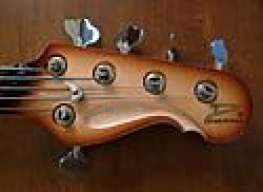
A B string shorter than 37" will get wolftones, it is just a matter of physics. Super J/P's do indeed get wolftones. A 36" scale may be enough to remove wolftones, I have no experience with this scale length.
Wolftone seems to be the most commonly used term for it but there are other terms I have heard, it is not the same as a dead spot. Essentially, a wolftone is when the note doesn't ring true, you get all the unwanted overtones with it. Hit an average B string at the 15th fret, I find that tends to be the worst spot on most basses. You will notice how there are tons of overtones even though the pitch is spot-on. This does not happen with a 37" scale.
Are Dingwalls neck divers?

Are Dingwalls neck divers?
Are Dingwalls neck divers?

Why, would it be necessary to have a lined board on a fretless Dingwall? Couldn't we fretless players figure out the board with just side dots?