
Enjoy the benefits of a premium membership!
Upgrade Account
-
TalkBass has been independent since 1998. Add your voice.
Create a free account to reply to discussions, view embedded media, and browse with fewer display ads.
Join free Log in
Want zero display ads or expanded classifieds tools? Compare plans.
You are using an out of date browser. It may not display this or other websites correctly.
You should upgrade or use an alternative browser.
You should upgrade or use an alternative browser.
Why I keep hammering the Carol Kaye pick method
- Thread starter JimmyM
- Start date
More options
Who Replied?

- Aug 21, 2008
- 10,386
- 252
- 68
- Disclosures
- Owner, SGD Music Products
We gotta do like one of those twelve step programs:
"Hi, I'm david, and I play bass with a pick!" (including motown and funk, thank you Bobby Vega! a bad mofo!)
Unite comrades!
"Hi, I'm david, and I play bass with a pick!" (including motown and funk, thank you Bobby Vega! a bad mofo!)
Unite comrades!

Ric5
Inactive
- Jan 29, 2008
- 29,772
- 30,452
- Disclosures
- I like 5, 8, 10, and 12 string basses
The whole premise that it is better for your wrists is completely unproven. I pick of finger or slap the way I need to get the music out of my bass.
Actually some of the technique that I use for pick playing is the Carol Kaye method. Not because I am afraid of hurting my wrists but rather because it feels right.
Actually some of the technique that I use for pick playing is the Carol Kaye method. Not because I am afraid of hurting my wrists but rather because it feels right.

completely unproven? i think not. i'm living proof.
EDIT: listen, i'm not a doctor. i have zero proof that wrist and hand injuries happen to everyone who plays pick bass like a gui...er...down by the bridge with their wrist cocked using all downstrokes. it's very possible some of you do that and have never had an injury from it in your lives. i went till i was 40 before i started getting pains. but this is an extremely effective method of playing pick bass pain-free IF YOU ARE ONE WHO DOES GET PAINS! all over talkbass, and all over the world, there are people who had pains who no longer get them because they adopted this method. it is proven to work for everyone who adopts it. i don't know a single person for whom this hasn't worked. and if people say it's not working, invariably it turns out they are deviating from the method.
so feel free to pooh pooh it all you want, but the fact is that it DOES work and will give you a lifetime of pain free pick bass playing. if that ain't good enough for you, what do you want from me? blood?

EDIT: listen, i'm not a doctor. i have zero proof that wrist and hand injuries happen to everyone who plays pick bass like a gui...er...down by the bridge with their wrist cocked using all downstrokes. it's very possible some of you do that and have never had an injury from it in your lives. i went till i was 40 before i started getting pains. but this is an extremely effective method of playing pick bass pain-free IF YOU ARE ONE WHO DOES GET PAINS! all over talkbass, and all over the world, there are people who had pains who no longer get them because they adopted this method. it is proven to work for everyone who adopts it. i don't know a single person for whom this hasn't worked. and if people say it's not working, invariably it turns out they are deviating from the method.
so feel free to pooh pooh it all you want, but the fact is that it DOES work and will give you a lifetime of pain free pick bass playing. if that ain't good enough for you, what do you want from me? blood?
I don't know if anyone has already mentioned it, but I do know that Carol Kaye teaches downstroke on the beat and upstroke between beats. The number of beats per measure can change depending on the meter........in 4/4 time: 4 beats per measure with eighth notes as is normal, but is 8 beats per measure when using sixteenth notes.
She also teaches that when playing triplets, it's down-up-up, which is hard to get used to, but is easier with practice. Down-up-up on a triplet will get you back to a downstroke on the next beat.
I loved being on her website and learned a ton, but we got into an argument over the Jamerson thing, (I'm a native Detroiter), and she kicked me off the forum.
She still is one of the greatest, though.
She also teaches that when playing triplets, it's down-up-up, which is hard to get used to, but is easier with practice. Down-up-up on a triplet will get you back to a downstroke on the next beat.
I loved being on her website and learned a ton, but we got into an argument over the Jamerson thing, (I'm a native Detroiter), and she kicked me off the forum.
She still is one of the greatest, though.


JimmyM said:Guitar strings are thin and wussy. Bass strings are thick and manly
That's awesome!
sigged

On the subject of pick hardness, I have played upright bass with several great jazz guitarists that swear by stone picks. Has anyone tried these on Bass?
I'm a pinger fluckin guy myself, mostly due to having started on Upright bass, but I am just curious.
I'm a pinger fluckin guy myself, mostly due to having started on Upright bass, but I am just curious.
I don't know if anyone has already mentioned it, but I do know that Carol Kaye teaches downstroke on the beat and upstroke between beats. The number of beats per measure can change depending on the meter........in 4/4 time: 4 beats per measure with eighth notes as is normal, but is 8 beats per measure when using sixteenth notes.
She also teaches that when playing triplets, it's down-up-up, which is hard to get used to, but is easier with practice. Down-up-up on a triplet will get you back to a downstroke on the next beat.
I loved being on her website and learned a ton, but we got into an argument over the Jamerson thing, (I'm a native Detroiter), and she kicked me off the forum.
She still is one of the greatest, though.
Johnny, in defense of Mr. Jamerson there is a good web site that has some very telling information on this issue. You may already be aware of it but here goes:
http://www.bassland.net/jamerson.html
Especially interesting are the comments (audio files) by Mr Joe Osborn. He feels that Ms Kaye is very mistaken.
BTW - have you seen this vid?
I don't know what to make of it. The guy might have a point. I take no sides but I think Jamerson was the cat on all the disputed tracks.
- Aug 21, 2008
- 10,386
- 252
- 68
- Disclosures
- Owner, SGD Music Products
completely unproven? i think not. i'm living proof.
You can't really correlate the two. If you live until you are 100, then we could postulate that using the Kaye method will make you live longer too.
First we would have to establish that playing with a pick other ways will cause RSI issues. It might, but we need more data. I'm not disagreeing with you, just pointing out that it's making assumptions.I think the majority of players who use a pick will never get wrist pain. I'm going to be 53 this year and the first time I ever had a pain and cramping in my right hand was from playing fingerstyle and plucking too hard. But then I do more-or-less use the Kaye method and always did.
But bad technique in general should be avoided. Same with fretting hand technique. I agree that bad technique can cause you injury.
The only part I wasn't agreeing with is that guitarist employ all down strokes by the bridge. That's simply not true unless you want to get a chunky rhythm sound. Or a tic-tac bass sound. All the guitarist I know (myself included) alternate pick, even on chords. I know a lot of guitarists that use medium or thin picks because it helps them strum. I point out they are using poor pick technique if they can't strum fast with a heavy pick. So it comes back to the use of thin picks to make up for poor pick technique.
But there are all kinds of players, and some will never learn the right way to do things.
EDIT: listen, i'm not a doctor. i have zero proof that wrist and hand injuries happen to everyone who plays pick bass like a gui...er...down by the bridge with their wrist cocked using all downstrokes. it's very possible some of you do that and have never had an injury from it in your lives.
It's good to point out that it is not the best angle to put your wrist in. You are right about that. That angle pinches the carpel tunnel and the nerve.
But you can play by the bridge and keep your wrist straighter, and also all down strokes aren't much harder than alternate picking, since if you were alternating, you would be doing down strokes anyway. As the tempo increases all down strokes becomes taxing, and you should switch to alternate picking.
I'm a proponent of alternate picking in general, but I do employ all down strokes at times.
lastly I wanted to post these just because they are cool pictures.
Yep, that's how I hold my wrist.
Link Removed
When did Carol use a Ripper (or Grabber)? (silly question.. when Rippers came out?) Those are studio shades!
Ric5
Inactive
- Jan 29, 2008
- 29,772
- 30,452
- Disclosures
- I like 5, 8, 10, and 12 string basses
To me her picking method and her tone are unimpressive but her choice of notes and her command of theory are impressive.
BTW - have you seen this vid?
Back, and to the left; back, and to the left....

To me her picking method and her tone are unimpressive
Whatever about her tone, but I'm sure her picking method is not particularly meant to be impressive..... just safe.


The only part I wasn't agreeing with is that guitarist employ all down strokes by the bridge. That's simply not true unless you want to get a chunky rhythm sound. Or a tic-tac bass sound. All the guitarist I know (myself included) alternate pick, even on chords. I know a lot of guitarists that use medium or thin picks because it helps them strum. I point out they are using poor pick technique if they can't strum fast with a heavy pick. So it comes back to the use of thin picks to make up for poor pick technique.
I know i'm sliding down the derail-train here, but I kinda question if a thin pick for guitar playing is always due to poor technique... pretty sure there are plenty of time-tested great guitar players who advocate thin guitar picks. Tom Verlaine, for one, who disproves the "heavy picks for lead guitarists, thin for rhythm side". Both of the guitarists in my band are quite capable and both opt for thin nylon picks.
For me, pick choice has always come down to what felt right at the time. I used those thick but tiny Dunlop Jazz III picks for years until I finally realized how much more control I could get out of a normal sized Tortex or Ultex guitar pick. After experimenting with thickness for a year or so (tried everthing from .73 up to 2mm) I found 1.0 mm feels the best. 1.14 is alright, but anything thicker is clunky, and for my playing style (Ric, played hard to bring out the bite) too heavy of a pick requires you to play too softly to really get the tone I like, at least IMHO. I'm sure its not the absolute safest way to play, but when i do play hard i still do it up by the neck, and keep the movement in my wrist rather than my thumb.
- Aug 21, 2008
- 10,386
- 252
- 68
- Disclosures
- Owner, SGD Music Products
I know i'm sliding down the derail-train here, but I kinda question if a thin pick for guitar playing is always due to poor technique... pretty sure there are plenty of time-tested great guitar players who advocate thin guitar picks. Tom Verlaine, for one, who disproves the "heavy picks for lead guitarists, thin for rhythm side". Both of the guitarists in my band are quite capable and both opt for thin nylon picks.
You can have a thin pick that doesn't flex much, and that's the issue, though standard thin picks are very flexible. I say that even good players using thin picks would get much better using heavy picks. All the truly masterful technical players advocate thick or non flexible picks. Tom Verlaine is a great player, but I'm talking about people like John McLaughlin and Robert Fripp. Fripp advocates the use of this pick:
It's very thin, but made of hard rubber, and has hardly any flex. I can't play with it to save my life!
For me, pick choice has always come down to what felt right at the time. I used those thick but tiny Dunlop Jazz III picks for years until I finally realized how much more control I could get out of a normal sized Tortex or Ultex guitar pick. After experimenting with thickness for a year or so (tried everthing from .73 up to 2mm) I found 1.0 mm feels the best. 1.14 is alright, but anything thicker is clunky, and for my playing style (Ric, played hard to bring out the bite) too heavy of a pick requires you to play too softly to really get the tone I like, at least IMHO. I'm sure its not the absolute safest way to play, but when i do play hard i still do it up by the neck, and keep the movement in my wrist rather than my thumb.
I used the Carol Kaye picks when I first started, and she was surprised by this when I told her, but a company named Coast was selling them back then! I still have some. I found them to be too small and liked the standard shaped Fender heavy picks better.
I was also a Rick player and also did that string bashing tone. I tried a bunch of new picks on the market, including picks made from copper and aluminum, and at one point I was using this pick I made for myself out of stainless steel.
Surprisingly it wasn't as bright as I imagined, and made too much of a "plinky" tone when it hit the string. It also scratched my bridge pickup!

Lately I like playing guitar with a 2mm Dunlop Big Stubby. It's very good for fast runs. I don't like it for bass though.
I also like the 1.14mm Tortex, and also had some white Clayton picks I liked in the same gauge.
You can play by the bridge, you just have to keep your wrist straight, like this:
Speaking of Ricks and Squire, I just realized that Carol was trying out a Maestro Bass Brassmaster in this photo!
Link Removed
right. ric, if you don't like her tone, get yourself another one. irrelevant to the discussion. and her pick method may not be as impressive as cocking your whole arm up and down like green day or blink 182, but when those guys end up with their arms all buggered up from surgery, carol will still be humming right along.Whatever about her tone, but I'm sure her picking method is not particularly meant to be impressive..... just safe.
and the motown thing is also irrelevant. i love a good thread hijacking as much as the next guy, but it's been beaten to death on here a million times over, and frankly, only two people care anymore and one of them is dead.
again, like i've said a million times, the info is here if you want it. if you don't, there's nothing i can do for you, so quit busting my balls
Ric5
Inactive
- Jan 29, 2008
- 29,772
- 30,452
- Disclosures
- I like 5, 8, 10, and 12 string basses
I know you want to help people. If I had any kind of wrist problems then I would look into her technique. But I have been playing since 1968 without wrist problems so my technique must be ergonomic.

used the heavy pick and played right below the neck, surprised how much faster i could play and how much longer i could play, pretty cool
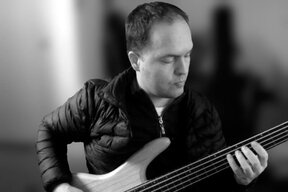
Yeah I used to play pickstyle with palm muting. Because of the scale length of the EBG it puts your wrist at an odd angle. I had pain after a couple hours. I also play some guitar and know the technique well. Playing closer to the neck is more ergonomic but that eliminates palm muting. Too bad.
good for both of you! i love palm muting and that was the hardest part for me to give up.
but if you promise not to tell anyone, i'll let you in on a secret...sometimes i do it anyway i just don't do it for very long.
but if you promise not to tell anyone, i'll let you in on a secret...sometimes i do it anyway
i just don't do it for very long.
Just an update on my workings with the Kaye method.
I picked up an '74 EB-3 Lawsuit bass that I thought would sound great with a pick. I have moved up to a thicker pick and I have been working at a slow tempo with really great results. My attack is much more even and my wrists and fingers feel great after a few hours. I have been learning songs specifically for picking....
So, I think this (for me anyway) was time well spent.
I picked up an '74 EB-3 Lawsuit bass that I thought would sound great with a pick. I have moved up to a thicker pick and I have been working at a slow tempo with really great results. My attack is much more even and my wrists and fingers feel great after a few hours. I have been learning songs specifically for picking....
So, I think this (for me anyway) was time well spent.


