I love head stocks of all shapes and styles. Its one of the first things I notice. They have even influenced a purchase or two. If an equal toss between two basses I have gone with one with a head unlike any already owned. Heck, I like the Tele styled head so much I bought a 50's Classic Vibe. Admittedly I sold as I discovered it was not the right bass for me, but regardless, I just love all kinds of head stocks, pointy, rounded, modern, classic, slim, fat, big and small I love them all.

Enjoy the benefits of a premium membership!
Upgrade Account
-
TalkBass has been independent since 1998. Add your voice.
Create a free account to reply to discussions, view embedded media, and browse with fewer display ads.
Join free Log in
Want zero display ads or expanded classifieds tools? Compare plans.
You are using an out of date browser. It may not display this or other websites correctly.
You should upgrade or use an alternative browser.
You should upgrade or use an alternative browser.
Why This Obsession With The Fender Headstock?
- Thread starter KingRazor
- Start date
More options
Who Replied?
It's not the Ursa hs itself per se, it's the hs mated with traditional Fender bodies - simply don't match imho. Imho the Ursa hs is too angular, modern looking. It's exascerbated by the fact that the world is still filled with Fender and Fender copies with more traditional looks - Ursa sticks out like the proverbial sore thumb.
I'd probably get past it if I really wanted an SX though.
I'd probably get past it if I really wanted an SX though.

My favorite headstock these days... since this photo, the chip has been repaired.
Invalid Link Removed
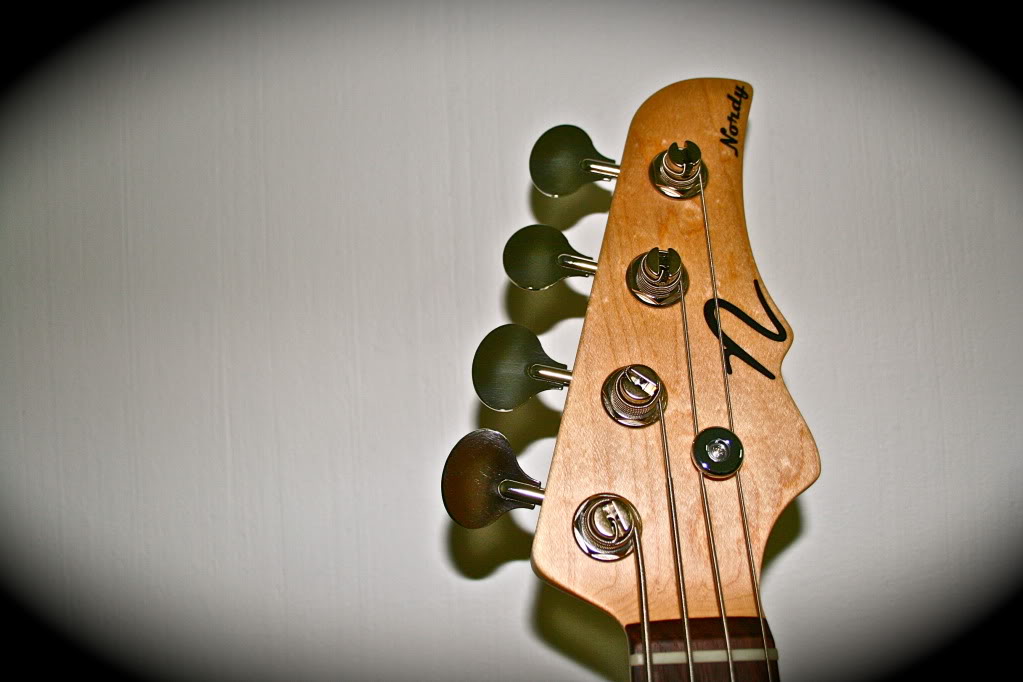
And anther example I swiped from the Nordstrand thread...
Invalid Link Removed
And anther example I swiped from the Nordstrand thread...

I think perhaps the best gage of what anyone likes the best is what they would put on a completely custom-made bass if they could have anything they want on there. Personally, I would go with something like:




I like the 2x2 (or 3x2), the asymmetry, and the flared taper.
I wouldn't want a bass on which I think the headstock is ugly (the old Deans, for example). There are just too many other options out there, with same or similar quality, to spend significant money on something I don't like to look at.
I like the 2x2 (or 3x2), the asymmetry, and the flared taper.
I wouldn't want a bass on which I think the headstock is ugly (the old Deans, for example). There are just too many other options out there, with same or similar quality, to spend significant money on something I don't like to look at.

I started out on an upright bass and no upright player ever gave a moments thought to the shape of the headstock. All basses (more or less) had the same shaped headstock and you pretty much expected them to.
[Invalid or Expired Link Removed]
Fancy scrollwork is historically pretty common.

I really, really wish I could type the words "I don't care what the headstock looks like as long as the bass plays fine" without it being a lie... but I can't. I like the look of certain bass headstocks more than others. I came to appreciate Fender basses well after I started playing, so maybe that's why I neither like nor dislike them. They just seem ... "ok" looking. Now, my Guild SB-202 headstock ([Invalid or Expired Link Removed]) I love the look of - its like a heraldic emblem or a shield - but in fairness it was my first "good" bass and also I am a sucker for symmetry. To my eye, the Musicman basses with 3 on top and 1 on the bottom look weird. They sound great, but look weird.
The important thing is, I always TRY (with varying degrees of success) to not think about the look of a bass when shopping for one - it is supposed to be about the sound of it and the ease / comfort when playing it. Which is why I bought and then returned within a few days the Gibson SG bass. The neck dive annoyed the heck out of me, so even though I was in love with the sound and looks of it, it had to go back - having to support the weight of the neck over the course of a 3 set gig with my left hand was a little tiring and a lot annoying wen I would let go of the neck and it would rotate downwards, pulling the strap across my neck repeatedly.
The important thing is, I always TRY (with varying degrees of success) to not think about the look of a bass when shopping for one - it is supposed to be about the sound of it and the ease / comfort when playing it. Which is why I bought and then returned within a few days the Gibson SG bass. The neck dive annoyed the heck out of me, so even though I was in love with the sound and looks of it, it had to go back - having to support the weight of the neck over the course of a 3 set gig with my left hand was a little tiring and a lot annoying wen I would let go of the neck and it would rotate downwards, pulling the strap across my neck repeatedly.

I don't know man I think it revolves around evens. The strings have never entered my thoughts on it until now. (damn) On the other hand I don't have any basses that could be folded in half perfectly and that kinda makes my skin crawl.
Sounds like a little OCD here...


I personally find the oversized bulbous mass of the Fender headstock to be quite hideous. But then, many bass player say the same thing about my entire bass, and I'm OK with that.
It is all personal preference, but some people mistake opinions for scripture.
It is all personal preference, but some people mistake opinions for scripture.

I hate the AC headstock and for that reason alone I'm not in the market for one this week. Aesthetics are a huge deal to me.
I personally find the oversized bulbous mass of the Fender headstock to be quite hideous. But then, many bass player say the same thing about my entire bass, and I'm OK with that.
It is all personal preference, but some people mistake opinions for scripture.
"oversized bulbous mass...my entire bass"? "quite hideous"? "scripture"?
Say. You haven't been playing the Mothman, have you?

You're at a show, the bassist (or guitarist) have a slamming awesome tone. You start analyzing their equipment, oh ok he's rocking an Ampeg SVT with an 8x10. Oh, he's playing a Fender P bass.
How do you know?
Headstock and pickups.
Headstocks go along with the whole presentation of the bass. Kind of like how rims or spoilers go along with a car. If the headstock doesn't compliment the overall design of the bass, it makes it less then desirable. Some people can look past it, others can't.
I can't.
How do you know?
Headstock and pickups.
Headstocks go along with the whole presentation of the bass. Kind of like how rims or spoilers go along with a car. If the headstock doesn't compliment the overall design of the bass, it makes it less then desirable. Some people can look past it, others can't.
I can't.

I'd be looking at the body of the bass first. The P body is unique enough. At a far enough distance, even the headstock won't give away whether it's a Fender or a clone.You're at a show, the bassist (or guitarist) have a slamming awesome tone. You start analyzing their equipment, oh ok he's rocking an Ampeg SVT with an 8x10. Oh, he's playing a Fender P bass.
How do you know?
Headstock and pickups.
Headstocks go along with the whole presentation of the bass. Kind of like how rims or spoilers go along with a car. If the headstock doesn't compliment the overall design of the bass, it makes it less then desirable. Some people can look past it, others can't.
I can't.

Headstock design, from a buyers standpoint, does seem to revolve much more around an aesthetic than it does around functionality. But then how many of us are quick to cry foul about a bass that will take a neck dive? That's something that can be very much attributable to headstock design and directly impacts how a bass will balance when have it strapped on.
When you look at the design of Fender basses from the 1950's and 1960's you'll find some interesting things. Notably, there are similarities in design between Fender's offerings and automobile designs. It would start with flowing lines that were reminiscent of sports cars, to chrome hardware and even the colors of bodies and headstocks. Some Fender colors came straight from GM's and Ford's color charts.
From a functionality standpoint, the Fender headstock works. You've got easy access to the tuners and it balances well. Plus the lines flow well. And like some of the other posters have mentioned that headstock is like a trademark for Fender. Granted, they were not able to trademark it in a court of law. But there is a definite association of that design with Fender. And that headstock design has been featured on almost all of Fender's most popular models at one time or another: P-Bass, J-Bass, Strat, Jaguar, Jazz Master, and even some Telecasters. Fender's history as a brand means a lot to a good number of people.
Ultimately, some of it does come down to personal tastes. Look at the aforementioned cars: some people are more influenced to buy a car for it's performance or functionality, and some people will seek out another car and base their decision primarily on aesthetics. There is a market for both. I think the most successful businesses will offer something that has a great blend of both: functionality plus a pleasing aesthetic.
When you look at the design of Fender basses from the 1950's and 1960's you'll find some interesting things. Notably, there are similarities in design between Fender's offerings and automobile designs. It would start with flowing lines that were reminiscent of sports cars, to chrome hardware and even the colors of bodies and headstocks. Some Fender colors came straight from GM's and Ford's color charts.
From a functionality standpoint, the Fender headstock works. You've got easy access to the tuners and it balances well. Plus the lines flow well. And like some of the other posters have mentioned that headstock is like a trademark for Fender. Granted, they were not able to trademark it in a court of law. But there is a definite association of that design with Fender. And that headstock design has been featured on almost all of Fender's most popular models at one time or another: P-Bass, J-Bass, Strat, Jaguar, Jazz Master, and even some Telecasters. Fender's history as a brand means a lot to a good number of people.
Ultimately, some of it does come down to personal tastes. Look at the aforementioned cars: some people are more influenced to buy a car for it's performance or functionality, and some people will seek out another car and base their decision primarily on aesthetics. There is a market for both. I think the most successful businesses will offer something that has a great blend of both: functionality plus a pleasing aesthetic.
While I love my Geddy Jazz and my CV P bass, I think the 4001/4003 Rick headstock is the coolest, I hope that in a year or less I will have this headstock hanging on the wall ... Well with the Rick under it 

Back in the 1990s one of my main basses was a white 1980s vintage Rickenbacker 2020 also called "The Hamburg".
I lost count of the times I was asked if it was "a reak Rick".
Even though it had the same Rickenbacker nameplate the headstock wasn't the iconic Rickenbacker shape. Therefore many were confused and on more than one occasion I was called a liar because it was "obvious" I was playing a "fake".
It really was a great bass and I honestly regret ever parting with it.
I wonder if a TB member in Louisville has it now?
Last seen wearing a black Hipshot Xtender and black Schaller Straplocks
I lost count of the times I was asked if it was "a reak Rick".
Even though it had the same Rickenbacker nameplate the headstock wasn't the iconic Rickenbacker shape. Therefore many were confused and on more than one occasion I was called a liar because it was "obvious" I was playing a "fake".
It really was a great bass and I honestly regret ever parting with it.
I wonder if a TB member in Louisville has it now?
Last seen wearing a black Hipshot Xtender and black Schaller Straplocks

The Fender headstock shape is classic. almost everyone attracts to classic objects.
and also The Fender headstock shape have some nice curves. almost everyone attracts to objects with nice curves.
its art.
this is how it works.
and also The Fender headstock shape have some nice curves. almost everyone attracts to objects with nice curves.
its art.
this is how it works.


